
Course list

Leaders at every level need to be able to execute on their ideas. In virtually every case, this means that leaders need to be able to persuade others to join in this execution. In order to do so, understanding how to create and utilize power in an organization is critical.

In this course, developed by Professor Glen Dowell, Ph.D., of Cornell University's Johnson Graduate School of Management, students will focus on their personal relationship with power as well as how power works in their organization and social network.


Project Management Institute (PMI®) Continuing Certification: Participants who successfully complete this course will receive 6 Professional Development Units (PDUs) from PMI®. Please contact PMI ® for details about professional project management certification or recertification.


  • Apr 8, 2026
  • Apr 22, 2026
  • May 6, 2026
  • May 20, 2026
  • Jun 3, 2026
  • Jun 17, 2026
  • Jul 1, 2026

Being able to negotiate is a practical, everyday skill that is critical for anyone working within an organization. The good news is it's a skill you can practice and master. Negotiation skills are ones you can use in any context and, once you master the behaviors of effective negotiation, you will use all the time. In this course, developed by Cornell University's Professor Samuel Bacharach, Ph.D., you will develop an awareness that every conversation is a negotiation, and you will identify the critical components of effective negotiation.

  • Apr 8, 2026
  • May 6, 2026
  • May 20, 2026
  • Jun 3, 2026
  • Jun 17, 2026
  • Jul 1, 2026
  • Jul 15, 2026

If you're in charge of developing and leading strategic organizational change, there are certain tools and concepts you must be familiar with. In this course, the emphasis is on cultivating your ability to assess the need for change. By determining why your organization or team needs change, you'll be able to better answer questions like: What should you change and how should the change be handled? You will explore the political and complex process of introducing change, which includes motivating others, dealing with resistance and the emotional elements of change, and finally, extending change over time and sustaining it. The course is designed to give you practice so you can initiate and carry out a change effort.

  • Apr 22, 2026
  • May 6, 2026
  • May 20, 2026
  • Jun 3, 2026
  • Jun 17, 2026
  • Jul 1, 2026
  • Jul 15, 2026

All leadership is change leadership. Good leadership isn't about stagnation; it's about moving ahead. In this course, Cornell University's Professor Samuel Bacharach, Ph.D., explores the fundamental, practical skills that effective leaders have mastered.

Effective change leaders do three things; they anticipate where things are moving, they facilitate the implementation of change, and they sustain momentum by taking charge and moving things ahead. Great change leaders know how to be both proactive and reactive, as Professor Bacharach explains. Students in this course will examine their own leadership styles and practice skills that will help them translate ideas into organizational results, find ways to overcome organizational inertia, and examine strategies for overcoming individual resistance to change.

  • Apr 8, 2026
  • Apr 22, 2026
  • May 6, 2026
  • May 20, 2026
  • Jun 3, 2026
  • Jun 17, 2026
  • Jul 1, 2026

Symposium sessions feature two days of live, highly interactive virtual Zoom sessions that will explore today’s most pressing topics. The Leadership Symposium offers you a unique opportunity to engage in real-time conversations with peers and experts from the Cornell community and beyond. Using the context of your own experiences, you will take part in reflections and small-group discussions to build on the skills and knowledge you have gained from your courses.

Join us for the next Symposium in which we’ll discuss the ways that leaders across industries have continued engaging their teams over the past two years while pivoting in strategic ways. You will support your coursework by applying your knowledge and experiences to relevant topics for leaders. Throughout this Symposium, you will examine different areas of leadership, including innovation, strategy, and engagement. By participating in relevant and engaging discussions, you will discover a variety of perspectives and build connections with your fellow participants from various industries.

          All sessions are held on Zoom.

          Future dates are subject to change. You may participate in as many sessions as you wish. Attending Symposium sessions is not required to successfully complete any certificate program. Once enrolled in your courses, you will receive information about upcoming events. Accessibility accommodations will be available upon request.

          Symposium sessions feature two days of live, highly interactive virtual Zoom sessions that will explore today’s most pressing topics. The HR Symposium offers you a unique opportunity to engage in real-time conversations with peers and experts from the Cornell community and beyond. Using the context of your own experiences, you will take part in reflections and small-group discussions to build on the skills and knowledge you have gained from your courses.

          Join us for the next Symposium, in which we’ll share experiences from across the industry, inspiring real-time conversations about best practices, innovation, and the future of human resources work. You will support your coursework by applying your knowledge and experiences to some of the most pressing topics and trends in the HR field. By participating in relevant and engaging discussions, you will discover a variety of perspectives and build connections with your fellow participants from across the industry.

          All sessions are held on Zoom.

          Future dates are subject to change. You may participate in as many sessions as you wish. Attending Symposium sessions is not required to successfully complete any certificate program. Once enrolled in your courses, you will receive information about upcoming events. Accessibility accommodations will be available upon request.

          eCornell Online Workshops are live, interactive 3-hour learning experiences led by Cornell faculty experts. These premium short-format sessions focus on AI topics and are designed for busy professionals who want to gain immediately applicable skills and strategic perspectives. Workshops include faculty presentations, breakout discussions, and guided hands-on practice.

          The AI Workshops All-Access Pass provides you with unlimited participation for 6 months from your date of purchase. Whether you choose to attend one workshop per month, or several per week, the All-Access Pass will allow you to customize your AI journey and stay on top of the latest AI trends.

          Workshops cover a range of cutting-edge AI topics applicable across industries, hosted by Cornell faculty at the forefront of their fields. Whether you are just getting started with AI, seeking to build your AI skillset, or exploring advanced applications of AI, Workshops will provide you with an action-oriented learning experience for immediate application in your career. Sample Workshops include:

          • Work Smarter with AI Agents: Individual and Team Effectiveness
          • Leading AI Transformation: Bigger Than You Imagine, Harder Than You Expect
          • Using AI at Work: Practical Choices and Better Results
          • Search & Discoverability in the Era of AI
          • Don't Just Prompt AI - Govern it
          • AI-Powered Product Manager
          • Leverage AI and Human Connection to Lead through Uncertainty
          In today's workforce, adaptation and responsiveness are key elements in the success for an organization. As turnaround times shorten and demands increase, organizations must leverage teams to reach strategic goals and fulfill initiatives. Based on the expertise and research of Kate Walsh, PhD, students in this course will diagnose team needs, set expectations for development, utilize conflict to augment change, and build team autonomy to support leaders in embracing a more strategic focus.
          • May 6, 2026
          • May 20, 2026
          • Jun 3, 2026
          • Jun 17, 2026
          • Jul 1, 2026
          • Jul 15, 2026
          • Jul 29, 2026

          Leading across cultures is about adapting, communicating, thinking critically, and understanding your own biases. Dr. Jan Katz of Cornell University's School of Hotel Administration will help you explore the five key dimensions of cross­-cultural leadership: culture, context, risk, linear/parallel hierarchy, and individualism/collectivism . After defining and sharing examples of each, Professor Katz will help you explore their impacts on business and how you can adapt to variations in different cultures. This course gives you the tools you need to continuously improve your cross-cultural leadership skills.

          In the course project, you will examine the cultures and dimensions you work in, explore how compensation relates to risk, examine the hierarchy at your company, and evaluate your own leadership style as it relates to the cultures you work in. You will also get to investigate the 2015 Greek financial crisis and interview an international colleague before creating an action plan for your own future education around the impact of cultural variation on leadership.

          • Apr 8, 2026
          • Apr 22, 2026
          • May 6, 2026
          • May 20, 2026
          • Jun 3, 2026
          • Jun 17, 2026
          • Jul 1, 2026
          The purpose of this course is to explore the idea of coaching within your organization and help you develop yourself as an internal coach. You will start by defining the term “internal coach” and examine the necessary conditions required to make this type of coaching effective. You will then delve into the concept of non-directive coaching, which uses questions to lead the coachee through a process of self-discovery. You will also discuss a directive approach to coaching, which involves the challenge of delivering difficult feedback in a constructive manner. Finally, you will explore the role of supporter as an important part of coaching, where you continue to provide the person you've coached with further guidance following the completion of the coaching session to make sure the coachee is able to sustain the change they worked to achieve.
          • Apr 8, 2026
          • May 6, 2026
          • Jun 3, 2026
          • Jul 1, 2026
          • Jul 29, 2026
          • Aug 26, 2026
          • Sep 23, 2026

          Leaders are responsible for encouraging the highest possible performance from their employees.  Most leaders recognize that motivation is a key driver of high performance. Few leaders are skilled at choosing the right combination of approaches and tools to motivate all of their people. Cornell University Professor Risa Mish provides a learning experience that builds on the important premise that not all individuals are motivated by the same things, and some might be demotivated by the same conditions or incentives that motivate others. This course prepares leaders to analyze performance problems and assess whether they actually can be attributed to a lack of motivation or to one of several other root causes.

          When students determine that poor workplace performance is indeed caused by a lack of motivation, they will use the motivation techniques that will be most effective for all the people involved. Leveraging the work of two American social psychologists to address the factors that may be demotivating people, students will learn how to increase the factors that do motivate people and improve workplace performance. Students will also use the three primary drivers of human motivation to foster better performance on the job.

          • Apr 8, 2026
          • May 6, 2026
          • May 20, 2026
          • Jun 3, 2026
          • Jun 17, 2026
          • Jul 1, 2026
          • Jul 15, 2026

          In an increasingly competitive global environment, quality is no longer considered a nice-to-have luxury. It's a requirement for successfully competing and surviving in the marketplace. While the concepts, tools, and procedures for quality and process improvement are now universally recognized and firmly placed in a large number of high-performing organizations around the world, it was not always so. The importance of quality in organizations has gone through a complete evolutionary cycle. 

          In this course, you will develop measures and standards of service quality, devise practices that improve employee learning and outcomes, and evaluate different approaches to process improvement, all based on the research and expertise of Cornell University Professor Rohit Verma, PhD. Using the tools provided in this course, you will be able to relate strategic decisions to their impact on organizational performance. And with the completion of an action plan at the end of the course, you will be ready to apply what you learn to your own organization.

          • May 6, 2026
          • May 20, 2026
          • Jun 3, 2026
          • Jun 17, 2026
          • Jul 1, 2026
          • Jul 15, 2026
          • Jul 29, 2026

          To be an effective leader, you must be able to articulate your thoughts and positions in a clear and concise manner.

          Professor Angela Noble-Grange of Cornell University's Johnson Graduate School of Management draws on her own extensive experience as a speaker and communicator to guide students through the preparation and delivery process. She discusses how to identify the communication purpose and analyze your expected audience. She then shares how to formulate and rehearse your message, including how to pay attention to nonverbal communication.

          To fine-tune these skills, this course includes interacting with fellow students. Students will participate in discussion forums and will record and share a video of a short presentation that serves as the course project. This provides rich opportunities for students to hone their communication and presentation skills in a practical way, and to learn from the efforts of others.

          Participants in this certificate need a high-speed internet connection and a computer or device that can shoot digital videos with reasonable quality. The eCornell course delivery system provides the ability to record and upload videos, so you won't need special video software.
          • Apr 22, 2026
          • May 6, 2026
          • May 20, 2026
          • Jun 3, 2026
          • Jun 17, 2026
          • Jul 1, 2026
          • Jul 15, 2026

          Managers who are seen practicing what they preach and following through on promises enjoy dramatically enhanced credibility and loyalty. They inspire workers to perform well and even to go beyond what is asked of them. Credibility is not all it takes to be successful, but no trust or meaningful relationship with those you manage can happen without it.

          This course, developed by Professor Tony Simons, Ph.D. of Cornell University's School of Hotel Administration, focuses on this critical element of leadership, and helps students develop the awareness, skills and habits necessary for mastering it.

          • Apr 22, 2026
          • May 6, 2026
          • May 20, 2026
          • Jun 3, 2026
          • Jun 17, 2026
          • Jul 1, 2026
          • Jul 15, 2026

          One of the challenges organizations face today is how to innovate. Innovation has become the modus operandi of organizational life. Every organization needs to innovate quickly to stay competitive. But what does “innovation” really mean?

          In simple terms, innovation is the practical application of creative ideas to drive organizational results; innovation results in something useful that benefits the organization. In this course, Cornell University's Professor Samuel Bacharach, Ph.D., clears away common misconceptions about the mystery surrounding this popular buzzword and identifies how individuals can harness creative energy to drive innovative results. Students will identify strategies for encouraging divergent thinking and examine methods of fostering a culture of innovation.
          • Apr 8, 2026
          • Apr 22, 2026
          • May 6, 2026
          • May 20, 2026
          • Jun 3, 2026
          • Jun 17, 2026
          • Jul 1, 2026

          The ability to make effective and timely decisions is an essential skill for successful executives. Mastery of this skill influences all aspects of day-to-day operations as well as strategic planning. In this course, developed by Professor Robert Bloomfield, Ph.D. of Cornell University's Johnson Graduate School of Management, you will hone your decision-making skills by following a methodology based on tested actions and sound organizational approaches. You will leave this course better equipped to confidently tackle any decision large or small, and you'll do so in a way that creates the optimal conditions for success.

          • May 6, 2026
          • May 20, 2026
          • Jun 3, 2026
          • Jun 17, 2026
          • Jul 1, 2026
          • Jul 15, 2026
          • Jul 29, 2026

          With emerging technologies and expanding global marketplaces, it is imperative that organizations become highly proficient in driving their change agenda. Whether diversifying, downsizing, merging, reorienting business, or developing new management structures, organizations must be able to effectively carry out change initiatives to remain productive and competitive.

          In this course, you will discover how to assess organizational readiness and your own ability to facilitate change. Working with a comprehensive organizational change management simulation, this experiential exercise provides an opportunity for you to learn by doing. By selecting and implementing strategies, you will see the rewards and consequences of your choices. You will also examine why the majority of change efforts fail, study change strategies, and determine how to fit them effectively to the stages of change. Finally, you will build an action plan for introducing a change initiative in your organization. In effect, this course enables you to begin building the skills and habits that you need to help make strategic or substantial change happen.

          • Apr 15, 2026
          • May 13, 2026
          • Jun 10, 2026
          • Jul 8, 2026
          • Aug 5, 2026
          • Sep 2, 2026
          • Sep 30, 2026

          Request
          more Info
          by completing the form below.

          Act today—courses are filling fast.

          How It Works

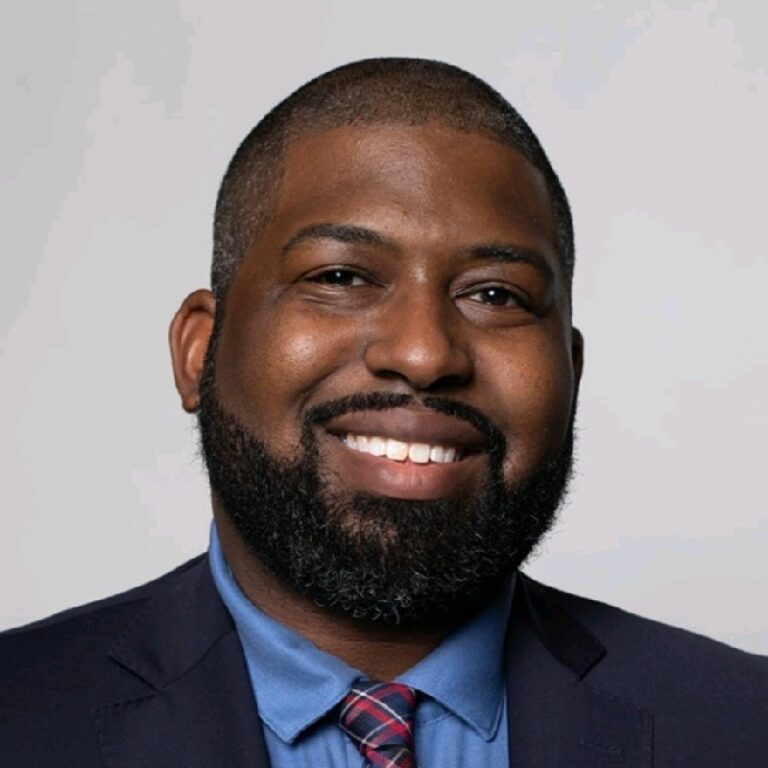
          As a seasoned executive and law school graduate, this program at Cornell was an excellent experience that gave me a fresh perspective on successful strategies, sharpening my negotiation techniques and equipping me with valuable tools to create fantastic value for my employer.
          ‐ Brandon C.
          Brandon C.

          Frequently Asked Questions

          Change is rarely just a process update. It is a leadership challenge that involves influence, stakeholder alignment, resistance, and follow-through. If you are expected to move a team, function, or organization forward in uncertain conditions, you need a practical way to diagnose what is happening as well as a repeatable method for making progress.

          In this certificate program, authored by faculty from the highly regarded Cornell SC Johnson College of Business and ILR School, you will build a change leadership toolkit you can use immediately at work. You'll learn how to understand and navigate power relationships, negotiate effectively, lead strategic change initiatives, and sustain momentum by anticipating uncertainty, overcoming inertia, and addressing resistance. You'll practice using these frameworks through applied course projects built around your own real-world situations, with feedback from an expert facilitator.

          You should choose this program if you want more than high-level change theory. You will leave with concrete approaches for building stakeholder support, making better decisions in the face of uncertainty, and leading change in a way that is credible, ethical, and executable.

          You're not just watching content and taking quizzes; you're learning in a facilitated, cohort-based experience designed to help you apply change leadership skills to the situations you are dealing with at work.

          In this certificate program, your learning is built around Cornell faculty-designed coursework and practical, multi-part projects that you develop over time. You will have an expert facilitator who guides discussion, provides feedback on your work, and helps you translate concepts into action. Many courses also include live online sessions that deepen learning through real-time conversation and problem solving with peers.

          This combination of small-cohort interaction, expert feedback, and workplace application is what makes the experience feel practical and personal. You build a set of tools, templates, and frameworks you can continue using to lead change long after the program ends.

          This certificate is designed for professionals who need to lead change, support change, or influence change across an organization, regardless of industry. I

          t is a strong fit if you:

          • Are a senior leader, mid- to upper-level manager, or high-potential professional responsible for implementing new strategic direction
          • Lead cross-functional work where you need stakeholder buy-in without relying solely on formal authority
          • Regularly face resistance, uncertainty, or competing priorities and need practical tools to sustain momentum
          • Are an individual contributor or project lead who must influence outcomes through negotiation, networks, and credibility

          You will get the most value if you can bring a real workplace change effort or a realistic change challenge into the course projects and discussions.

          You will complete multi-part, applied projects that help you connect change management concepts directly to your role, your stakeholders, and your organization’s real constraints. Depending on the courses you select, your work can include diagnosing a real power situation, mapping and strengthening your network, building a change vision and communication approach, and developing strategies for overcoming resistance and sustaining change.

          Examples of project work past learners have completed include:

          • Standardizing a finance department by building shared SOPs, visual process maps, and cross-training routines that reduce knowledge silos and improve close and reporting reliability
          • Shifting a construction project team from discipline silos to multi-skilled project managers through phased cross-training, mentorship, and pilot projects that reduce coordination delays and workload strain
          • Improving a service operation by launching pre-shift briefings and a lightweight real-time communication channel that cuts handoff errors and speeds up guest-facing execution
          • Building a unified customer experience score by combining quality evaluation and customer sentiment into one index that makes coaching more focused on outcomes and reduces metric conflict

          Across the certificate, these projects help you build a practical change leadership toolbox you can use to plan, influence, and implement change with greater confidence.

          You will strengthen your ability to lead and influence change by using practical frameworks for power, negotiation, stakeholder alignment, and sustaining momentum.

          After completing the Change Management Certificate, you will:

          • Analyze your organization in terms of its tendency toward change
          • Build an approach for identifying and influencing key stakeholders
          • Devise an approach for overcoming resistance
          • Explore critical decisions such as when to negotiate, when not to negotiate, whether you should make the opening move in a negotiation, and how many issues you want to put on the table
          • Analyze, enhance, and activate your network to achieve goals and improve your ability to exercise power

          Students consistently describe this program as practical, high-impact professional development they can use immediately — not just interesting theory. They highlight clear frameworks and tools, short expert videos that make complex ideas easier to apply, and hands-on activities that translate to day-to-day leadership work. Many also emphasize that the experience feels personal and applied because assignments are built around their own work scenarios and reinforced with specific, constructive facilitator feedback. Over time, learners report increased confidence and capability as a leader, manager, or change agent, along with the added credibility of earning a Cornell University certificate.

          In addition, because eCornell represents the pinnacle of premium online professional education, participants of eCornell’s programs often experience long-term career transformation such as promotions to more senior roles, salary increases, improved networking opportunities, and successful career transitions.

          The Change Management Certificate includes 4 core courses plus 2 leadership electives. Each course runs in a 2-week format and combines flexible, asynchronous work such as videos, readings, and project assignments with facilitated discussion. Many courses also offer live online sessions led by your facilitator, which add structure and peer interaction while keeping the overall schedule workable alongside a full-time job.

          This certificate is designed to be completed in about 3 months. Your weekly time commitment is typically about 3 to 7 hours, depending on the course and how deeply you choose to engage.

          Students consistently describe this program as practical, high-impact professional development they can use immediately — not just interesting theory. They point to clear frameworks and tools that help them tackle real workplace challenges, from motivating and coaching others to leading change, building credibility, negotiating effectively, and making stronger strategic decisions. Many also emphasize that the learning experience feels personal and applied because assignments are built around their own work scenarios and reinforced with meaningful feedback.

          Common themes students highlight include:

          • Immediately usable frameworks, templates, and checklists
          • Strong facilitator support with specific, constructive feedback
          • Short, engaging expert videos that make complex ideas easy to grasp
          • Hands-on activities, reflections, and scenarios that translate to day-to-day work
          • A flexible online format that fits demanding schedules without sacrificing rigor
          • Opportunities to learn from peers through discussions and live touchpoints
          • Increased confidence and capability as a leader, manager, or change agent
          • The added credibility of earning a certificate from Cornell University

          Overall, students say they finish the program with a “toolbox” they can bring straight back to their teams, helping them lead more intentionally, communicate more effectively, and drive better outcomes at work.

          Yes. Organizational change often hinges on your ability to influence decisions, secure resources, and align stakeholders who may not report to you.

          In this program, you will build influence skills through courses like Navigating Power Relationships, where you assess your sources of power and analyze and strengthen your professional network. You will also develop practical negotiation capability in Negotiation Skills, where you practice preparation tools like defining your BATNA and the zone of possible agreement, and you discover that many everyday workplace conversations are negotiations.

          Together, these skills help you lead change more effectively by improving how you build support, handle conflict, and move initiatives forward.

          You can earn PMI Professional Development Units (PDUs) for at least one course in this certificate. When you successfully complete Navigating Power Relationships, you will receive 6 PDUs through Project Management Institute (PMI). PMI certification requirements can vary, so you should confirm how PDUs apply to your specific credential or renewal plan directly with PMI.

          You will learn practical ways to diagnose why people resist change, anticipate uncertainty, and sustain progress after the initial rollout.

          In Leading Strategic Change Initiatives, you build a structured approach for clarifying why change is needed, developing a vision, identifying stakeholders who will support or resist the initiative, and creating a plan for extending and sustaining change over time. In Leading Organizational Change, you examine organizational inertia and individual resistance; practice framing an agenda for action across goals, culture, structure, and job design; and learn strategies for navigating competing agendas and uncertainty.

          These tools help you move from good intentions to implementation by giving you repeatable methods you can apply to real change efforts.