


Richard T. John is a general practice lawyer, consultant, and businessperson located in Ithaca, NY. Professor John is a member of the Tompkins County Legislature, chair of the Public Safety Committee, and chair of the T.C. Industrial Development Agency. He has taught as an adjunct professor at the Cornell Law School for the past several years, teaching “Functions of the General Counsel” and “Compliance Systems.” Professor John served nine years as the North American General Counsel and Vice President of Compliance at Intertek, a global product and commodity testing, inspection, and certification company.
Request More Info
More Info
Overview and Courses
A robust compliance function will have a significant effect on an organization, positively impacting its daily operations and helping to mitigate risk. This certificate program will introduce you to the role of compliance within organizations and how it is maintained through internal rule systems.
Throughout this program, you will explore the rules of compliance and how they can be maintained sustainably for your organization. First, you will analyze the manner in which rules and policies serve an organization. Through this process, you will take away best practices on the elements of effective rule design and the use of policing techniques to ensure rules are followed. In anticipation of potential issues, you will delve into the process for investigating violations and consider the available responses to those violations. By the end of this certificate program, you will have developed an in-depth understanding of how to design, enforce, and continuously improve your own organizational compliance policies in a way that can benefit your business and your career.
The courses in this certificate program are required to be completed in the order that they appear.
Course list
In this course, you will examine the function of rules in your daily business operations along with the elements that make an effective rule system. As you explore the ways in which rules can protect your business processes, you'll also discover that they can make your work more efficient. In order to prepare for possible risk, you will examine how rule systems can help you identify sources of risk within your organization and serve as a tool for risk mitigation. By the end of this course, you will recognize the different elements that need to be included in a rule system and feel prepared to create your own.
View Course Start Dates Hide Course Start Dates
View Course Details- Jul 29, 2026
- Nov 18, 2026
- Mar 10, 2027
- Jun 30, 2027
Effective rule design requires you to follow a number of principles. This course will focus on those principles and guide you through the process of creating rules for your business needs. You will start by exploring the importance of clarity and simplicity in rule design and apply these skills by finding ways to make your rules more accessible and engaging. You will then acquire tools that will help you identify your audience and allow you to design rules that are relevant and clear to them. Finally, as a means of enhancing comprehension and application, you will examine design approaches to make your rules easier to implement using psychology, advertising, and visual principles. The skills you take away from this course will help ensure that you and your team are set up for success.
You are required to have completed the following course or have equivalent experience before taking this course:
- Rule Systems as Designed Systems
View Course Start Dates Hide Course Start Dates
View Course Details- Aug 12, 2026
- Dec 2, 2026
- Mar 24, 2027
The value of rules depends on their implementation, and no other effort is as important to rule implementation as training. This course will explore the principles of rule training and provide you with pragmatic tools to introduce new rules into your organization. You will begin by identifying the most important elements for a successful training program, including the cost of training and potential training alternatives. You will then examine specific training modes that will help your audience internalize new rule systems and use them effectively. Finally, you will focus on presentation tactics for effective training. By the end of this course, you will have acquired useful tools and powerful techniques that will support your training efforts and help to successfully implement your rule system.
You are required to have completed the following courses or have equivalent experience before taking this course:
- Rule Systems as Designed Systems
- Rule Design
View Course Start Dates Hide Course Start Dates
View Course Details- Aug 26, 2026
- Dec 16, 2026
- Apr 7, 2027
The policing of rule systems is almost as important as the rules themselves. This course will focus on selecting and designing effective policing tools to enforce your rule system. You will explore the importance of policing as a means of maintaining your rule system and you will analyze ways to make policing both impactful and sustainable for your organization. Additionally, in preparation for any concerns, you will address the issue of intentional rule breakers whose actions cannot be prevented with standard policing methods. Overall, the information you gain in this course can help assure you and your stakeholders that your rule system is dependable and sustainable for your organization.
You are required to have completed the following courses or have equivalent experience before taking this course:
- Rule Systems as Designed Systems
- Rule Design
- Rule System Training
View Course Start Dates Hide Course Start Dates
View Course Details- Sep 9, 2026
- Dec 30, 2026
- Apr 21, 2027
Investigating rule violations in your organization is essential to the prevention of future violations. This course focuses on planning and conducting investigations in response to such violations.
You will determine the circumstances that necessitate an investigation and the steps required to lead one, including the development of an investigation capacity in your organization. You will then acquire and apply practical tools for effective interviewing — an extremely important source of information during an investigation. Finally, best practices for reporting your findings will support you in your compliance process. This includes preparing an effective report, determining its scope, and considering the advantages and disadvantages of publicizing it; all are tangible takeaways to support your organization in high-risk situations.
The following course is required to be completed before taking this course:
- Rule Systems as Designed Systems
Additionally, you are required to have completed the following courses or have equivalent experience before taking this course:
- Rule Design
- Rule System Training
- Policing of Rule Systems
View Course Start Dates Hide Course Start Dates
View Course Details- Jul 1, 2026
- Sep 23, 2026
- Jan 13, 2027
- May 5, 2027
In this course, you will consider possible responses to instances of rule violations. Using a case study format, you will review different categories of rule violations and choose the most effective response based on a process of assessment and improvement. By investigating the sources of such violations and the actions required to limit them in the future, you will take away techniques to help avoid further damage to your organization. Finally, through iteration and assessment, you will determine how to analyze your rule system, ensuring sustainability and effectiveness that benefits your organization for years to come.
The following course is required to be completed before taking this course:
- Rule Systems as Designed Systems
Additionally, you are required to have completed the following courses or have equivalent experience before taking this course:
- Rule Design
- Rule System Training
- Policing of Rule Systems
- Investigation of Rule System Violations
View Course Start Dates Hide Course Start Dates
View Course Details- Jul 15, 2026
- Oct 7, 2026
- Jan 27, 2027
- May 19, 2027
eCornell Online Workshops are live, interactive 3-hour learning experiences led by Cornell faculty experts. These premium short-format sessions focus on AI topics and are designed for busy professionals who want to gain immediately applicable skills and strategic perspectives. Workshops include faculty presentations, breakout discussions, and guided hands-on practice.
The AI Workshops All-Access Pass provides you with unlimited participation for 6 months from your date of purchase. Whether you choose to attend one workshop per month, or several per week, the All-Access Pass will allow you to customize your AI journey and stay on top of the latest AI trends.
Workshops cover a range of cutting-edge AI topics applicable across industries, hosted by Cornell faculty at the forefront of their fields. Whether you are just getting started with AI, seeking to build your AI skillset, or exploring advanced applications of AI, Workshops will provide you with an action-oriented learning experience for immediate application in your career. Sample Workshops include:
- Work Smarter with AI Agents: Individual and Team Effectiveness
- Leading AI Transformation: Bigger Than You Imagine, Harder Than You Expect
- Using AI at Work: Practical Choices and Better Results
- Search & Discoverability in the Era of AI
- Don't Just Prompt AI - Govern it
- AI-Powered Product Manager
- Leverage AI and Human Connection to Lead through Uncertainty
Request more Info by completing the form below.
more Info
by completing the form below.Act today—courses are filling fast.
How It Works
Format
All Online
Time Commitment
3 months with 3 to 5 hours of study per week
Cost
$3,900
Learn From Top Minds
Courses are developed by Cornell faculty.
Power Your Career
Gain today’s most in-demand skills to stand apart.
Flexibility Fits Your Life
Learn on your schedule without stepping out of your job.
Small-class Experience
Participate in facilitated discussions and live sessions with industry peers.
Real-world Projects
Apply learnings and insights to your work to make an impact right away.
Personalized Feedback
Enjoy meaningful feedback on assignments from expert facilitators.
Format
All Online
Time Commitment
3 months with 3 to 5 hours of study per week
Cost
$3,900
Learn From Top Minds
Courses are developed by Cornell faculty.
Power Your Career
Gain today’s most in-demand skills to stand apart.
Flexibility Fits Your Life
Learn on your schedule without stepping out of your job.
Small-class Experience
Participate in facilitated discussions and live sessions with industry peers.
Real-world Projects
Apply learnings and insights to your work to make an impact right away.
Personalized Feedback
Enjoy meaningful feedback on assignments from expert facilitators.
- View slide #1
- View slide #2
- View slide #3
- View slide #4
- View slide #5
- View slide #6
- View slide #7
- View slide #8
- View slide #9
Faculty Author
Adjunct Professor of Law, Cornell Law School
Key Course Takeaways
- Map policy systems in your organization to their intended purposes and functions, and identify incongruities and failure points
- Create rules that serve their underlying purpose and are understandable to their target audiences
- Select and develop effective policing tools to monitor compliance
- Plan and conduct effective investigations in response to compliance system violations

Download Brochure
Fill out the form below to download program information and connect
with us.
Download a Brochure
Not ready to enroll but want to learn more? Download the certificate brochure to review program details.“
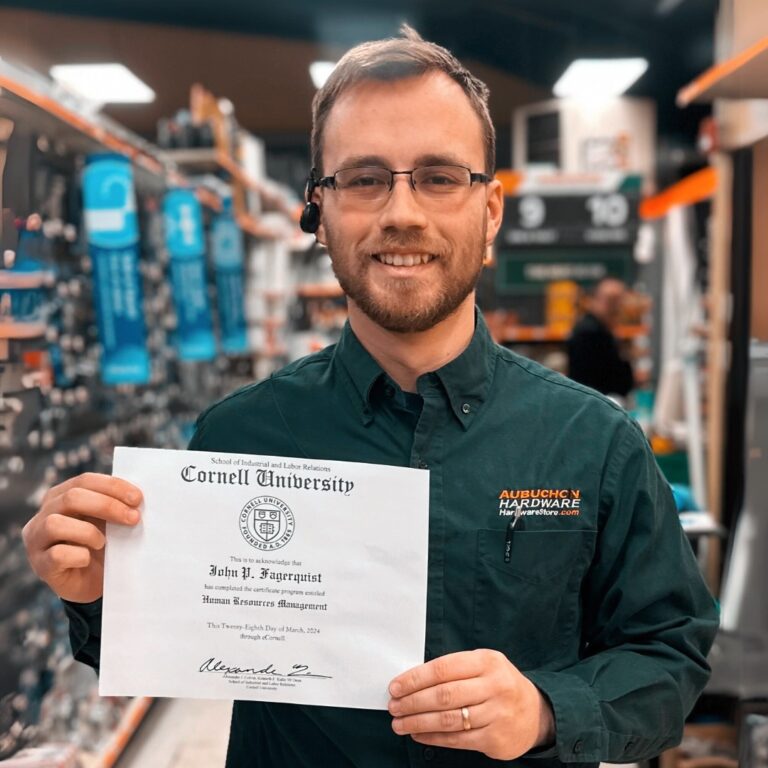
I decided to invest in my future and work toward a career in HR. As a dad of two with a full time job, this online program gave me the chance to work when I could. It was a fantastic way for me to develop my skills and advance my career.
‐ John F.
What You'll Earn
- Compliance Systems Certificate from Cornell Law School
- 60 Professional Development Hours (6.0 CEUs)
Watch the Video
Hear eCornell students share their stories.
Who Should Enroll
- HR professionals
- Compliance officers
- Finance and accounting professionals
- Health and safety managers
- Process control professionals
- Operations professionals
- Lawyers and legal professionals
Frequently Asked Questions
Modern organizations run on policies, procedures, and controls, but many compliance breakdowns come from rule systems that were never intentionally designed, clearly communicated, or sustainably enforced. Cornell’s Compliance Systems Certificate helps you step back and build a practical, end-to-end approach to compliance operations so your rules protect value, reduce risk, and support the business instead of slowing it down.
In this certificate program, authored by faculty from Cornell Law School, you will learn how to map and evaluate rule systems, write clearer and more usable rules, train people in ways that actually stick, design policing and monitoring that is both effective and efficient, and respond to violations with investigations and continuous improvement. You will repeatedly apply tools like the Compliance Circle, risk likelihood and severity analysis, root-cause methods (including the Five Whys and fishbone diagrams), and frameworks for auditing, whistleblowing, and reporting.
If you want a practical blueprint for building stronger compliance rule systems, the skills to train, police, and investigate violations, and the confidence to improve compliance operations without adding unnecessary bureaucracy, you should choose Cornell's Compliance Systems Certificate.
Many online compliance offerings focus on content consumption, such as reading policies or watching videos, with limited opportunity to practice building a compliance system that works inside real operational constraints. Cornell’s Compliance Systems Certificate is designed for application, so you repeatedly translate concepts into usable outputs for your workplace, supported by expert facilitation and peer discussion.
You learn in a small cohort model with an expert facilitator who guides discussions and provides feedback on your project work, so you are not left to interpret complex compliance trade-offs alone. The learning experience blends short, focused lessons with structured activities that mirror real compliance work, such as simplifying dense rule language, choosing training alternatives based on cost and risk, selecting a toolbox of policing controls that minimizes operational drag, and planning investigations and reports that leadership can act on.
Because the Compliance Systems Certificate is designed by Cornell faculty and built around competency-based, on-the-job projects, the program is aimed at helping you improve how compliance operates in practice, not just what compliance is in theory.
Enrolling in this certificate also provides you with a 6-month All-Access Pass to eCornell's live online AI Workshops, interactive sessions led by world-class Cornell faculty that combine Ivy League insight with practical applications for busy professionals. Each 3-hour Workshop features structured instruction, guided practice, and real tools to build competitive AI capabilities, plus the opportunity to connect with a global cohort of growth-oriented peers. While AI Workshops are not required, they enhance certificate programs through:
- Integrating AI perspectives across most curricula
- Responding to emerging AI developments and trends
- Offering direct engagement with Cornell faculty at the forefront of AI research
The strongest fit for Cornell’s Compliance Systems Certificate is a professional who needs to design, operate, or improve rule systems that people will actually follow, whether your title is formally in compliance or not.
The program is designed for:
- HR professionals supporting policies, training, investigations, and employee relations
- Compliance and ethics professionals building sustainable monitoring and reporting programs
- Finance, accounting, and audit professionals strengthening controls and preventing misconduct
- Health and safety managers implementing rules that protect people and operations
- Operations and process-control professionals who need rule systems that reduce risk without adding unnecessary drag
- Lawyers and legal professionals who translate legal requirements into workable organizational systems
A legal background is not presented as a requirement for Cornell’s Compliance Systems Certificate. The learning is structured to help you explain, implement, and improve compliance systems in plain language, with tools you can apply in many industries.
Your project work in Cornell’s Compliance Systems Certificate is built around the real compliance rule systems that exist in organizations, and each course uses a multi-part project so you can develop practical outputs step by step:
- Categorizing existing rule systems in your organization, connecting them to risk management, tracing root causes, and mapping a policy onto a complete Compliance Circle (goal, rules, training, policing, investigation, enforcement, assessment)
- Translating complex rule language into simpler, clearer guidance, then redesigning how the policy is presented for a specific audience using relevance statements and visual or advertising-style design principles
- Deciding when training is necessary versus when alternatives (such as checklists, signage, or quizzes) could work, then designing a training approach that uses ethos, pathos, and logos to improve engagement and retention
- Evaluating whether current policing matches the importance of a rule, assessing the effectiveness of selected policing tools, and analyzing a real-world compliance failure scenario to identify vulnerabilities
- Building an investigation plan, applying structured interviewing techniques to a fact pattern, and drafting an investigative report with findings and recommended actions
- Choosing appropriate responses to individual violations, selecting organizational-level interventions for systemic issues, and diagnosing why a rule system failed to adapt over time so you can propose improvements
Across Cornell’s Compliance Systems Certificate, you will be asked to remove or redact confidential information when applying course concepts to workplace situations, so you can get relevant feedback while protecting sensitive details.
Cornell’s Compliance Systems Certificate helps you build practical, end-to-end compliance capability you can use to operate and improve policies, training, monitoring, investigations, and enforcement.
After completing the Compliance Systems Certificate, you will be prepared to:
- Map policy systems in your organization to their intended purposes and functions, and identify incongruities and failure points
- Create rules that serve their underlying purpose and are understandable to their target audiences
- Select and develop effective policing tools to monitor compliance
- Plan and conduct effective investigations in response to compliance system violations
Learners report that the program changes how they approach compliance operations and helps them build stronger compliance programs right away by providing reusable frameworks, checklists, and tools for policy design, training delivery, investigations, audits, and day-to-day compliance decision making. Students also highlight increased confidence for moving into new or expanded compliance responsibilities, plus the ability to explain complex legal and compliance concepts in plain language and apply them in realistic scenarios alongside feedback from responsive facilitators and insights from other working professionals.
What truly sets eCornell apart is how our programs unlock genuine career transformation. Learners earn promotions to senior positions, enjoy meaningful salary growth, build valuable professional networks, and navigate successful career transitions.
Cornell’s Compliance Systems Certificate, which consists of 6 short courses, is designed to be completed in 3 months. Each course runs for 2 weeks, with a typical weekly time commitment of 3 to 5 hours.
Designed for working professionals, flexibility comes from a blended online experience. You complete most coursework asynchronously, including videos, readings, discussions, and project submissions, and you have opportunities for live online sessions with your facilitator and cohort that focus on discussion, application, and questions. This structure lets you keep moving on your own schedule while still benefiting from expert guidance and accountability.
Students in Cornell’s Compliance Systems Certificate consistently describe it as a practical, career-relevant program that changes how they approach compliance operations and helps them build stronger, more effective compliance programs right away. They frequently point to the way the program blends clear instruction with applied projects, giving them frameworks and tools they can use for policy, training, investigations, audits, and day-to-day compliance decision making.
Common themes students highlight include:
- A structured approach to designing and evaluating compliance rule systems
- Practical guidance for building policies, procedures, and employee training programs
- Clear methods for identifying audiences and delivering persuasive, effective compliance training
- Realistic scenarios and exercises that mirror compliance, fraud, audit, and regulatory challenges
- Tools, checklists, and takeaways they keep and reuse on the job
- Strong instruction in explaining complex legal and compliance concepts in plain language
- A learning experience that supports growth into new or expanded compliance roles
- Engaging discussions that surface useful perspectives from other working professionals
- High-quality faculty and responsive facilitators who deepen understanding through actionable feedback
- A flexible, self-paced format that fits demanding full-time schedules
- Short, focused lessons that make it easy to stay on track without sacrificing depth
- A user-friendly online platform that keeps coursework organized and manageable
Overall, students say Cornell’s Compliance Systems Certificate delivers high-value, immediately applicable learning they can translate into better compliance practices and stronger professional confidence.
Most professionals enter Cornell’s Compliance Systems Certificate with experience working around policies and procedures, but a formal legal background is not described as a prerequisite. The program is built to help you learn how rules work inside organizations and how to design rule systems that are understandable, teachable, and sustainable.
You will be well positioned for success if you can bring a real workplace context, such as an HR policy, a safety procedure, a finance control, or an operations standard, because the projects ask you to analyze and improve rule systems you can observe firsthand. When you apply program tools to your work, you should redact or remove confidential details before submission so you can still receive meaningful feedback without exposing sensitive information.
When a rule is broken, organizations often lose time and credibility because they don’t have a clear investigation plan, consistent interviewing practices, or a reporting format leaders can act on. Cornell’s Compliance Systems Certificate equips you with a practical investigation workflow so you can respond quickly, gather reliable information, and translate findings into corrective action.
You will learn how to decide when an investigation is necessary, map the relevant business process, preserve documentation, and scope the work to avoid unnecessary disruption. You’ll also practice structured, respectful interviewing techniques that focus on information gathering, including moving from open-ended to closed questions (the funnel) and handling inconsistencies without turning the interview into an interrogation. Finally, you’ll develop skills for producing an investigative report that balances clarity with appropriate audience considerations and ends with actionable recommendations.
Fraud and intentional misconduct require a different mindset than accidental noncompliance, because determined rule breakers study controls and look for predictable gaps. Cornell’s Compliance Systems Certificate helps you design policing and monitoring that can both deter misconduct and surface problems early.
You will explore how to choose a balanced mix of direct and indirect policing tools, decide when visible versus invisible controls are appropriate, and build defense in depth for high-consequence risks. Cornell’s Compliance Systems Certificate also addresses the fraud triangle (pressure, rationalization, opportunity), with emphasis on reducing opportunity through stronger controls and less predictable, more asymmetrical monitoring. You also learn how whistleblower channels can serve as a powerful detection mechanism, and what organizational mechanisms help make reporting safer and more effective.
Explore Related Programs















Request Information Now by completing the form below.
Act today—courses are filling fast.
Purchase Options
3900

Compliance Systems
| Select Payment Method | Cost |
|---|---|
| $3,900 | |
Review Program Pricing and Details