
Course list

Every property's finance function keeps detailed records of the daily transactions involved in the running the organization. Periodically, they create reports that allow management, stakeholders and regulating authorities to have insight into the financial health of the organization. As a manager, you need to understand both the metrics that are reported in income statement, balance sheets, and cash flow statements, and how they relate to each other. You also need to understand how comparing numbers across your company, the industry, and from year to year, can help you assess the overall financial performance of the firm.

The in-depth review of sample case studies in this course will provide you with the tools you need to examine your own property's reports. As you make budgeting and investment decisions, your knowledge of how vital financial markers indicate relative health in the organization will help drive initiatives to meet your company's financial goals.

  • Apr 29, 2026
  • May 13, 2026
  • May 27, 2026
  • Jun 10, 2026
  • Jun 24, 2026
  • Jul 8, 2026
  • Jul 22, 2026

In this course, you will create a strategy to turn a work group into a high-functioning team by evaluating challenges and applying techniques to generate positive team outcomes. Based on the research and expertise of Professor Kate Walsh, PhD, of Cornell University's School of Hotel Administration, you will learn how to enable a team to take ownership of its own success and shift leadership roles as the team assumes greater responsibility. 

Using tools provided in this course, you will explore best practices in leading teams, assess case studies, and examine functional conflict. With the completion of an action plan at the end of the course, you will be ready to apply what you learn to your own organization.

  • Apr 8, 2026
  • Apr 22, 2026
  • May 6, 2026
  • May 20, 2026
  • Jun 3, 2026
  • Jun 17, 2026
  • Jul 1, 2026

Services marketing is often viewed in terms of outcomes, but services marketing is also an ongoing analytic process. In this course, you will learn how to properly analyze frameworks, tools, channels, data sets, customer behavioral data, decision-making factors, and strategies that support broader marketing decisions.

Authored by Robert Kwortnik from Cornell University's School of Hotel Administration, this course will teach you how to review the way marketing works in your organization and how to create and apply a services marketing process.

  • Apr 1, 2026
  • Apr 15, 2026
  • Apr 29, 2026
  • May 13, 2026
  • May 27, 2026
  • Jun 10, 2026
  • Jun 24, 2026

Have you traveled recently? More than likely, you used the internet to search for the “best” price in whatever way you might define that: a combination of room, car rental, and airline seat class prices; discounts; travel dates; length of stay; and so on. Conversely, as a decision maker in the hospitality industry, you cannot escape the influence of search engines, online travel agents, and social media on how you price your product. In this course, you will explore various revenue management, pricing, and internet marketing strategies and tactics that can enable you to maximize revenue at your firm.

Revenue management is about rejecting current opportunities for potential future opportunities while maximizing profit. Pricing has also become an increasingly important mechanism in a firm's profits. In this course, you will begin by examining how to incorporate uncertainty in setting prices along with the trade-offs between demand and price. Calculating breakeven rates will assist you in determining where to set prices.

Your customers have varying appetites for risk; in hospitality, this entails whether they will book now or wait for a lower price. How your competitors react to price changes you make will impact your revenue as well, and you will explore a model for framing these interactions.

Finally, you can optimize your position on internet search results and increase conversions by applying the search engine optimization strategies that you will explore in this course. These strategies can increase your visibility to target customers.

This course includes a pricing simulation game, where you will first compete against the computer to set prices competitively, then you will play the game with your peers. We recommend that you start the game immediately to ensure that you have enough time to experience (and enjoy!) the game in the final module.

  • Jun 10, 2026
  • Aug 5, 2026
  • Sep 30, 2026
  • Nov 25, 2026

Loyal repeat customers are key to the success of any food and beverage operation. They represent recurring revenue and are a great source for feedback and gauging customer sentiment. They can also be your greatest evangelists, recommending you to friends and colleagues, even giving favorable online reviews.

Through careful design, meticulous attention to service processes, and a way to gauge customer sentiment, you can play to your team's strengths and identify opportunities for improving the guest experience to grow your business.

  • Apr 15, 2026
  • Apr 29, 2026
  • May 13, 2026
  • May 27, 2026
  • Jun 10, 2026
  • Jun 24, 2026
  • Jul 8, 2026

Running a successful hotel today is a highly collaborative process involving many roles.

This course is structured around the four key stages in the guest experience -- pre-arrival, arrival, occupancy, and departure -- and will explain hotel operations, the systems that hotels rely on, and the managers and staff who run them. During the guests' experience, managers and staff will learn how to engage with guests to win and maintain their loyalty.

Professor Reneta McCarthy brings first-hand knowledge of hotel operations to this course, providing insights and guidelines that will give participants a good understanding of the inner workings of today's hotels.

  • Apr 29, 2026
  • May 27, 2026
  • Jun 24, 2026
  • Jul 22, 2026
  • Aug 19, 2026
  • Sep 16, 2026
  • Oct 14, 2026

Symposium sessions feature two days of live, highly interactive virtual Zoom sessions that will explore today’s most pressing topics. The Leadership Symposium offers you a unique opportunity to engage in real-time conversations with peers and experts from the Cornell community and beyond. Using the context of your own experiences, you will take part in reflections and small-group discussions to build on the skills and knowledge you have gained from your courses.

Join us for the next Symposium in which we’ll discuss the ways that leaders across industries have continued engaging their teams over the past two years while pivoting in strategic ways. You will support your coursework by applying your knowledge and experiences to relevant topics for leaders. Throughout this Symposium, you will examine different areas of leadership, including innovation, strategy, and engagement. By participating in relevant and engaging discussions, you will discover a variety of perspectives and build connections with your fellow participants from various industries.

          All sessions are held on Zoom.

          Future dates are subject to change. You may participate in as many sessions as you wish. Attending Symposium sessions is not required to successfully complete any certificate program. Once enrolled in your courses, you will receive information about upcoming events. Accessibility accommodations will be available upon request.

          Symposium sessions feature two days of live, highly interactive virtual Zoom sessions that will explore today’s most pressing topics. The Hospitality Symposium offers you a unique opportunity to engage in real-time conversations with peers and experts from the Cornell community and beyond. Using the context of your own experiences, you will take part in reflections and small-group discussions to build on the skills and knowledge you have gained from your courses.

          Join us for the next Symposium, in which we’ll discuss how both day-to-day operations and strategic goal setting in the hospitality sector have rapidly evolved over the past two years, opening up new space for real-time conversations about the future of the industry. You will support your coursework by applying your knowledge and experiences to various areas of the industry, examining the innovations and accommodations you have all had to make throughout the COVID-19 pandemic and strategizing on future directions. By participating in relevant and engaging discussions, you will discover a variety of perspectives and build connections with your fellow participants from across the industry.

          All sessions are held on Zoom.

          Future dates are subject to change. You may participate in as many sessions as you wish. Attending Symposium sessions is not required to successfully complete any certificate program. Once enrolled in your courses, you will receive information about upcoming events. Accessibility accommodations will be available upon request.

          Symposium sessions feature two days of live, highly interactive virtual Zoom sessions that will explore today’s most pressing topics. The Marketing Symposium offers you a unique opportunity to engage in real-time conversations with peers and experts from the Cornell community and beyond. Using the context of your own experiences, you will take part in reflections and small-group discussions to build on the skills and knowledge you have gained from your courses.

          Join us for the next Symposium, in which we’ll share experiences from across the industry, inspiring real-time conversations about best practices, innovation, and the future of marketing work. You will support your coursework by applying your knowledge and experiences to some of the most pressing topics and trends in the marketing field. By participating in relevant and engaging discussions, you will discover a variety of perspectives and build connections with your fellow participants from across the industry.

          All sessions are held on Zoom.

          Future dates are subject to change. You may participate in as many sessions as you wish. Attending Symposium sessions is not required to successfully complete any certificate program. Once enrolled in your courses, you will receive information about upcoming events. Accessibility accommodations will be available upon request.

          eCornell Online Workshops are live, interactive 3-hour learning experiences led by Cornell faculty experts. These premium short-format sessions focus on AI topics and are designed for busy professionals who want to gain immediately applicable skills and strategic perspectives. Workshops include faculty presentations, breakout discussions, and guided hands-on practice.

          The AI Workshops All-Access Pass provides you with unlimited participation for 6 months from your date of purchase. Whether you choose to attend one workshop per month, or several per week, the All-Access Pass will allow you to customize your AI journey and stay on top of the latest AI trends.

          Workshops cover a range of cutting-edge AI topics applicable across industries, hosted by Cornell faculty at the forefront of their fields. Whether you are just getting started with AI, seeking to build your AI skillset, or exploring advanced applications of AI, Workshops will provide you with an action-oriented learning experience for immediate application in your career. Sample Workshops include:

          • Work Smarter with AI Agents: Individual and Team Effectiveness
          • Leading AI Transformation: Bigger Than You Imagine, Harder Than You Expect
          • Using AI at Work: Practical Choices and Better Results
          • Search & Discoverability in the Era of AI
          • Don't Just Prompt AI - Govern it
          • AI-Powered Product Manager
          • Leverage AI and Human Connection to Lead through Uncertainty

          Request
          more Info
          by completing the form below.

          Act today—courses are filling fast.

          How It Works

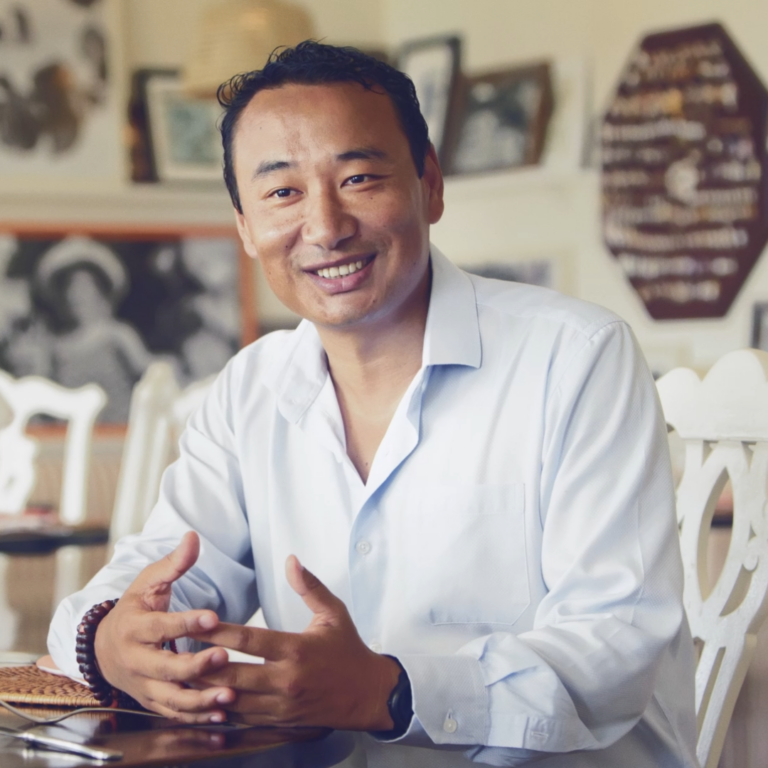
          Cornell University definitely changed my life.
          ‐ Chorten W.
          Chorten W.

          Frequently Asked Questions

          Hospitality managers are expected to deliver consistent service, lead teams, and make financially sound decisions while responding to shifting demand, online reviews, and digital booking behavior. In this certificate program, you will build a practical, cross-functional foundation you can apply immediately, from hotel operations across the guest cycle to guest loyalty, services marketing, revenue management, pricing, and financial statement analysis.

          You will learn from a curriculum authored by faculty from the prestigious Nolan School of Hotel Administration at the Cornell SC Johnson College of Business, and you'll practice turning concepts into action through structured, real-world projects. By the end of the program, you'll be better equipped to collaborate across departments, evaluate performance with the right metrics, and make decisions that strengthen both the guest experience and business results.

          If you want to manage hotel operations across the entire guest cycle, lead high-performing hospitality teams, and make confident decisions that strengthen both guest experience and business results, you should choose Cornell's Hospitality Management Certificate.

          Unlike generic business programs, this certificate is built specifically around the hotel guest cycle — from pre-arrival through departure — with projects that address actual hospitality challenges like service recovery, team performance in high-pressure environments, financial analysis, and revenue optimization. All of this will be in a structured, cohort-based environment designed for working professionals, not in an isolated, self-study experience.

          Courses combine faculty-authored content with active, applied learning so you can practice what you're learning in your own context. Key elements of the learning experience include:

          • Expert facilitation and tailored feedback on hospitality-specific projects
          • Interactive learning design featuring hotel operations scenarios, guest feedback analysis, and revenue management simulations
          • Workplace-relevant projects such as evaluating multi-platform hotel reviews, creating service blueprints for restaurant concepts, and analyzing competing hospitality businesses' financial statements
          • A small-cohort model connecting you specifically with hospitality and service professionals for industry-relevant peer learning and perspective sharing

          The Hospitality Management Certificate is designed for hospitality professionals who want to strengthen their ability to manage across the operation, not just within a single function.

          It is a strong fit if you:

          • Work in any hotel or hospitality function and want a clearer end-to-end view of how the property operates
          • Are moving into a hotel management role and need grounding in operations, service, marketing, pricing, and finance
          • Are a new or developing hotel leader who wants practical tools for building high-performing teams and improving day-to-day execution
          • Need to become more confident reading financial statements and using performance metrics to support better decisions

          You will complete applied, multi-part projects that help you turn course concepts into practical outputs for real hospitality and service environments. Past learners have completed projects such as:

          • Evaluating recent guest reviews for a luxury lifestyle hotel and translating recurring themes into clear strengths, operational gaps, and a practical stay decision grounded in real traveler priorities
          • Synthesizing multi-platform feedback for a modern select-service urban hotel and pinpointing the top drivers of satisfaction alongside consistent pain points such as privacy, maintenance consistency, and fee transparency
          • Designing a fast-paced lunch service standard with measurable timing targets, role-based responsibilities, and specific guest-feedback prompts to protect both speed and perceived attentiveness
          • Building a detailed service blueprint for a communal small-plates concept by defining arrival, menu guidance, and pacing standards, then connecting them to survey and mystery shopping questions that drive continuous improvement
          • Analyzing competing business financial statements and using specific profitability, liquidity, leverage, and cash flow indicators to justify which acquisition offers the strongest foundation for entering a premium coffee segment

          Across the certificate, you will also work on projects that mirror core management decisions, such as diagnosing and improving team performance, mapping your organization’s services marketing process, and practicing pricing and revenue trade-offs through a simulation-based experience.

          This certificate equips you to operate more effectively as a hospitality manager by strengthening your ability to lead teams, improve guest experiences, and make confident decisions using marketing, revenue, and financial insights.

          After completing the Hospitality Management Certificate, you will:

          • Describe hotel revenue management and its benefits
          • Assess the role of marketing in your organization
          • Understand the principles of financial statements * Identify online sources of financial information
          • Create strategies to develop a high-functioning team
          • Identify service recovery strategies that satisfy guests and prevent problems from occurring again
          • Estimate the marginal value of capacity and plan allocations
          • Evaluate competitive responses to pricing actions
          • Simulate how consumers find prices

          Students commonly report that the program translates quickly into better on-the-job performance because it is practical, well organized, and designed for application. They highlight flexible pacing that works around demanding schedules, action-oriented assignments tied to their role or organization, and reusable tools such as templates, metrics, checklists, and worksheets. Many also note increased confidence in areas like operations, guest experience, marketing, leadership, revenue and pricing, and financial analysis, along with a stronger professional vocabulary and more strategic perspective for collaborating across departments.

          The Hospitality Management Certificate, which consists of 6 short courses, is designed to be completed in 3 months. Each course in this certificate runs for 2 weeks, with a typical weekly time commitment of 3 to 7 hours.

          The experience is designed to be flexible for full-time professionals. You will complete most coursework asynchronously on your own schedule (such as videos, readings, quizzes, and project work) while benefiting from a facilitated course structure with defined milestones to help you stay on track.

          Students commonly describe this program as a highly practical, career-relevant learning experience that fits smoothly into a busy professional schedule. Many say the coursework helps them build a clear, end-to-end understanding of core hospitality and business concepts then immediately translate those concepts into better decisions and stronger performance at work.

          Across responses, students frequently highlight:

          • Flexible, self-paced structure that works around demanding schedules
          • Clear, well-organized modules that make complex topics approachable
          • Strong balance of academic credibility and real-world application
          • Action-oriented assignments that connect directly to a learner’s own role or organization
          • Practical tools and frameworks (e.g., worksheets, templates, metrics, checklists) they can reuse on the job
          • Engaging learning formats, such as short videos, quizzes, scenarios, discussions, and, in some courses, simulations
          • Expert instruction paired with supportive facilitation and detailed, timely feedback
          • Increased confidence applying skills in areas like operations, guest experience, marketing, leadership, revenue/pricing, and financial analysis

          Many learners also note that the program strengthens their professional vocabulary and strategic perspective, helping them collaborate more effectively across departments, think more analytically, and feel better prepared for career growth or a transition into new responsibilities.

          Yes. You will learn hotel operations through the full guest cycle, including pre-arrival, arrival, occupancy, and departure. You'll examine how departments and systems work together to deliver service at each stage, and you'll practice applying service delivery and service recovery approaches to common operational issues.

          You will also work with core hotel performance concepts and terminology, including chain-scale segments and key operating metrics, so you can communicate more effectively across front office, housekeeping, and other operational teams.

          You will learn how revenue management and pricing decisions are made in service businesses where capacity is perishable and how digital channels influence both price transparency and demand. You'll practice techniques for:

          • Estimating the marginal value of capacity and making allocation decisions under uncertain demand
          • Calculating breakeven impacts before changing price, including how variable costs can change the breakeven point
          • Anticipating competitor reactions to pricing actions and recognizing situations where price competition can hurt profitability
          • Understanding how consumers find prices through search engines, online travel agents, and review platforms
          • Improving visibility and conversion with search-focused tactics such as keyword selection and pay-per-click bidding decisions

          You will also participate in a pricing simulation to see how pricing and marketing levers interact in a competitive marketplace.

          Yes. You will build practical fluency with the income statement, balance sheet, and cash flow statement, including how the three statements connect and what key metrics reveal about performance.

          You will practice common managerial analyses such as comparing results across time periods and across firms, creating common-size statements, and separating cash performance from accounting profit. You'll also learn where to find reliable public financial information so you can benchmark companies and industries when you need additional context for decisions.