
Course list

People may assume that it's employee satisfaction or commitment to their job that promotes higher performance, but it's engagement. In this course, you will examine the foundational drivers of engagement and explore the components of successful engagement initiatives. When completed, this course will help you identify strategies for bringing about engagement in organizations.

In companies where 60-70% of employees are engaged, shareholder returns are approximately 24%. Compare that to companies where only 50-60% of employees are engaged: shareholder returns are as low as approximately 5%. Similarly, teams with high engagement experience 4.1% turnover, as opposed to approximately 14.5% turnover for teams with low engagement.  These figures clearly illustrate the significant impact that managers and HR professionals can have if they better understand what impacts the engagement of employees.

  • Apr 22, 2026
  • May 6, 2026
  • May 20, 2026
  • Jun 3, 2026
  • Jun 17, 2026
  • Jul 1, 2026
  • Jul 15, 2026
In this course, you will learn about perceptual and psychological processes that impact the way that individuals interact with people who are demographically dissimilar from them. You will examine psychological processes that impact personnel decision making within organizations. This understanding will help HR professionals to design better practices and will help line managers to more effectively leverage the potential among employees from diverse backgrounds.

The course will also help you understand why “Diversity” is now often referred to as “Diversity & Inclusion” by explaining what inclusion is and how it differs from diversity. Why is inclusion so important, and what are its building blocks?
  • May 6, 2026
  • Jun 3, 2026
  • Jun 17, 2026
  • Jul 1, 2026
  • Jul 15, 2026
  • Jul 29, 2026
  • Aug 12, 2026

The management of diversity, equity, and inclusion has evolved from "counting the numbers" to "making the numbers count." Organizations that no longer look at inclusion as having a good mix of diverse people, but as a way to fully engage employees, partners and customers have an opportunity to compete globally. Diversity, equity, and inclusion must be embedded in an organizational culture to make a positive impact on performance.

This course, based on the expertise of Cornell University Professor Lisa Nishii, differentiates diversity from inclusion and how organizations often miss the real opportunity. Students assess three levels of inclusion and identify evidence that can be used for each level to assess presence and effectiveness. HR executives and leaders share their perspective on diversity and inclusion and how they made the shift to inclusion at organizational, managerial and work group levels.

  • Apr 22, 2026
  • May 6, 2026
  • May 20, 2026
  • Jun 3, 2026
  • Jun 17, 2026
  • Jul 1, 2026
  • Jul 15, 2026

Inclusion is a relational construct. It's ultimately about how your team functions and performs based on the quality of social connections, openness to learning, agility, and depth of decision making. How can you foster greater inclusion within your workgroup? Throughout these modules, you will be asked to reflect upon your own experiences and apply the lessons in the modules in your own role.

You will examine the concept of climate, specifically inclusive climates, as well as learn about the specific behaviors and skills you need to demonstrate in order to be successful in shaping an inclusive climate.

  • Apr 22, 2026
  • Jun 17, 2026
  • Jul 15, 2026
  • Aug 12, 2026
  • Sep 9, 2026
  • Oct 7, 2026
  • Nov 4, 2026

Symposium sessions feature two days of live, highly interactive virtual Zoom sessions to explore today's most pressing topics. The Workplace Belonging Symposium offers you a unique opportunity to engage in real-time conversations with peers and experts from the Cornell community and beyond. Using the context of your own experiences, you will take part in reflections and small-group discussions to build on the skills and knowledge you have gained from your courses.

Belonging isn't just a feel-good concept—it's a cornerstone of the human experience that shapes our health, relationships, professional success, and creative potential. By participating in dynamic and relevant dialogues, you will discover a variety of perspectives and create genuine connections with participants from diverse industries and backgrounds.

All sessions are held on Zoom.

You may participate in as many sessions as you wish. Attending Symposium sessions is not required to successfully complete the certificate program. Once enrolled in your courses, you will receive information about upcoming events. Accessibility accommodations will be available upon request.

Symposium sessions feature two days of live, highly interactive virtual Zoom sessions that will explore today’s most pressing topics. The HR Symposium offers you a unique opportunity to engage in real-time conversations with peers and experts from the Cornell community and beyond. Using the context of your own experiences, you will take part in reflections and small-group discussions to build on the skills and knowledge you have gained from your courses.

Join us for the next Symposium, in which we’ll share experiences from across the industry, inspiring real-time conversations about best practices, innovation, and the future of human resources work. You will support your coursework by applying your knowledge and experiences to some of the most pressing topics and trends in the HR field. By participating in relevant and engaging discussions, you will discover a variety of perspectives and build connections with your fellow participants from across the industry.

All sessions are held on Zoom.

Future dates are subject to change. You may participate in as many sessions as you wish. Attending Symposium sessions is not required to successfully complete any certificate program. Once enrolled in your courses, you will receive information about upcoming events. Accessibility accommodations will be available upon request.

eCornell Online Workshops are live, interactive 3-hour learning experiences led by Cornell faculty experts. These premium short-format sessions focus on AI topics and are designed for busy professionals who want to gain immediately applicable skills and strategic perspectives. Workshops include faculty presentations, breakout discussions, and guided hands-on practice.

The AI Workshops All-Access Pass provides you with unlimited participation for 6 months from your date of purchase. Whether you choose to attend one workshop per month, or several per week, the All-Access Pass will allow you to customize your AI journey and stay on top of the latest AI trends.

Workshops cover a range of cutting-edge AI topics applicable across industries, hosted by Cornell faculty at the forefront of their fields. Whether you are just getting started with AI, seeking to build your AI skillset, or exploring advanced applications of AI, Workshops will provide you with an action-oriented learning experience for immediate application in your career. Sample Workshops include:

  • Work Smarter with AI Agents: Individual and Team Effectiveness
  • Leading AI Transformation: Bigger Than You Imagine, Harder Than You Expect
  • Using AI at Work: Practical Choices and Better Results
  • Search & Discoverability in the Era of AI
  • Don't Just Prompt AI - Govern it
  • AI-Powered Product Manager
  • Leverage AI and Human Connection to Lead through Uncertainty
In this course, you will learn how to make a focus on disability an explicit part of your overarching business strategy. Starting with a broad overview of the role HR professionals play in addressing workplace disability issues, you will learn about important areas for proactive attention that contribute to people with disabilities thriving in the workplace and minimize disability discrimination across the employment process. You will discuss the importance of workplace and workforce participation for people with disabilities, employers, and the business case for aligning a focus on disability with a company's strategic human-capital, talent management, and customer-service imperatives. You will also dive into the implications of effective HR policies and practices in the recruitment and hiring process, career development and retention initiatives, and compensation and benefits programs. Finally, you will utilize metrics and analytics to measure progress on effective disability workplace policies and practices to realize the benefits of maximizing the participation of talented people with disabilities in your organization.
  • May 6, 2026
  • Jun 3, 2026
  • Jul 1, 2026
  • Jul 29, 2026
  • Aug 26, 2026
  • Sep 23, 2026
  • Oct 21, 2026

It's estimated that approximately one in six people in the United States are now considered to be neurodivergent. Yet nearly 40% of neurodivergent adults are unemployed or underemployed compared to their age peers. Promisingly, in recent years, companies in technology and other industries have come to recognize neurodiverse individuals as a valuable workforce resource, and they have responded by actively recruiting this largely untapped talent pool.

This course provides an overview of emerging Neurodiversity at Work employment programs and outlines the implications for HR policies and practices. Course topics include background information about autism and neurodiversity; models of effective recruitment, screening, and onboarding; supervisor training and support; best practices for career progression, advancement, and retention; and strategies for building a broad array of internal and external support systems.

  • Jul 15, 2026
  • Sep 9, 2026
  • Nov 4, 2026
In this course, developed by Professor Diane Burton, Ph.D. of Cornell University's ILR School, you will learn the skills necessary to reassert your HR role as a trusted, neutral advisor to employees at all levels within your organization. Students will develop coaching skills and learn how to foster a coaching culture while managing organizational HR needs with the most effective response for each situation.
  • Apr 22, 2026
  • May 6, 2026
  • May 20, 2026
  • Jun 3, 2026
  • Jun 17, 2026
  • Jul 1, 2026
  • Jul 15, 2026

Human resource professionals must navigate and deal with a wide range of legal and policy issues in the workplace. They must know the responsibilities and boundaries of their own role, and they must assess issues and consult appropriate legal or expert counsel.

This course will help current and aspiring HR managers and staff to establish a structured framework for systematic analysis of employee issues that may have legal implications. It focuses on the layers of employee rights, the HR role, appropriate consultation with legal counsel, and the use of a step-by-step process in the assessment of workplace issues. By the end of this course, you will develop a systematic foundation for managing employment law issues.

  • May 6, 2026
  • Jun 3, 2026
  • Jul 1, 2026
  • Jul 29, 2026
  • Aug 26, 2026
  • Sep 23, 2026
  • Oct 21, 2026

Request
more Info
by completing the form below.

Act today—courses are filling fast.

How It Works

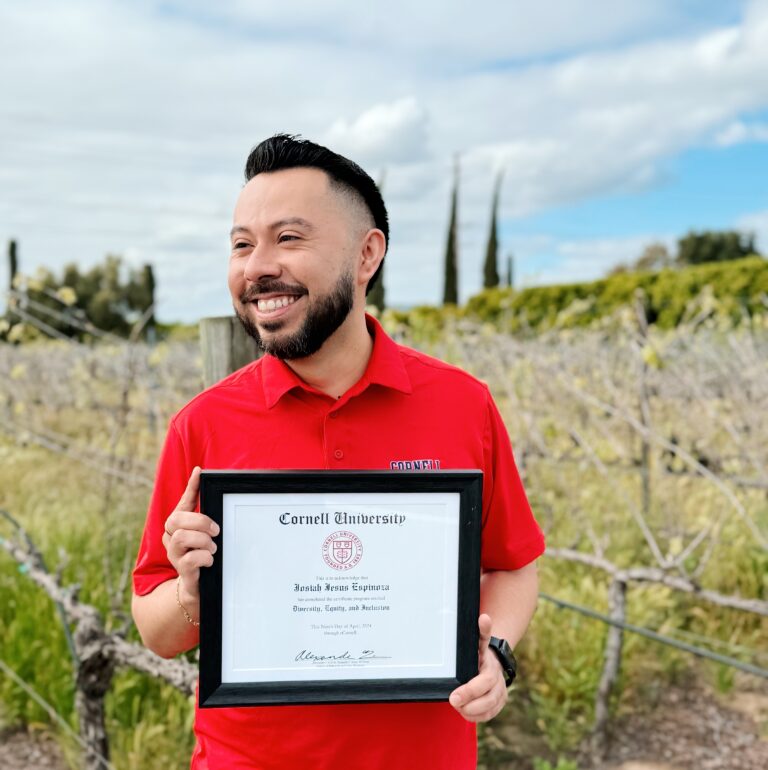
I have always been passionate to voice the voice of the unheard and provide an opportunity to bring everyone to the table. This certificate gave me the experience, tools and skills to do so... It was exactly what I needed.
‐ Josiah E.
Josiah E.

Frequently Asked Questions

Building an inclusive, high-performing culture has become a strategic expectation for HR, not just a compliance responsibility. You need practical ways to recognize bias, create psychological safety, and design HR systems that make inclusion real in day-to-day decisions about hiring, development, performance, and belonging.

In the Diversity, Equity, and Inclusion for HR Certificate, authored by faculty from Cornell’s School of Industrial and Labor Relations, you will build a research-backed foundation in how inclusion works, why unconscious bias persists, and how engagement and inclusion connect to performance. You’ll learn how to assess what is happening in your organization, select interventions that fit your context, and partner with leaders to turn DEI intent into consistent practices at the organizational, manager, and work-group levels.

You will also have the opportunity to tailor the program to your goals by choosing electives that expand your DEI toolkit into disability inclusion and neuroinclusion, including practical guidance on recruiting, accommodation processes, workplace climate, and measurement.

If you want practical frameworks to diagnose inclusion challenges, evidence-based strategies you can implement through HR practices, and the ability to build a culture where people can do their best work, you should choose Cornell's Diversity, Equity, and Inclusion for HR Certificate.

Many online DEI programs focus on awareness without giving you a structured way to diagnose what is happening in your organization and translate it into HR practice. In the Diversity, Equity, and Inclusion for HR Certificate, you learn from Cornell faculty research on inclusion climates, engagement, and bias, then apply it to real HR decisions and workplace dynamics.

You learn in a small cohort with expert facilitation, which means you can test ideas, get feedback on your thinking, and refine your work into deliverables you can actually use. Instead of one-off assignments, you complete applied, multi-part projects that ask you to assess your current state, identify root causes, and recommend interventions with clear goals and accountability.

The content is also distinctive in its scope. Along with core DEI and inclusion strategy, you can choose electives that help you build disability-inclusive and neuroinclusive HR practices, including recruiting and hiring approaches, accommodation and accessibility processes, supervisor support, and metrics and analytics.

Enrolling in this certificate also provides you with a 6-month All-Access Pass to eCornell's live online AI Workshops, interactive sessions led by world-class Cornell faculty that combine Ivy League insight with practical applications for busy professionals. Each 3-hour Workshop features structured instruction, guided practice, and real tools to build competitive AI capabilities, plus the opportunity to connect with a global cohort of growth-oriented peers. While AI Workshops are not required, they enhance certificate programs through:

  • Integrating AI perspectives across most curricula
  • Responding to emerging AI developments and trends
  • Offering direct engagement with Cornell faculty at the forefront of AI research

Plus, by enrolling in the Diversity, Equity, and Inclusion for HR Certificate, you get two years of access to the Workplace Belonging Symposium and HR Symposium, each featuring two days of highly interactive virtual Zoom sessions that explore today’s most pressing topics, giving you opportunities to engage in real-time conversations with your eCornell community.

You finish with a Cornell University credential that clearly signals you can move beyond statements of intent to evidence-based HR systems, manager practices, and measurable progress.

Cornell's Diversity, Equity, and Inclusion for HR Certificate is designed for HR professionals who want to strengthen their ability to build and sustain inclusive workplaces through practical HR policies, processes, and leader partnership.

The Diversity, Equity, and Inclusion for HR Certificate is a strong fit if you:

  • Work in HR and support hiring, performance management, employee relations, learning and development, or culture initiatives
  • Are responsible for advancing DEI in your organization and want a research-backed approach you can apply immediately
  • Want tools to diagnose inclusion and engagement challenges at the organization, work-group, and manager levels
  • Need practical strategies for countering bias in talent decisions and everyday team interactions
  • Want the option to build expertise in disability inclusion and neuroinclusion as part of your broader DEI strategy

Because the program focuses on how to assess context, improve HR practices, and influence leader behavior, it is relevant across industries and organizational sizes.

You will complete applied projects that connect course concepts to situations you are actively navigating in HR and people leadership. Across Cornell's Diversity, Equity, and Inclusion for HR Certificate, you practice assessing your current state, diagnosing root causes, and recommending interventions with clear actions and measures.

Examples of projects learners have completed include:

  • Designing structured meeting norms that balance participation by using turn-taking, pre-meeting idea collection, and clear decision rules to reduce dominance by high-status voice
  • Building a manager accountability system by tying inclusive leadership behaviors to performance expectations, survey follow-through, and transparent action plans rather than relying on ad hoc goodwill
  • Responding to a public cross-team bullying incident by clarifying roles, setting digital conduct standards, and establishing early intervention steps to prevent psychological safety breakdowns and disengagement
  • Improving internal mobility fairness by proposing posted openings, rubric-based selection, and panel reviews to reduce favoritism and expand access to growth opportunities for underrepresented employees
  • Strengthening hybrid and remote inclusion by creating “remote-first” meeting practices, consistent communication routines, and intentional check-ins to prevent remote colleagues from being excluded from informal decisions

As you progress, you also build practical tools you can reuse, such as engagement diagnosis and action planning, bias-interruption strategies for talent decisions and team interactions, and inclusion assessment approaches that look beyond representation to the everyday employee experience.

Cornell's Diversity, Equity, and Inclusion for HR Certificate helps you build credible, practical DEI and inclusion capability that you can apply to HR systems, leader coaching, and culture work.

After completing the Diversity, Equity, and Inclusion for HR Certificate, you will have the skills to:

  • Recognize unconscious bias and how it affects the way that people perceive, evaluate, and react to others
  • Critically assess the HR practices in place and whether they are likely to exacerbate or reduce the negative outcomes associated with unconscious bias
  • Choose appropriate strategies for improving employee engagement and fostering greater inclusion at multiple levels of the organization
  • Build awareness of the stereotypes and biases that may influence behavior in work groups and implement strategies to improve employee psychological safety
  • Understand the dimensions of diversity that matter most in organizations and why
  • Make disability inclusion (including neuroinclusion) an explicit part of your business strategy

Students commonly report that the program strengthens their confidence and momentum by giving them clear language and structure for addressing inclusion, engagement, and workplace dynamics. They highlight practical frameworks, tools, and templates they continue using on the job; realistic cases and scenarios that mirror HR challenges; and research-backed instruction that connects directly to day-to-day management practice. Learners also point to strong facilitator feedback and peer discussion that help them refine how they diagnose issues and propose actions, along with a flexible format that still feels rigorous and workplace-centered.

What truly sets eCornell apart is how our programs unlock genuine career transformation. Learners earn promotions to senior positions, enjoy meaningful salary growth, build valuable professional networks, and navigate successful career transitions.

Cornell’s Diversity, Equity, and Inclusion for HR Certificate, which consists of 6 short courses (4 core and 2 elective), is designed to be completed in 3 months. Each course in this certificate runs for 2 weeks, with a typical weekly time commitment of 3 to 5 hours.

This certificate is designed to be manageable alongside full-time work. In practice, you can expect:

  • Asynchronous course components you complete on your own schedule, including videos, readings, and project work
  • A structured weekly cadence with clear deadlines that helps you stay on track
  • Live, interactive opportunities that deepen learning and let you compare approaches with peers

You can move through the coursework at a steady pace while still getting guidance and feedback as you apply concepts to your workplace.

Students commonly describe Cornell's Diversity, Equity, and Inclusion for HR Certificate as a timely, workplace-centered learning experience that helps them turn DEI and people-leadership concepts into practical actions they can use immediately. Many say the curriculum gives them language and structure to better understand today’s organizational dynamics, plus concrete tools, frameworks, and resources they can bring back to their teams.

What learners highlight most often includes:

  • Practical frameworks for addressing inclusion, engagement, and workplace dynamics with clarity and confidence
  • Realistic case studies and scenarios that mirror HR and leadership challenges across industries
  • Research-backed instruction from Cornell faculty that connects theory to everyday management practice
  • A broader perspective on topics like employee relations, disability inclusion, neurodiversity, and building inclusive cultures
  • Short, focused modules that fit busy professional schedules while still feeling rigorous and meaningful
  • Strong facilitator presence, including personalized feedback that helps learners refine their thinking and application
  • Peer discussion that surfaces multiple viewpoints and sparks reflection on real workplace situations
  • A smooth online experience that is intuitive to navigate and easy to return to as a reference
  • Increased confidence and momentum for professional growth, including immediate ideas to implement with teams and stakeholders

You do not need prior DEI specialization to get value from this program. Cornell's Diversity, Equity, and Inclusion for HR Certificate is designed to build your foundation in how bias and inclusion operate in organizations then help you apply that knowledge to HR practices and manager partnership.

If you are earlier in your HR career, you will gain practical language and structured frameworks for diagnosing issues like disengagement, psychological safety breakdowns, and biased talent decisions. If you are more experienced, you can use the multilevel inclusion assessment approach to evaluate current initiatives and strengthen how your organization measures progress.

Because the work is applied, it helps to have access to workplace examples (your own organization or a prior one). You will be asked to reflect on real processes like recruiting, performance evaluation, team decision making, and employee experience, and to translate insights into specific recommendations.

You can choose electives that help you make disability inclusion and neuroinclusion a visible part of your overall talent and culture strategy.

In the Disability at Work elective course, you focus on practical HR levers across the employment life cycle, including disability-inclusive recruitment and hiring, career development and retention, accessibility and accommodation processes, workplace climate, compensation and benefits, and metrics and analytics you can use to track progress.

In the Neurodiversity at Work elective course, you explore how organizations build effective neurodiversity employment programs. You learn how to adapt recruiting, screening, onboarding, and supervisor support, as well as how to design career development and retention practices and support systems that sustain the program over time.

Together, these options help you broaden your DEI practice into concrete policies, manager supports, and measurement approaches that expand access to opportunity.

In Cornell's Diversity, Equity, and Inclusion for HR Certificate, you will learn how to move from broad DEI goals to specific measures and evidence-based evaluation.

You will explore how to assess inclusion at multiple levels and evaluate whether initiatives are actually improving the employee experience, not just representation. You’ll also practice identifying what evidence is meaningful, how to interpret it, and how to use it to improve design and accountability.

On the engagement side, you learn how to define engagement clearly, diagnose its drivers, interpret engagement data for specific employee groups, and build targeted action plans that managers can own and follow through on.

If you choose the Disability at Work elective, you also gain additional practice building disability metrics and analytics, including tracking hiring flow, retention and advancement patterns, accommodation data, and climate measures.