
Course list

There is no such thing as a workplace that lacks diversity. Despite decades of legal and social reform aimed at reducing discrimination in the workplace, inequality continues to be a significant problem in all societies and most workplaces.

In this course, you will identify the perceptual and psychological processes that impact the way that individuals interact with people who are demographically dissimilar from them. You will examine the psychological processes that impact decision making within organizations and identify how professionals can design better work practices and help to more effectively leverage the potential among employees.

As a trained psychologist with research and consulting expertise related to diversity and inclusion, Cornell University Professor Lisa Nishii is uniquely positioned to help course participants understand the complex dynamics underlying diversity challenges and opportunities within organizations.

  • Apr 22, 2026
  • May 20, 2026
  • Jun 17, 2026
  • Jul 15, 2026
  • Aug 12, 2026
  • Sep 9, 2026
  • Oct 7, 2026

Research shows that positive relationships and effective communication at work have a profound impact on individuals, teams, and organizations. Diminishing role ambiguity, providing employees with task-related help and information, strengthening employees' identification with their work and their workgroups, enhancing progress and change, and fostering collaboration are just some of the key impacts. In this course, you will leverage dialogue tools and frameworks to enhance your leadership skills, while exploring strategies to strengthen connection, communication, and collaboration within your team and organization.

Participation in three 90-minute synchronous dialogue sessions is a requirement for successful completion of this course. These weekly sessions are led by trained facilitators from Cornell's Center for Dialogue & Pluralism and will occur on the three Tuesdays during the course from 7:00 to 8:30pm ET.

The Center for Dialogue & Pluralism (CDP) at Cornell University is an academic initiative grounded in theory and practice. In the last few years, CDP has developed and implemented innovative programs in a variety of settings, aiming to strengthen human connection; foster understanding of differences in identity, opinion, background, and experiences; practice intentional communication; and lead collaborative change processes.

  • May 13, 2026
  • Jul 22, 2026
  • Sep 16, 2026
  • Oct 28, 2026

You can't influence meaningful change without understanding your potential role in both upholding and transforming behaviors, norms, and systems that hinder connection, communication, and collaboration in the workplace. In this course, you will examine specific work-related spheres and settings in which you have influence and impact, and you'll discover how to apply dialogue-based frameworks and tools to improve connection, communication, and collaboration at interpersonal and organizational levels.

Participation in three 90-minute synchronous dialogue sessions is a requirement for successful completion of this course. These weekly sessions are led by trained facilitators from Cornell's Center for Dialogue & Pluralism and will occur on the three Tuesdays during the course from 7:00 to 8:30pm ET.

The Center for Dialogue & Pluralism (CDP) at Cornell is an academic initiative grounded in theory and practice. In the last few years, CDP has developed and implemented innovative programs in a variety of settings, aiming to strengthen human connection; foster understanding of differences in identity, opinion, background, and experiences; practice intentional communication; and lead collaborative change processes.

The following course is required to be completed before taking this course:

  • Dialogue Across Difference
  • Jun 10, 2026
  • Aug 19, 2026
  • Oct 14, 2026
  • Nov 25, 2026

Symposium sessions feature two days of live, highly interactive virtual Zoom sessions to explore today's most pressing topics. The Workplace Belonging Symposium offers you a unique opportunity to engage in real-time conversations with peers and experts from the Cornell community and beyond. Using the context of your own experiences, you will take part in reflections and small-group discussions to build on the skills and knowledge you have gained from your courses.

Belonging isn't just a feel-good concept—it's a cornerstone of the human experience that shapes our health, relationships, professional success, and creative potential. By participating in dynamic and relevant dialogues, you will discover a variety of perspectives and create genuine connections with participants from diverse industries and backgrounds.

All sessions are held on Zoom.

You may participate in as many sessions as you wish. Attending Symposium sessions is not required to successfully complete the certificate program. Once enrolled in your courses, you will receive information about upcoming events. Accessibility accommodations will be available upon request.

How It Works

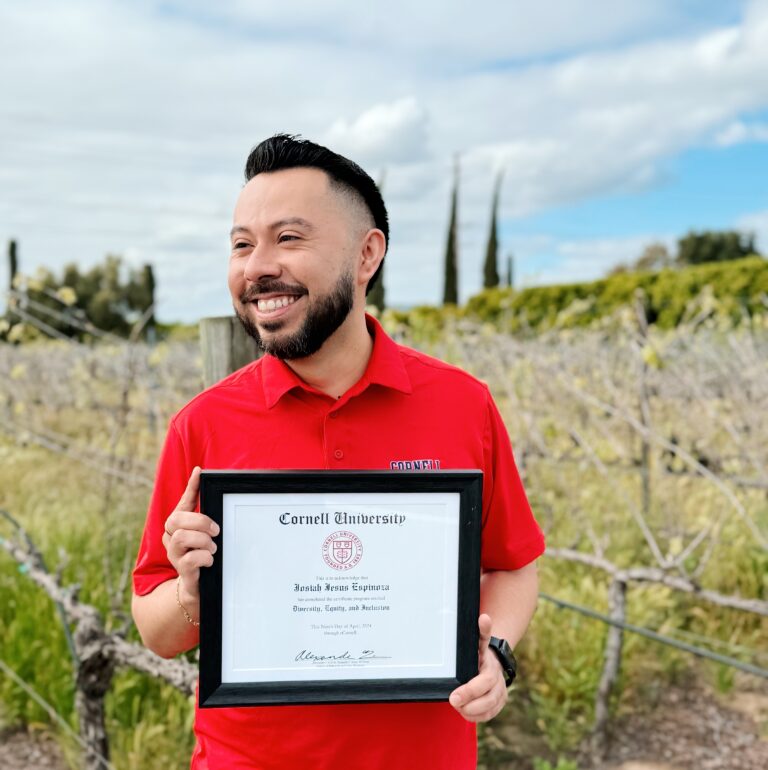
I have always been passionate to voice the voice of the unheard and provide an opportunity to bring everyone to the table. This certificate gave me the experience, tools and skills to do so... It was exactly what I needed.
‐ Josiah E.
Josiah E.

Frequently Asked Questions

Workplaces are asking leaders to do more than manage tasks. You are expected to build trust, reduce friction, and lead productive conversations across differences in identity, background, and perspective, even when stakes are high.

Authored by faculty from Cornell’s School of Industrial and Labor Relations, Cornell’s Leading Through Dialogue and Connection Certificate equips you with research-informed frameworks and repeated practice to strengthen human connection, communicate with intention, and move groups toward collaborative change. You will explore what drives connection and disconnection at work, learn structured ways to listen and respond across differences, and build your ability to influence norms and systems, not just one conversation at a time.

Because the experience is designed for working professionals, you will apply what you learn through guided reflection, discussion with a small cohort, and live, facilitator-led practice sessions that help you turn concepts into behaviors you can use immediately.

If you want practical dialogue tools, real-time practice that builds confidence, and strategies to strengthen connection and collaboration at work, you should choose Cornell's Leading Through Dialogue and Connection Certificate.

Many online programs stop at ideas, videos, and self-check quizzes. Cornell’s Leading Through Dialogue and Connection Certificate is built around human-centered learning that helps you practice how you communicate, not just learn what to believe.

You learn in an intimate, facilitated cohort where discussion is guided and your work is reviewed by an expert facilitator. The learning design blends short, faculty-designed videos and readings with structured reflection, peer dialogue, and live sessions where you practice listening and response skills in real time. That practice component is central, with multiple required synchronous sessions led by trained facilitators from Cornell’s Center for Dialogue & Pluralism.

The content is also deliberately practical and workplace grounded. You examine how identity, power, privilege, and unconscious bias shape everyday decisions and interactions, then apply evidence-based strategies to interrupt bias and improve collaboration.

Plus, by enrolling in Cornell’s Leading Through Dialogue and Connection Certificate, you get two years of access to Workplace Belonging Symposium featuring two days of live, highly interactive virtual Zoom sessions that will explore today’s most pressing topics, giving you a unique opportunity to engage in real-time conversations with peers and experts from the Cornell community and beyond.

Leaders at any level can benefit when the job starts to include harder conversations, cross-functional collaboration, or culture and belonging responsibilities. Cornell’s Leading Through Dialogue and Connection Certificate is designed for professionals who want to strengthen how they build connection and navigate differences at work.

The Leading Through Dialogue and Connection Certificate is a strong fit if you:

  • Manage or supervise a team and want better tools for trust, psychological safety, and productive conflict
  • Lead initiatives that require influence without authority across functions, regions, or perspectives
  • Support culture, inclusion, or employee experience efforts and want research-backed approaches you can apply day to day
  • Want to communicate with more intention in moments that typically trigger defensiveness, misunderstanding, or shutdown

Cornell’s Leading Through Dialogue and Connection Certificate does not require a specific industry background. Your results come from applying the tools to your real relationships, team dynamics, and organizational context.

Your work in Cornell’s Leading Through Dialogue and Connection Certificate is designed to be immediately usable in the real conversations and dynamics you face at work. Instead of a single final exam, you build practical outputs through structured reflections, applied analysis, and action planning.

Across the program, your project work includes:

  • Mapping which dimensions of difference and privilege are most salient in your workplace or profession, and identifying where unearned advantage or disadvantage shows up in day-to-day decisions
  • Observing and documenting how unconscious bias can shape interactions and evaluations (for example, patterns of interruption, idea appropriation, or uneven standards for similar behavior)
  • Auditing a policy, practice, or norm in your organization to assess whether it reduces bias or unintentionally reinforces it
  • Proposing targeted, SMART interventions to interrupt bias and improve fairness and inclusion, grounded in evidence-based “bias interrupter” strategies
  • Completing a multi-part journal that analyzes moments of connection and disconnection, then applying structured dialogue tools in your real conversations
  • Participating in live practice sessions where you use specific listening and response frameworks to engage across differences, followed by reflection on what you will do differently at work

By the end of Cornell’s Leading Through Dialogue and Connection Certificate program, you will have a set of concrete tools, personal insights, and an action plan you can use to strengthen relationships and collaboration in your workplace.

Cornell’s Leading Through Dialogue and Connection Certificate helps you become the kind of leader people trust in complex moments by building practical skills in connection, communication, and collaborative change.

After completing the Leading Through Dialogue and Connection Certificate, you will be prepared to:

  • Examine human connection and disconnection in the workplace
  • Explore dimensions of difference related to identity, background, experiences, and perspectives
  • Practice skills for effective dialogue and mutual understanding
  • Explore opportunities for collaborative change
  • Participate in practice sessions led by trained dialogue facilitators
  • Examine the critical role of leadership in fostering mutual understanding and navigating complex dynamics
  • Identify interventions that will help override errors in judgment and decision making

Students consistently describe long-term benefits that show up directly in day-to-day leadership and teamwork: more confidence navigating difficult conversations, stronger empathy paired with clear structure for how to respond, and a shift from reactive communication to intentional, reflective dialogue. Learners also report that the research-backed frameworks are easy to remember and use, and that the live, small-group practice makes it easier to build trust and communicate across differences at work and in everyday life.

In addition, because eCornell represents the pinnacle of premium online professional education, participants in eCornell's programs often experience long-term career transformation such as promotions to more senior roles, salary increases, improved networking opportunities, and successful career transitions.

Cornell’s Leading Through Dialogue and Connection Certificate, which consists of 3 short courses, is designed to be completed in 3 months. Each course runs for 3 weeks, with a typical weekly time commitment of 3 to 5 hours.

Designed for working professionals, flexibility comes from the fact that most readings, videos, reflections, and discussion posts are completed asynchronously on your schedule. At the same time, the certificate includes required live, 90-minute virtual practice sessions in two of the three courses, scheduled on Tuesdays from 7:00 to 8:30pm ET, which adds helpful structure and real-time skill building.

Because the program is facilitated, you have clear weekly expectations and feedback while still being able to choose when you do most of the coursework during the week.

Students in Cornell’s Leading Through Dialogue and Connection Certificate often describe it as a highly practical, skills-first experience that helps them navigate difficult conversations with more confidence, empathy, and intention. They frequently highlight how the program combines clear, research-informed dialogue frameworks with real-time practice, leading to immediate improvements in how they communicate and build trust at work and in everyday life.

Common themes students share include:

  • Practical dialogue tools for communicating across differences and polarization
  • Research-backed frameworks (for example, structured listening and response models) that are easy to remember and use
  • A shift from reactive responses to more intentional, reflective communication
  • Strong focus on identity, power, privilege, and social identities to deepen understanding and connection
  • Live, small-group practice that builds confidence for real workplace conversations
  • A supportive learning community that makes it easier to engage honestly and learn from peers

Students also consistently praise the overall learning experience, noting:

  • Skilled facilitators who guide discussions thoughtfully and keep sessions engaging
  • Actionable assignments that translate directly to leadership, teamwork, and DEI efforts
  • A blended format (readings, short videos, reflections, and live sessions) that supports different learning styles
  • Manageable pacing for working professionals and flexibility to complete work on their own schedule
  • High-quality feedback that strengthens learning and application on the job

Strong collaboration depends on what you do in the moment when someone disagrees, shuts down, or feels misunderstood. In Cornell’s Leading Through Dialogue and Connection Certificate, you practice concrete frameworks you can carry into meetings, 1:1s, and team conversations.

You will learn and apply tools such as:

  • The 3Ds framework (debate, discussion, dialogue) to choose the right mode for the outcome you need
  • Active and reflective listening techniques that reduce assumptions and improve understanding
  • The LARA method (Listen, Affirm, Respond, Add Information) for engaging across differences without escalating conflict
  • Generative listening practices that create space for new ideas and shared meaning
  • Strategic questioning and shared community agreements that help groups set better norms for participation and respect

Because these tools are practiced in facilitated live sessions and reinforced through reflection, you build both skill and confidence using them in real workplace dynamics through Cornell’s Leading Through Dialogue and Connection Certificate.

Bias at work rarely shows up as an obvious policy statement. It is more often embedded in split-second judgments, everyday interactions, and the informal norms that shape who gets heard, supported, and advanced. Cornell’s Leading Through Dialogue and Connection Certificate helps you make those patterns visible and actionable.

You will be prepared to:

  • Identify the diversity dimensions that tend to carry status and privilege in your context, and understand how those hierarchies can shape opportunity
  • Recognize how schemas and “automatic” thinking can distort perceptions and evaluations, including common microaggressions such as interruptions or idea appropriation
  • Assess whether existing practices reduce bias or unintentionally reinforce it, using structured analysis tools
  • Apply evidence-based bias interrupters, such as agreeing on evaluation criteria upfront, questioning gut reactions, and using inclusive interaction norms to ensure equitable participation

The result is a more practical, day-to-day ability to lead with fairness and improve team dynamics using the tools you build in Cornell’s Leading Through Dialogue and Connection Certificate.

Building comfort with difficult conversations usually takes more than good advice. You need a structure for what to do and a supportive place to practice it. Cornell’s Leading Through Dialogue and Connection Certificate is designed to help you develop those skills through guided reflection and live, facilitated practice.

You will use clear participation norms and community agreements that support respectful engagement, then practice real dialogue skills in small-group sessions led by trained facilitators. Between sessions, you reflect on moments of connection and disconnection at work, apply specific listening and response tools in everyday conversations, and learn from peer perspectives through structured discussion.

If you tend to avoid conflict, over-accommodate, or get reactive under pressure, Cornell’s Leading Through Dialogue and Connection Certificate gives you repeatable frameworks and practice opportunities so you can show up with more clarity, curiosity, and confidence in the conversations that matter.

Request Information Now by completing the form below.

Act today—courses are filling fast.