

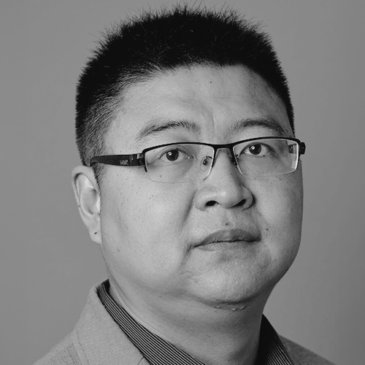
Fei Wang is currently a tenured Professor of Health Informatics in Department of Population Health Sciences at Weill Cornell Medicine (WCM), where he also holds a secondary appointment as a Professor in Department of Emergency Medicine. Dr. Wang is the Founding Director of the WCM Institute of AI for Digital Health (AIDH) and an Adjunct Scientist at Hospital for Special Surgery (HSS). His research interest is machine learning and artificial intelligence in biomedicine. Dr. Wang has published over 350 papers on the major venues of AI and biomedicine, which have received more than 30K citations to date. His H-index is 83. Dr. Wang is an elected fellow of American Medical Informatics Association (AMIA), American College of Medical Informatics (ACMI) and International Academy of Health Sciences and Informatics (IAHSI), and a distinguished member of Association for Computing Machinery (ACM).
Request More Info
Overview and Courses
As data in healthcare grows more complex, AI is increasingly being used to enhance diagnoses, treatment, patient engagement, and administrative tasks. Brought to you by expert faculty from Weill Cornell Medicine, this certificate program focuses on the transformative power of data science and artificial intelligence in the healthcare space.
You will begin by developing a foundation in machine learning techniques, emphasizing data preparation and predictive analytics to improve patient care. You will build on this by focusing on efficient data management, exploring relational databases, and honing skills in data querying for insightful healthcare decisions. You will then be introduced to natural language processing (NLP), exploring methods to extract insights from medical texts as well as ways to apply conscientious practices in data handling. Finally, you will examine the human factors influencing AI design and implementation, advocating for user-centered solutions that adhere to ethical principles.
Throughout the courses, you will have the opportunity to apply these teachings in hands-on exercises as you gain practice addressing real-world healthcare problems. Together, these courses will equip you with the skills to leverage technology for improved healthcare outcomes, ensuring data integrity, patient privacy, and the creation of equitable AI-driven solutions.
You must have intermediate proficiency in Python programming and machine learning to be successful in this certificate program.
The courses in this certificate program are required to be completed in the order that they appear.
Course list
Artificial intelligence is influenced by various human factors. In this course, you will delve into the human elements that affect the design, implementation, and evaluation of tools in the healthcare industry. You'll examine how to apply user-centered and participatory design theory to potential solutions in healthcare, including the FAVES principles: fairness, appropriateness, validity, effectiveness, and safety. You'll discover how to create and assess a design based on a real-life problem, equipping you with the skills to translate theory into practice. You'll also explore how human factors impact different aspects of artificial intelligence and discover how to incorporate these considerations when designing a healthcare product or service related to digital health.
- Nov 25, 2026
- Feb 17, 2027
- May 12, 2027
- Aug 4, 2027
- Oct 27, 2027
Data is critical to the diagnosis and treatment of patients. In this course, you will examine the efficient storage, management, and processing of healthcare data, with a focus on implementing relational data models that emphasize structure, integrity, and manipulation. You'll also explore programming languages essential for querying information from relational and non-relational databases, and you'll gain proficiency in leveraging these languages to extract valuable insights from healthcare datasets through practical exercises. You'll also develop the skills to adapt to diverse data management challenges within healthcare systems.
By mastering these competencies, you will be well prepared to navigate the complex landscape of healthcare data management while ensuring compliance with regulatory standards and optimizing data-driven decision-making processes.
You are required to have completed the following courses or have equivalent experience before taking this course:
- Designing Digital Healthcare Tools
- Dec 9, 2026
- Mar 3, 2027
- May 26, 2027
- Aug 18, 2027
- Nov 10, 2027
In the healthcare sector, patient data is abundant. Machine learning can transform this data into a powerful tool for prediction and analysis. In this course, you will explore supervised and unsupervised learning, two key machine learning approaches that can help you maximize your data's potential. Before addressing healthcare challenges with machine learning, it's essential to begin with high-quality data. You'll examine and practice the key steps to clean and prepare raw data, ensuring it's ready for effective machine analysis.
Once you've mastered these data preparation processes, you'll be ready to apply machine learning to healthcare analysis. You'll use supervised learning techniques to predict whether a patient is likely to experience sepsis. You'll also leverage unsupervised learning methods to identify similar subtypes within a large group of patients. By the end of the course, you'll realize how machine learning can improve efficiency for medical professionals and personalize patient care.
Students must have intermediate proficiency in Python programming and machine learning to succeed in this course.
You are required to have completed the following courses or have equivalent experience before taking this course:
- Designing Digital Healthcare Tools
- Data Management in Healthcare
- Dec 23, 2026
- Mar 17, 2027
- Jun 9, 2027
- Sep 1, 2027
- Nov 24, 2027
Clinical notes and patient records contain vast amounts of data, but this data is not always in a format machines can interpret. In this course, you will discover how natural language processing (NLP) can help you transform free text into structured data for extracting insights. You'll start by reviewing NLP methods to prepare raw text for machine analysis. Using the Python package spaCy, you'll perform NLP tasks like sentence splitting, tokenization, part-of-speech tagging, and parsing.
You will then explore key NLP applications. Using the scikit-learn and scispaCy Python packages, you'll apply text classification and named entity recognition (NER) to gain insights from medical texts. Finally, you'll advance to deep learning models, examining their application for healthcare tasks such as the de-identification of patient data. You will also consider the ethical implications of using such models, focusing on patient security and privacy. By the end of this course, you'll gain hands-on experience using NLP techniques to extract insights from healthcare data while also considering how to apply these methods ethically and responsibly.
Students must have intermediate proficiency in Python programming and machine learning to succeed in this course.
You are required to have completed the following courses or have equivalent experience before taking this course:
- Designing Digital Healthcare Tools
- Data Management in Healthcare
- Machine Learning in Healthcare
- Oct 14, 2026
- Jan 6, 2027
- Mar 31, 2027
- Jun 23, 2027
- Sep 15, 2027
- Dec 8, 2027
eCornell Online Workshops are live, interactive 3-hour learning experiences led by Cornell faculty experts. These premium short-format sessions focus on AI topics and are designed for busy professionals who want to gain immediately applicable skills and strategic perspectives. Workshops include faculty presentations, breakout discussions, and guided hands-on practice.
The AI Workshops All-Access Pass provides you with unlimited participation for 6 months from your date of purchase. Whether you choose to attend one workshop per month, or several per week, the All-Access Pass will allow you to customize your AI journey and stay on top of the latest AI trends.
Workshops cover a range of cutting-edge AI topics applicable across industries, hosted by Cornell faculty at the forefront of their fields. Whether you are just getting started with AI, seeking to build your AI skillset, or exploring advanced applications of AI, Workshops will provide you with an action-oriented learning experience for immediate application in your career. Sample Workshops include:
- Work Smarter with AI Agents: Individual and Team Effectiveness
- Leading AI Transformation: Bigger Than You Imagine, Harder Than You Expect
- Using AI at Work: Practical Choices and Better Results
- Search & Discoverability in the Era of AI
- Don't Just Prompt AI - Govern it
- AI-Powered Product Manager
- Leverage AI and Human Connection to Lead through Uncertainty
Request more Info by completing the form below.
How It Works
Faculty Authors

Yiye Zhang is an Associate Professor in the Division of Health Informatics and Faculty Director of the M.S. Program in Health Informatics at the Department of Population Health Sciences, Weill Cornell Medicine, Cornell University. She also has a secondary appointment in the Emergency Department at Weill Cornell Medicine. As a health informaticist, Dr. Zhang has years of research experience in developing tools to analyze and visualize healthcare information including electronic health records. As a principal investigator, Dr. Zhang’s research has been funded by multiple federal agencies including the National Library of Medicine of National Institute of Health, Agency for Healthcare Research and Quality, and the U.S. Department of Transportation Tier 1 University Transportation Center. Dr. Zhang received her Ph.D. degree in information systems and management at Carnegie Mellon University. She has a B.A. in mathematics from Washington University in St. Louis and an M.S. in biostatistics from Columbia University.
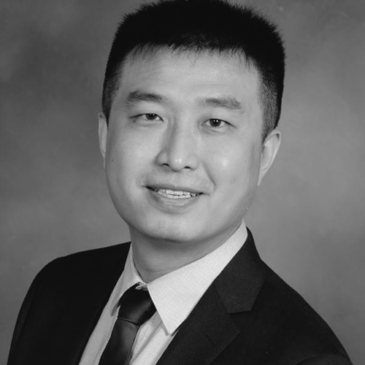
Yifan Peng, PhD, is an Assistant Professor in the Division of Health Sciences Department of Population Health Sciences at Weill Cornell Medicine. His main research interests include BioNLP and medical image analysis. He has published in major AI and healthcare informatics venues, including ACL, CVPR, MICCAI, and ICHI, as well as medical venues, including Nature Medicine, Nucleic Acids Research, npj Digital Medicine, and JAMIA. His research has been funded by federal agencies, including NIH and NSF, as well as by industries such as Amazon and Google. He is an Editorial Board Member for the Journal of Biomedical Informatics. He received the AMIA New Investigator Award in 2023.

Jose Florez-Arango is an educator, clinician, and researcher at the Weill Cornell Medical College. His work includes an emphasis in health informatics and emergency, disasters and pre-hospital care. Dr. Florez-Arango is focused on user-centered design of decision-support systems. He has extensive experience with the adaptation of low cost technologies to be used in healthcare. Dr. Florez-Arango holds an MD in Medicine and an MS in Biomedical Sciences from the University of Antioquia, and a PhD in Health Information and Medical Records Administration from the University of Texas Health Science Center at Houston.
Fei Wang is currently a tenured Professor of Health Informatics in Department of Population Health Sciences at Weill Cornell Medicine (WCM), where he also holds a secondary appointment as a Professor in Department of Emergency Medicine. Dr. Wang is the Founding Director of the WCM Institute of AI for Digital Health (AIDH) and an Adjunct Scientist at Hospital for Special Surgery (HSS). His research interest is machine learning and artificial intelligence in biomedicine. Dr. Wang has published over 350 papers on the major venues of AI and biomedicine, which have received more than 30K citations to date. His H-index is 83. Dr. Wang is an elected fellow of American Medical Informatics Association (AMIA), American College of Medical Informatics (ACMI) and International Academy of Health Sciences and Informatics (IAHSI), and a distinguished member of Association for Computing Machinery (ACM).
Yiye Zhang is an Associate Professor in the Division of Health Informatics and Faculty Director of the M.S. Program in Health Informatics at the Department of Population Health Sciences, Weill Cornell Medicine, Cornell University. She also has a secondary appointment in the Emergency Department at Weill Cornell Medicine. As a health informaticist, Dr. Zhang has years of research experience in developing tools to analyze and visualize healthcare information including electronic health records. As a principal investigator, Dr. Zhang’s research has been funded by multiple federal agencies including the National Library of Medicine of National Institute of Health, Agency for Healthcare Research and Quality, and the U.S. Department of Transportation Tier 1 University Transportation Center. Dr. Zhang received her Ph.D. degree in information systems and management at Carnegie Mellon University. She has a B.A. in mathematics from Washington University in St. Louis and an M.S. in biostatistics from Columbia University.
Yifan Peng, PhD, is an Assistant Professor in the Division of Health Sciences Department of Population Health Sciences at Weill Cornell Medicine. His main research interests include BioNLP and medical image analysis. He has published in major AI and healthcare informatics venues, including ACL, CVPR, MICCAI, and ICHI, as well as medical venues, including Nature Medicine, Nucleic Acids Research, npj Digital Medicine, and JAMIA. His research has been funded by federal agencies, including NIH and NSF, as well as by industries such as Amazon and Google. He is an Editorial Board Member for the Journal of Biomedical Informatics. He received the AMIA New Investigator Award in 2023.
Jose Florez-Arango is an educator, clinician, and researcher at the Weill Cornell Medical College. His work includes an emphasis in health informatics and emergency, disasters and pre-hospital care. Dr. Florez-Arango is focused on user-centered design of decision-support systems. He has extensive experience with the adaptation of low cost technologies to be used in healthcare. Dr. Florez-Arango holds an MD in Medicine and an MS in Biomedical Sciences from the University of Antioquia, and a PhD in Health Information and Medical Records Administration from the University of Texas Health Science Center at Houston.
Key Course Takeaways
- Design, implement and evaluate machine learning models in healthcare
- Manage, process, and analyze data to prepare for AI integration in healthcare
- Process and analyze text data to prepare for AI integrations in healthcare
- Apply natural language processing and data management models to daily workflows in healthcare

Download a Brochure
Not ready to enroll but want to learn more? Download the certificate brochure to review program details.
What You'll Earn
- AI in Healthcare Certificate from Weill Cornell Graduate School of Medical Sciences
- 56 Professional Development Hours (5.6 CEUs)
Watch the Video
Who Should Enroll
- Data scientists
- Medical and health services managers
- Database and IT data architects
- Data engineers
- Digital transformation managers
- Clinicians with experience in informatics
- Biomedical and clinical informatics fellows
- Aspiring medical database managers or administrators
Frequently Asked Questions
Healthcare organizations are under pressure to turn rapidly growing clinical data into safer, more efficient decisions while protecting patient privacy and earning clinician trust. Cornell’s AI in Healthcare Certificate helps you build practical, job-ready capability in the core methods behind modern healthcare AI so you can move from curiosity to confident application.
In this certificate program, authored by faculty from the Weill Cornell Graduate School of Medical Sciences, you will gain hands-on experience with healthcare-focused machine learning, data management, and natural language processing, then connect those technical skills to real implementation realities like usability, evaluation, and responsible design. Along the way, you’ll practice workflows that mirror how AI work actually happens in hospitals and health systems, including data preparation, model evaluation, and working with structured and unstructured data.
If you want practical healthcare AI skills, confidence working with real-world clinical data workflows, and a human-centered approach to building tools that are usable and safe, you should choose Cornell's AI in Healthcare Certificate.
Many online programs teach AI concepts in isolation, with limited feedback and few opportunities to connect technical work to clinical realities. Cornell’s AI in Healthcare Certificate is built to help you apply healthcare AI end to end, from preparing messy clinical data to evaluating models, extracting insights from clinical notes, and designing digital health tools that people can actually use.
You learn in a small, cohort-based environment with an expert facilitator guiding discussions, providing feedback on your work, and offering live opportunities to ask questions and learn with peers. The learning experience emphasizes applied assignments, including coding in Python for machine learning and NLP, working with SQL and database concepts used in healthcare, and using practical evaluation methods that connect model building to implementation risk, privacy, and usability.
The result is a human-centered learning experience that is more structured and supported than purely self-paced content, while still fitting into a working professional’s schedule.
Enrolling in Cornell’s AI in Healthcare Certificate also provides you with a 6-month All-Access Pass to eCornell's live online AI Workshops, interactive sessions led by world-class Cornell faculty that combine Ivy League insight with practical applications for busy professionals. Each 3-hour Workshop features structured instruction, guided practice, and real tools to build competitive AI capabilities, plus the opportunity to connect with a global cohort of growth-oriented peers. While AI Workshops are not required, they enhance certificate programs through:
- Integrating AI perspectives across most curricula
- Responding to emerging AI developments and trends
- Offering direct engagement with Cornell faculty at the forefront of AI research
Cornell’s AI in Healthcare Certificate is designed for professionals who want to apply AI methods to healthcare problems and need a structured, healthcare-relevant path to doing the work, not just talking about it.
The AI in Healthcare Certificate is a strong fit if you work in or alongside healthcare data and digital health initiatives, including roles such as:
- Data scientists and data engineers working with clinical, claims, or operational datasets
- Digital transformation managers and IT/data architects supporting analytics and AI implementation
- Medical and health services managers partnering with technical teams on data-driven initiatives
- Clinicians with informatics experience and biomedical or clinical informatics fellows
To be successful in Cornell’s AI in Healthcare Certificate program, you should have intermediate proficiency in Python and machine learning so you can focus on healthcare application, evaluation, and responsible deployment.
Your work in Cornell’s AI in Healthcare Certificate centers on applied, multi-part projects that mirror common healthcare AI tasks, from data modeling and querying to building and evaluating models and designing usable, responsible digital health tools. Project prompts are designed so you can practice the full workflow and produce concrete artifacts you can discuss in interviews or bring back to your team.
Examples of the kinds of projects you will complete include:
- Conducting a stakeholder and user analysis for a healthcare problem, creating a low-fidelity prototype, then running discounted usability tests to assess acceptability and usability
- Creating an entity relationship diagram (ER diagram) for a public-health dataset, then writing an advanced SQL query against patient tables
- Planning how to deploy a predictive model into an electronic health record environment using appropriate interoperability resources (FHIR)
- Cleaning and preparing ICU-style data in Python, training supervised models to predict sepsis risk, and building unsupervised clustering to identify patient subtypes
- Using Python NLP libraries to analyze a clinical note’s linguistic structure, training a text classifier, comparing embedding approaches including BERT for sentence similarity, and critically assessing a generative model’s response for risk factors such as hallucination and completeness
Cornell’s AI in Healthcare Certificate helps you build the practical capability to contribute to healthcare AI initiatives with stronger technical confidence and better implementation judgment.
After completing the AI in Healthcare Certificate, you will be prepared to:
- Design, implement and evaluate machine learning models in healthcare
- Manage, process, and analyze data to prepare for AI integration in healthcare
- Process and analyze text data to prepare for AI integrations in healthcare
- Apply natural language processing and data management models to daily workflows in healthcare
Students frequently report that the program builds confidence through hands-on machine learning work grounded in healthcare use cases and datasets, with a strong emphasis on real-world data preprocessing and readiness for messy clinical data. Learners also highlight clear connections to EHR and hospital operations, exposure to key AI approaches including NLP, and step-by-step instruction in a well-structured online experience. Many note that timely facilitator guidance and feedback helps them translate new techniques into day-to-day work, from model-building workflows to improving how health data is managed and used.
What truly sets eCornell apart is how our programs unlock genuine career transformation. Learners earn promotions to senior positions, enjoy meaningful salary growth, build valuable professional networks, and navigate successful career transitions.
Cornell’s AI in Healthcare Certificate, which consists of 4 short courses, is designed to be completed in 2 months. Each course runs for 2 weeks, with a typical weekly time commitment of 5 to 7 hours.
Flexibility comes from the fact that most learning activities can be completed asynchronously on your schedule, while still benefiting from structured weekly expectations that help you maintain momentum. Live sessions offer opportunities to deepen learning and give you a chance to discuss concepts and implementation questions with your facilitator and peers, but the core coursework is designed to be compatible with a full-time professional schedule.
Students in Cornell’s AI in Healthcare Certificate often describe it as a rare opportunity to build practical machine learning skills in a healthcare context, with hands-on work that feels directly relevant to hospitals, EHR environments, and real patient data challenges. Many say the program strikes a strong balance between depth and accessibility for working professionals, especially because the learning is applied, well supported, and designed to help them use new techniques on the job.
Common themes learners highlight include:
- Hands-on machine learning projects grounded in healthcare use cases and datasets
- Practical work with notebooks and model-building workflows, not just theory
- Strong emphasis on data preprocessing and readiness for real clinical data
- Clear connections to EHR and hospital operations, helping learners apply skills immediately
- Exposure to key AI approaches used in healthcare, including natural language processing
- Step-by-step instruction with a well-structured, easy-to-navigate online experience
- Engaged facilitators who provide timely, helpful guidance and feedback
- Flexible pacing and a manageable weekly rhythm that fits busy professional schedules
- Assignments that are challenging in a productive way and reinforce real-world application
- Useful supplemental resources and live support options that deepen understanding
Across responses, students frequently mention leaving with greater confidence in applying machine learning to healthcare problems, from building models to inform evaluation and treatment decisions to improving how health data is managed and used.
A big part of making AI work in healthcare is building reliable data foundations, not just building models. Cornell’s AI in Healthcare Certificate helps you strengthen the database and interoperability skills that support real analytics and clinical decision support.
You will work with relational database concepts and practice writing SQL queries for healthcare-style tables, then broaden into modern data management topics such as ETL workflows, non-relational database options, and the role of APIs and standards that enable data exchange. You’ll also examine how interoperability resources like FHIR can be used to support integration of data-driven tools into clinical environments.
Generative AI is quickly becoming part of healthcare workflows, but using it responsibly requires understanding both how the models work and where the risks are. Cornell’s AI in Healthcare Certificate gives you hands-on exposure to modern NLP approaches, including transformer-based models.
You will start with practical NLP foundations for clinical text, then advance to deep learning concepts including BERT-style models and their healthcare applications. You’ll also explore generative AI through applied prompting and, importantly, practice evaluating outputs for issues that matter in clinical contexts, such as hallucination risk, completeness, privacy, and safety.
Adoption is often the hardest part of healthcare AI. Building a model is not the same as building a tool that fits clinical reality, supports human decision making, and avoids unintended harm. Cornell’s AI in Healthcare Certificate helps you develop a user-centered approach so your AI work is more likely to translate into real-world impact.
Throughout the AI in Healthcare Certificate program, you will practice methods that connect human factors to design and evaluation, including participatory and user-centered design techniques, persona-driven thinking, and structured ways to identify what users need versus what they may simply request. You’ll also apply practical evaluation approaches such as heuristic analysis and lightweight usability testing methods, and you’ll examine ethical principles for healthcare AI through the FAVES framework (fair, appropriate, valid, effective, safe).
Cornell's AI in Healthcare Certificate is designed as a hands-on, technical certificate program where you will spend significant time coding in Python, building machine learning models, working with SQL databases, and implementing natural language processing workflows. The coursework assumes you're already comfortable with programming concepts and can focus on applying those skills to healthcare-specific problems like sepsis prediction, clinical text analysis, and EHR integration.
If you're a clinician with informatics experience, a biomedical informatics fellow, or an administrator who already works closely with technical teams and has some programming background, Cornell's AI in Healthcare Certificate could be an excellent way to deepen your AI capabilities in healthcare contexts.
However, if you're a clinician or administrator interested in AI but have less familiarity with coding or AI, you might consider starting with foundational programming courses to build Python Programming skills first, or consider exploring other Cornell certificate programs such as AI Strategy or Designing and Building AI Solutions, which do not require coding skills.
Explore Related Programs









“I absolutely loved this program. It was just so amazing. I learned so much about artificial intelligence and how to apply it to running and managing a business. I’m thrilled!”
Explore programs to meet your professional goals

- 2 to 6 months
- $2,000 to $10,000
- Online

- 2 to 4 weeks
- $299 to $1,199
- Online

- 3 hours
- $449
- Online

- 15 to 24 months part-time
- Tuition varies
- In person or online

- 2 to 5 days
- $3,000 to $10,000
- In person - Ithaca or NYC
- Custom Enterprise Programs
- Price varies
- In person or hybrid
Request Information Now by completing the form below.

AI in Healthcare
| Select Payment Method | Cost |
|---|---|
| $3,750 | |