
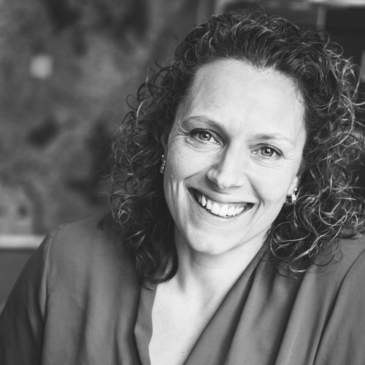
Dr. Gen Meredith, a graduate of McGill University’s Faculty of Medicine (Occupational Therapy) and the University of Massachusetts’ School of Public Health (Master of Public Health), has come to Cornell to help design and lead the Master of Public Health program. Prior to this, Dr. Meredith spent eight years leading large international development projects with a focus on national public health systems development in sub-Saharan Africa and the Caribbean, and four years doing the same in the United States. Dr. Meredith’s work has centered primarily on institutional capacity development and growth specifically related to integrated disease surveillance and response systems, the routine collection and use of data, and effective public health leadership and management infrastructure to support population health access and accountability.

Public Health EssentialsCornell Certificate Program
Request More Info
Overview and Courses
The COVID-19 pandemic created an unprecedented health challenge on a global scale. A novel virus jumped from an animal to a person, and within a matter of weeks, people were infected around the world. Public health and healthcare systems were not prepared, and neither those frameworks nor our bodies were ready to detect, prevent, and respond. Countless lives were lost, as were jobs and financial security, food access, housing, and access to education. Now, we need to build back, and build back better, together.
Public health is a field of work made up of many different types of people working in many different roles at community, state, national, and international levels. Its purpose is to develop and implement programs and policies to create the conditions where people can achieve health.
This certificate program is designed for people who work — or want to work — to improve the health and wellbeing of communities. You will study fundamental public health principles and practices to enable you to be part of a push for health equity for all. You will examine how to review and interpret data so you can focus your efforts, and you will practice critical communication skills so you can support your community in making choices that prevent infection and illness. Using COVID-19 as one of many case studies, you will explore how, in public health, we learn from the past to improve the future. You will be positioned to use the knowledge and skills you gain to support the long-term goal of maximizing good health for all.
The courses in this certificate program are required to be completed in the order that they appear.
Course list
- Nov 4, 2026
- Jan 13, 2027
- Mar 24, 2027
- Jun 2, 2027
- Aug 11, 2027
- Oct 20, 2027
- Dec 29, 2027
The field of public health has been evolving for centuries, and thanks to research and documentation, you will learn from and build upon the lessons and successes of the past. In this course, you will explore how public health is funded and administered in the U.S., what some of the key tools and functions of public health are, and who implements this powerful work in our communities.
You are required to have completed the following course or have equivalent experience before taking this course:
- Public Health Foundations
- Sep 16, 2026
- Nov 25, 2026
- Feb 3, 2027
- Apr 14, 2027
- Jun 23, 2027
- Sep 1, 2027
- Nov 10, 2027
Public health actions should be informed by data, and opportunities to use data that can inform public health interventions are everywhere. In this course, you will build your data- and evidence-based public health skills and confidence. You will explore trusted and reliable sources of public health data and look for themes and disparities that can answer your questions about a community's health and wellbeing.
You will identify factors in your own community that contribute to positive or negative public health outcomes and practice supporting your perspective with data. Finally, you will connect those factors to the organizations and services that can help address them, offering recommendations you can use to serve and improve the health of the community in which you live or work.
You are required to have completed the following courses or have equivalent experience before taking this course:
- Public Health Foundations
- Assessing and Implementing Public Health
- Oct 7, 2026
- Dec 16, 2026
- Feb 24, 2027
- May 5, 2027
- Jul 14, 2027
- Sep 22, 2027
- Dec 1, 2027
Practicing public health involves working directly with people to advocate for and support the behaviors that will prevent disease, promote health, and prolong life among individuals and the population as a whole. Through this course, you have the opportunity to enhance your ability to facilitate behavior change by studying behavior principles. You begin by examining two important behavior models and considering several different factors that influence behaviors. You will then review key components of effective public health communication, including audience analysis and accessible messaging. Finally, you will explore and practice critical strategies for developing trust and meaningful connections with people of other cultures and social identities.
You are required to have completed the following courses or have equivalent experience before taking this course:
- Public Health Foundations
- Assessing and Implementing Public Health
- Using Public Health Data for Action
- Oct 28, 2026
- Jan 6, 2027
- Mar 17, 2027
- May 26, 2027
- Aug 4, 2027
- Oct 13, 2027
- Dec 22, 2027
Human health depends upon the health of the environment in which we live. We create systems to bring us clean water and to take away our waste, or we try to plant trees to keep land from washing away and to filter the air. Unfortunately, we also make changes to our environment that have the unintended effect of hurting our health.
Sometimes people think issues like air pollution or natural disasters are “too big,” yet there are things we can each do that will help protect ourselves. When combined, these individual actions can make a real difference.
You will start by understanding the risks then, using a case-study approach, examine some of the main environmental issues that affect our health. Looking back at history as well as into the future, you will share ideas for your role in addressing these problems.
You are required to have completed the following courses or have equivalent experience before taking this course:
- Public Health Foundations
- Assessing and Implementing Public Health
- Using Public Health Data for Action
- Supporting Public Health Behaviors
- Sep 9, 2026
- Nov 18, 2026
- Jan 27, 2027
- Apr 7, 2027
- Jun 16, 2027
- Aug 25, 2027
- Nov 3, 2027
eCornell Online Workshops are live, interactive 3-hour learning experiences led by Cornell faculty experts. These premium short-format sessions focus on AI topics and are designed for busy professionals who want to gain immediately applicable skills and strategic perspectives. Workshops include faculty presentations, breakout discussions, and guided hands-on practice.
The AI Workshops All-Access Pass provides you with unlimited participation for 6 months from your date of purchase. Whether you choose to attend one workshop per month, or several per week, the All-Access Pass will allow you to customize your AI journey and stay on top of the latest AI trends.
Workshops cover a range of cutting-edge AI topics applicable across industries, hosted by Cornell faculty at the forefront of their fields. Whether you are just getting started with AI, seeking to build your AI skillset, or exploring advanced applications of AI, Workshops will provide you with an action-oriented learning experience for immediate application in your career. Sample Workshops include:
- Work Smarter with AI Agents: Individual and Team Effectiveness
- Leading AI Transformation: Bigger Than You Imagine, Harder Than You Expect
- Using AI at Work: Practical Choices and Better Results
- Search & Discoverability in the Era of AI
- Don't Just Prompt AI - Govern it
- AI-Powered Product Manager
- Leverage AI and Human Connection to Lead through Uncertainty
Request more Info by completing the form below.
How It Works
Faculty Authors

Dr. Alex Travis’s research explores a diverse set of subjects related to One Health, which is interdisciplinary work that links the functions and well-being of people, animals, and the environment. His interests include animal health and fertility as well as efforts to help alleviate poverty and hunger in developing countries, work that indirectly benefits local wildlife. Dr. Travis serves as Associate Dean of International Programs and Public Health at the College of Veterinary Medicine, and he is founding Director of Cornell’s Master of Public Health program.
Key Course Takeaways
- Build your understanding of the various factors that impact health as well as the role you can play in improving health outcomes
- Apply public health assessment models, data analysis methods, and communications best practices to a variety of circumstances
- Identify factors contributing to public health disparities in your community
- Determine public health and intervention opportunities to improve overall health
- Assess how to influence behavioral changes to support public health and intervention opportunities
- Develop practical strategies for increasing your influence to improve public health behaviors
- Plan for interventions at a community level, including impact assessment as well as vaccination acceptance and uptake

What You'll Earn
- Public Health Essentials Certificate from Cornell University
- 105 Professional Development Hours (10.5 CEUs)
Watch the Video
Who Should Enroll
- Community health leaders
- Emerging public health leaders
- Public health volunteers
- Volunteers working with high-risk populations
- Outreach coordinators
- Anyone interested in personal and collective health and wellbeing, community development, preventing disease and injury, or leading change to support health equity
Frequently Asked Questions
Public health challenges are showing up everywhere, from infectious disease and misinformation to chronic illness, climate-related risk, and unequal access to care. When systems are stretched, communities need professionals who can assess what is happening, communicate clearly, and turn evidence into practical action.
Authored by faculty from the Master of Public Health Program at Cornell University, Cornell’s Public Health Essentials Certificate equips you to understand the forces shaping health outcomes and to contribute meaningfully to solutions, even if you are not a clinician or an epidemiologist. You will build a foundation in prevention and equity, learn to interpret real public health data sources, and practice designing interventions that fit local realities.
Because the learning is project based, you will repeatedly translate concepts into usable outputs, such as a community health profile, an equity-centered plan, and a communication approach designed for a specific audience. You’ll also strengthen core community-facing skills like trust-building, cultural humility, and inclusive messaging.
If you want a practical public health foundation, confidence using data to focus your efforts, and concrete tools for equitable community action, you should choose Cornell’s Public Health Essentials Certificate.
Many online programs rely on self-directed content and generic quizzes, which can make it hard to build confidence applying public health concepts in real community contexts. Cornell’s Public Health Essentials Certificate is designed around guided practice, where you use structured frameworks and real data to produce work you can carry back to your role.
You learn in a small cohort with an expert facilitator who guides discussion, provides feedback on your work, and helps you connect course concepts to the situations you care about. Courses also include opportunities for live sessions designed for applied conversation, reflection, and troubleshooting, alongside flexible asynchronous modules.
Just as important, Cornell’s Public Health Essentials Certificate curriculum is not limited to definitions and history. You practice modern public health tools and skills, including prevention planning, systems thinking, identifying social determinants of health, spotting disparities in community data, countering misinformation and disinformation, crafting accessible public health messages, and building preparedness and resilience plans grounded in environmental health realities.
Enrolling in this certificate also provides you with a 6-month All-Access Pass to eCornell's live online AI Workshops, interactive sessions led by world-class Cornell faculty that combine Ivy League insight with practical applications for busy professionals. Each 3-hour Workshop features structured instruction, guided practice, and real tools to build competitive AI capabilities, plus the opportunity to connect with a global cohort of growth-oriented peers. While AI Workshops are not required, they enhance certificate programs through:
- Integrating AI perspectives across most curricula
- Responding to emerging AI developments and trends
- Offering direct engagement with Cornell faculty at the forefront of AI research
Cornell’s Public Health Essentials Certificate is designed for people who want to contribute to community health outcomes and need a clear, practical entry point into modern public health. The program is a strong fit if you are working in, alongside, or in support of community-facing services and want to strengthen your ability to assess needs, partner effectively, and communicate for impact.
The Public Health Essentials Certificate is especially relevant for:
- Community health leaders and emerging public health leaders
- Public health volunteers and volunteers supporting high-risk populations
- Outreach coordinators and community-facing professionals
- Professionals in healthcare, public service, education, or nonprofit roles who need public health fluency
You do not need a public health degree to begin, but you should be ready to engage with real-world scenarios, work with publicly available datasets, and produce short written deliverables that apply course frameworks to your community or workplace.
Across Cornell’s Public Health Essentials Certificate, the work is built around applied projects that mirror what public health practitioners and community partners actually do: assess needs, design prevention strategies, communicate clearly, and plan for implementation.
Examples of projects you can expect include:
- Drafting a concise overview of a priority public health issue and proposing an equity-focused action plan using prevention and determinants-of-health frameworks
- Mapping the public health system in your community, including key agencies, laws, assets, and cross-sector partners who influence health outcomes
- Designing a trust-building plan for a specific constituency using cultural humility tools, identity awareness, and the LARA (Listen, Affirm, Respond, Add) dialogue approach
- Building a community demographics and health profile, identifying disparities, and connecting needs to relevant local resources and services
- Completing an audience analysis and writing an accessible public health message aligned to a defined communication goal, including strategies for navigating misinformation
- Creating a logic model with SMART objectives and a work plan that links resources, activities, outputs, and outcomes for a behavior-change initiative
- Developing a preparedness-oriented action plan that considers environmental health risks, systems drivers, and community resilience
By the end of Cornell’s Public Health Essentials Certificate program, you will have a portfolio of practical outputs you can refine and reuse in community work, program planning, outreach, or stakeholder communication.
Cornell’s Public Health Essentials Certificate helps you become the person who can translate public health concepts into credible, community-ready action.
After completing the Public Health Essentials Certificate, you will be prepared to:
- Build your understanding of the various factors that impact health as well as the role you can play in improving health outcomes
- Apply public health assessment models, data analysis methods, and communications best practices to a variety of circumstances
- Identify factors contributing to public health disparities in your community
- Determine public health and intervention opportunities to improve overall health
- Assess how to influence behavioral changes to support public health and intervention opportunities
- Develop practical strategies for increasing your influence to improve public health behaviors
- Plan for interventions at a community level, including impact assessment as well as vaccination acceptance and uptake
Learners commonly describe long-term benefits that include increased confidence in core public health concepts, a stronger ability to apply equity and social determinants of health in real situations, and practical planning and communication skills they can use immediately in healthcare, community health, and public service roles. Many highlight that the projects help them turn ideas into actionable plans, the module structure makes progress manageable alongside work and family responsibilities, and facilitator feedback strengthens both clarity and follow-through.
What truly sets eCornell apart is how our programs unlock genuine career transformation. Learners earn promotions to senior positions, enjoy meaningful salary growth, build valuable professional networks, and navigate successful career transitions.
Cornell’s Public Health Essentials Certificate, which consists of 5 short courses, is designed to be completed in 4 months. Each course runs for 3 weeks, with a typical weekly time commitment of 5 to 7 hours.
In practice, the weekly workload is designed for working adults. Learning is structured into focused modules with clear expectations, and you will work toward graded project submissions that keep you moving forward.
Flexibility does not mean you learn alone. Cornell’s Public Health Essentials Certificate includes facilitated discussion and opportunities for live sessions that add real-time conversation and support, while still letting you complete the core learning and assignments asynchronously.
Students in Cornell's Public Health Essentials Certificate often describe the program as a practical, confidence-building introduction to modern public health, with clear instruction and projects that help them apply core concepts to real community and workplace challenges. Many say they finish the courses with a broader perspective on what public health is, why it matters, and how to turn ideas into action.
Learners commonly highlight:
- Strong focus on health equity, social justice, and the social determinants of health
- Hands-on projects that translate concepts into community- and workplace-ready plans
- Realistic public health scenarios that connect learning to today’s leadership needs
- Practical tools for planning and behavior change, including audience targeting and messaging strategy
- Action-oriented work that helps learners identify needs and outline interventions for local populations
- Flexible, self-paced format that fits demanding work and family schedules
- Clear module structure that builds step-by-step toward assignments and a final project
- Engaged facilitators who provide timely, specific, and encouraging feedback
- A mix of short videos, readings, and interactive activities that keeps learning digestible
- User-friendly online platform with straightforward access to materials and submissions
- Knowledge that feels immediately useful for healthcare, community health, and public service roles
- Added credibility and professional value from earning a Cornell-backed credential
Health equity is treated as a practical planning requirement, not an abstract ideal. In Cornell’s Public Health Essentials Certificate, you will learn to distinguish equity from equality, connect inequities to social determinants of health, and identify where prevention efforts can reduce avoidable gaps in outcomes.
You will apply these concepts by analyzing determinants such as economic stability, education access and quality, healthcare access and quality, neighborhood and built environment, and social and community context. You’ll also practice choosing interventions across multiple levels, from individual behavior supports to community and policy approaches, so your recommendations match both reach and feasibility.
Because equity work depends on trust, you will also build skills for engaging communities respectfully, including cultural humility and inclusive communication approaches that help you collaborate across differences.
You will build practical data literacy that supports day-to-day public health decision making, without assuming you are a statistician. Cornell’s Public Health Essentials Certificate teaches you how to find credible sources, ask the right questions about what a dataset does and does not show, and translate trends into next steps for action.
You will practice interpreting common public health measures like incidence, prevalence, morbidity, and mortality, and you’ll compare patterns across person, place, and time to identify themes and disparities. You’ll also build a community profile using accessible sources such as U.S. Census QuickFacts, County Health Rankings, and widely used COVID-19 trackers, then connect what you find to local resources and service options.
The goal is simple: You leave Cornell’s Public Health Essentials Certificate program better prepared to support a recommendation with evidence and to explain that evidence clearly to partners and stakeholders.
A public health job title is not required to get value from the program. Cornell’s Public Health Essentials Certificate is built to help you develop a strong foundation in what public health is, how prevention works, and how to contribute to community wellbeing through practical assessment, communication, and planning skills.
You will be most successful if you are comfortable learning from real-world examples, writing brief responses and project submissions, and exploring reputable websites for public health data and local resources. The coursework is designed to build your skills step by step, from core public health concepts to community assessment, behavior change communication, and preparedness planning.
If you already work in a community-facing role, you will have many natural opportunities to apply the tools immediately. If you are exploring a transition into public health, the projects help you demonstrate applied capability, not just familiarity with terminology.
Explore Related Programs







“I have been looking for a healthcare program where I could broaden my knowledge and skills, and this is how I found eCornell. I signed up, and I am so happy that I did. The faculty gave thorough lessons, and I am taking so much away from their classes!”

- 2 to 6 months
- $2,000 to $10,000
- Online

- 2 to 4 weeks
- $299 to $1,199
- Online

- 3 hours
- $449
- Online

- 15 to 24 months part-time
- Tuition varies
- Hybrid
- 2 to 5 days
- $3,000 to $10,000
- In person - Ithaca or NYC
- Custom Enterprise Programs
- Price varies
- In person or hybrid
Request Information Now by completing the form below.

Public Health Essentials
| Select Payment Method | Cost |
|---|---|
| $2,999 | |