

Rob Kwortnik, Associate Professor of Services Marketing, joined Cornell’s faculty after earning his Ph.D. in Business Administration from Temple University in 2003. He also earned a B.A. in Journalism from Temple and an MBA from California State University, Northridge. Professor Kwortnik’s research focuses on consumer behavior in service contexts, with special attention to service experience management. He has published in the Journal of Marketing Research, Journal of Service Research, The International Journal of Research in Marketing, and the Cornell Hospitality Quarterly, among others. He has been honored eight times as a Teacher of the Year by students at the School of Hotel Administration. Prior to his career in academics, Professor Kwortnik held several professional positions in marketing and was a travel industry consultant. He is a recognized expert on the leisure cruise industry.

Hospitality Digital MarketingCornell Certificate Program
Overview and Courses
Marketing in the hospitality industry involves effectively communicating and differentiating your brand promise to target customers. A strong digital strategy is essential, as today’s consumers increasingly rely on online resources to make purchase decisions based on their needs and preferences. Developed by faculty from Cornell’s renowned Nolan School of Hotel Administration, this certificate program equips you with foundational hospitality marketing concepts and principles designed to help you better integrate your company’s brand communications across various media channels.
Working through a detailed case study, you will develop an integrated marketing communications (IMC) strategy for a hospitality brand. You’ll have the opportunity to identify and assess the brand’s target market, plan and implement creative strategies, and optimize the organization’s online presence. The program delves into search engine marketing, social media marketing, user-generated content, community management, traditional media, and mapping your IMC strategy to the consumer engagement cycle. You will also discover how to identify key performance indicators, interpret marketing data, and make data-driven decisions to align with business goals, preparing you to evaluate and execute an IMC campaign strategy for your organization.
This program includes two years of free access to both the Hospitality and Marketing Symposia! These events feature several days of live, highly participatory virtual Zoom sessions with Cornell faculty and experts to explore pressing industry topics. Symposium events are held several times throughout the year. Once enrolled in your program, you will receive information about upcoming sessions.
Throughout the year, you may participate in as many sessions as you wish. Attending Symposium sessions is not required to successfully complete the certificate program.
The courses in this certificate program are required to be completed in the order that they appear.
Course list
Integrated marketing communications (IMC) is both a theory and a process. The goal of IMC is to make sure the promotional elements of a business work together and communicate a consistent brand experience for current and future customers. In the information age, it is critical that your brand penetrates through the dense marketing landscape and connects with your target audiences.
In this course, you will examine what integrated marketing communications is and how you can use it to communicate your brand's strategy and promise. You will also identify why an IMC plan should constantly evolve in the face of a shifting media landscape and dynamic business realities and market conditions. You will discover how you can use marketing communications to effectively shape consumers' brand beliefs and persuade them, while doing so in ways that are legal and ethical. Finally, you will explore a number of conceptual models that can help you define and refine the brand's marketing communications goals. Throughout, you will utilize these strategies to begin to build an IMC strategy for a fictional hotel in Baltimore, Maryland.
- Sep 30, 2026
- Nov 25, 2026
- Jan 20, 2027
- Mar 17, 2027
- May 12, 2027
- Jul 7, 2027
- Sep 1, 2027
A brand's marketing communications must be where target consumers are, and they are increasingly online. As the number of online channels grows, it becomes even more important to ensure that marketing communications are integrated and targeted to the brand's key audience. Successfully defining that target audience, then designing communication that will resonate with them and shape their brand beliefs, must be the basis of the organization's online marketing. With those in hand, you can focus on the two main channels of online marketing: website and search engine marketing.
In this course, you will examine how to identify the brand's target market and develop a brand voice that will resonate with them. You will also determine how to develop a creative strategy and marketing messages that will effectively shape the target audience's brand beliefs. You will then examine the importance of the brand website as the centerpiece of your online channels along with the many ways to keep the website functional, engaging, and fresh. Finally, you will explore search engine marketing, including how to bid on search keywords, which keywords to bid on, and how to make effective use of online display advertising. Throughout the course, you will remain centered on the importance of ensuring that the brand channels speak with one voice, with messaging tailored to the target audience and in support of the broader integrated marketing strategy.
It is highly recommended that you have completed the following course or have equivalent experience before taking this course:
- Marketing the Hospitality Brand Through Digital Media
- Oct 14, 2026
- Dec 9, 2026
- Feb 3, 2027
- Mar 31, 2027
- May 26, 2027
- Jul 21, 2027
- Sep 15, 2027
The contemporary media landscape offers a staggering range of marketing communications channels and tools. These include digital channels, social media platforms, influencers and content creators, user-generated content, and experiential marketing, along with the full suite of traditional media such as print, radio and TV, and public relations. It is therefore critical that brands optimize their marketing communications to meet and exceed the needs and expectations of their current and future customers.
In this course, you will explore ways to utilize online and traditional media to effectively communicate a brand's promise and voice, build positive associations with the brand, drive sales, and meet marketing goals. You will examine search engine optimization strategies and analyze the role content marketing plays in building the brand's online presence. You will also delve into the nuances of creating content for social media channels, managing online communities, and working with influencers. Throughout, you will assess the continued role that traditional media and tools play in meeting integrated marketing communications goals. After successful completion of this course, you will have analyzed, practiced, and applied a wide range of contemporary digital marketing strategies designed to strengthen and enhance the audience-brand relationship.
You are required to have completed the following courses or have equivalent experience before taking this course:
- Marketing the Hospitality Brand Through Digital Media
- Implementing Brand Strategy Through Digital Media
- Dec 23, 2026
- Feb 17, 2027
- Apr 14, 2027
- Jun 9, 2027
- Aug 4, 2027
- Sep 29, 2027
- Nov 24, 2027
Digital marketing is fast becoming the primary means for hospitality and related service firms to reach, engage, and transact with consumers across their multiple devices. Consumer planning, shopping, experience, and sharing through digital media is quickly changing how marketing is done as well as how marketing effectiveness is measured.
Owners and managers must be able to make effective, data-driven, analytical, and integrated decisions related to digital marketing using the right metrics and reports. These decision support tools may be generated internally and/or by vendors, like digital or social media marketing agencies. Managers must be able to understand, evaluate, and communicate recommendations in line with the firm's overall business and marketing strategies. This course provides managers with the insight and tools to do the job.
In this course, you will make marketing and service enhancement decisions based on the interpretation and integration of digital media performance metrics. Through this analysis, you will evaluate the effectiveness of digital marketing activities using standard and new performance metrics. You will also use digital media reports and available analytic tools to assess the competitive position of a business and articulate recommendations to improve performance.
You are required to have completed the following courses or have equivalent experience before taking this course:
- Marketing the Hospitality Brand Through Digital Media
- Implementing Brand Strategy Through Digital Media
- Communicating the Brand Across Marketing Media
- Nov 11, 2026
- Jan 6, 2027
- Mar 3, 2027
- Apr 28, 2027
- Jun 23, 2027
- Aug 18, 2027
- Oct 13, 2027
Symposium sessions feature two days of live, highly interactive virtual Zoom sessions that will explore today's most pressing topics. The Marketing Symposium offers you a unique opportunity to engage in real-time conversations with peers and experts from the Cornell community and beyond. Using the context of your own experiences, you will take part in reflections and small-group discussions to build on the skills and knowledge you have gained from your courses.
Join us for the next Symposium, in which we'll share experiences from across the industry, inspiring real-time conversations about best practices, innovation, and the future of marketing work. You will support your coursework by applying your knowledge and experiences to some of the most pressing topics and trends in the marketing field. By participating in relevant and engaging discussions, you will discover a variety of perspectives and build connections with your fellow participants from across the industry.
All sessions are held on Zoom.
Future dates are subject to change. You may participate in as many sessions as you wish. Attending Symposium sessions is not required to successfully complete any certificate program. Once enrolled in your courses, you will receive information about upcoming events. Accessibility accommodations will be available upon request.
Symposium sessions feature two days of live, highly interactive virtual Zoom sessions that will explore today's most pressing topics. The Hospitality Symposium offers you a unique opportunity to engage in real-time conversations with peers and experts from the Cornell community and beyond. Using the context of your own experiences, you will take part in reflections and small-group discussions to build on the skills and knowledge you have gained from your courses.
Join us for the next Symposium, in which we'll discuss how both day-to-day operations and strategic goal setting in the hospitality sector have rapidly evolved over the past two years, opening up new space for real-time conversations about the future of the industry. You will support your coursework by applying your knowledge and experiences to various areas of the industry, examining the innovations and accommodations you have all had to make throughout the COVID-19 pandemic and strategizing on future directions. By participating in relevant and engaging discussions, you will discover a variety of perspectives and build connections with your fellow participants from across the industry.
All sessions are held on Zoom.
Future dates are subject to change. You may participate in as many sessions as you wish. Attending Symposium sessions is not required to successfully complete any certificate program. Once enrolled in your courses, you will receive information about upcoming events. Accessibility accommodations will be available upon request.
eCornell Online Workshops are live, interactive 3-hour learning experiences led by Cornell faculty experts. These premium short-format sessions focus on AI topics and are designed for busy professionals who want to gain immediately applicable skills and strategic perspectives. Workshops include faculty presentations, breakout discussions, and guided hands-on practice.
The AI Workshops All-Access Pass provides you with unlimited participation for 6 months from your date of purchase. Whether you choose to attend one workshop per month, or several per week, the All-Access Pass will allow you to customize your AI journey and stay on top of the latest AI trends.
Workshops cover a range of cutting-edge AI topics applicable across industries, hosted by Cornell faculty at the forefront of their fields. Whether you are just getting started with AI, seeking to build your AI skillset, or exploring advanced applications of AI, Workshops will provide you with an action-oriented learning experience for immediate application in your career. Sample Workshops include:
- Work Smarter with AI Agents: Individual and Team Effectiveness
- Leading AI Transformation: Bigger Than You Imagine, Harder Than You Expect
- Using AI at Work: Practical Choices and Better Results
- Search & Discoverability in the Era of AI
- Don't Just Prompt AI - Govern it
- AI-Powered Product Manager
- Leverage AI and Human Connection to Lead through Uncertainty
How It Works
Faculty Authors

Bill Carroll is a clinical professor (ret.) at the Nolan School of Hotel Administration. For more than 12 years he taught economics, pricing, and marketing distribution courses at the undergraduate, graduate, and executive-education levels. He holds a B.A. degree in economics from Rutgers, an M.S. in labor studies from the University of Massachusetts, and a Ph.D. in economics from Penn State.
As CEO of Marketing Economics, a consulting firm specializing in travel industry pricing, distribution, yield management, and strategic planning, Dr. Carroll works with a variety of clients, including global distribution systems, hotel service companies, and travel intermediaries. He also works closely with PhoCusWright, Inc., a travel industry research, consulting, and publishing company, and he has written a number of reports and articles, including a report covering the evolution of hotel distribution and its impact on major chains and intermediaries.
For over 25 years, Dr. Carroll held a variety of senior positions in the travel industry. He was the Division Vice President for Global Marketing Planning at Hertz, where he was responsible for global pricing, yield management, marketing information systems, and counter sales. He implemented the first decentralized yield management system in the car rental industry and a comprehensive executive information system (EIS) that gained national recognition. Following Hertz, Dr. Carroll served as the Global Vice President for Reed Elsevier’s Travel Group, which included responsibility for Travel Weekly, the Hotel and Travel Index, the Official Hotel Guide, and the Official Meetings and Facilities Guide. He was also responsible for production and database systems and the migration of information products to electronic distribution.
Prior to his work in the travel industry, Dr. Carroll was an assistant professor of economics at Drew University, where he taught courses in econometrics, public finance, labor, and environmental economics. He also served as a member of the economics staff at AT&T, where he was an expert witness before state regulatory bodies and prepared filings on pricing and forecasting with the Federal Communications Commission.
Dr. Carroll has written numerous academic and popular-press articles on economics and travel industry topics. In addition to his business and academic career, he is a retired U.S. Army Lieutenant Colonel and was a university lacrosse coach for over 10 years.
Key Course Takeaways
- Develop a brand voice that will resonate with a target market
- Use marketing communications to shape consumers’ brand beliefs
- Examine the importance of a brand website as the centerpiece of the brand’s online channels
- Identify ways to keep a brand website functional, engaging, and fresh
- Explore search engine marketing, including how to bid on search keywords, which keywords to bid on, and how to make effective use of online display advertising
- Examine ways to utilize online and traditional media to effectively build positive brand associations and drive sales and conversions
- Develop a content marketing strategy, including drafting creative briefs and creating audience personas

JOIN A MARKETING SYMPOSIUM!

What You'll Earn
- Hospitality Digital Marketing Certificate from Cornell's Peter and Stephanie Nolan School of Hotel Administration
- 72 Professional Development Hours (7.2 CEUs)
Watch the Video
Who Should Enroll
- Marketers
- Operations professionals
- Revenue managers
- Sales professionals
- Property ownership groups
- Hospitality executives
Frequently Asked Questions
Hospitality marketing has changed fast, with guests moving between search, brand websites, OTAs, social platforms, reviews, and influencer content before they ever book. Cornell’s Hospitality Digital Marketing Certificate helps you bring order to that complexity by giving you a clear integrated marketing communications approach that connects brand promise to channel execution and measurable results.
In this certificate program, authored by faculty from the Nolan School of Hotel Administration at the Cornell SC Johnson College of Business, you will build practical skills that hospitality teams use every day, including defining a target audience and brand voice, developing creative strategy, strengthening brand-owned channels like the website, planning search and social marketing, and using performance data to improve decisions. Throughout the program, you apply what you learn to a detailed hospitality case so you practice making the same kinds of trade-offs and recommendations you would make for a real property.
If you want a hospitality-specific IMC playbook, stronger digital channel execution across website, search, social, and media, and the ability to measure and improve results with KPI-driven decisions, you should choose Cornell's Hospitality Digital Marketing Certificate.
Many online programs focus on content consumption, with limited structure, feedback, or connection to your day-to-day work. Cornell’s Hospitality Digital Marketing Certificate is built around an applied, cohort-based learning experience where you practice making real marketing decisions and get expert guidance as you refine your thinking.
You learn with a small group of professionals, and the Hospitality Digital Marketing Certificate program emphasizes active application through case-based, multi-part assignments that build an integrated marketing communications strategy for a hospitality brand. Instead of treating channels as separate tactics, you learn to connect brand promise and brand voice to website performance, search visibility, content strategy, social and influencer programs, PR and experiential ideas, and the metrics that show whether the plan is working.
Plus, by enrolling in Cornell’s Hospitality Digital Marketing Certificate, you get two years of access to Marketing Symposium and Hospitality Symposium, each featuring two days of live, highly interactive virtual Zoom sessions that will explore today’s most pressing topics, giving you a unique opportunity to engage in real-time conversations with peers and experts from the Cornell community and beyond.
Enrolling in this certificate also provides you with a 6-month All-Access Pass to eCornell's live online AI Workshops, interactive sessions led by world-class Cornell faculty that combine Ivy League insight with practical applications for busy professionals. Each 3-hour Workshop features structured instruction, guided practice, and real tools to build competitive AI capabilities, plus the opportunity to connect with a global cohort of growth-oriented peers. While AI Workshops are not required, they enhance certificate programs through:
- Integrating AI perspectives across most curricula
- Responding to emerging AI developments and trends
- Offering direct engagement with Cornell faculty at the forefront of AI research
Cornell’s Hospitality Digital Marketing Certificate is designed for hospitality professionals who need to plan, execute, or evaluate digital marketing that supports both brand building and bookings. The program is a strong fit if you are responsible for aligning multiple channels to one consistent brand promise or if you partner with agencies and need to confidently assess recommendations and results.
The Hospitality Digital Marketing Certificate is commonly suited to:
- Marketers
- Operations professionals
- Revenue managers
- Sales professionals
- Property ownership groups
- Hospitality executives
Cornell’s Hospitality Digital Marketing Certificate is especially relevant if you work in hotels or related service businesses and want a hospitality-specific approach to integrated marketing communications, content and social strategy, search marketing, and performance measurement.
Project work in Cornell’s Hospitality Digital Marketing Certificate is designed to feel like the kind of end-to-end planning and performance evaluation you would do for a property or portfolio. You build an integrated marketing communications strategy using a hospitality case, and each set of deliverables helps you move from strategy to execution to measurement.
Examples of the kinds of outputs you will produce include:
- A market and competitor assessment using a structured market analysis framework, tied to brand fit and brand promise
- Legal, ethical, and consumer-protection guidelines for marketing communications, informed by consumer decision making and persuasion concepts
- Clear IMC goals and SMART objectives, mapped to funnel-stage models and a planning checklist for campaign development
- Target audience definition and a creative brief, including audience personas and brand voice guidelines
- A unifying “big idea” creative strategy, along with message appeal decisions grounded in how audiences process information
- A website and owned-channel audit with recommendations to improve engagement, usability, and conversion
- An SEO and paid search analysis, including keyword strategy and recommendations for improving search visibility and performance
- A social media and user-generated content plan, plus influencer and community management approaches
- An integrated KPI report that synthesizes channel performance and communicates recommendations to stakeholders
By the end of Cornell’s Hospitality Digital Marketing Certificate program, you will have a set of practical planning documents and performance insights you can adapt to your own hospitality brand.
Cornell's Hospitality Digital Marketing Certificate helps you build the strategy, execution, and measurement skills that hospitality employers rely on to grow demand, protect brand reputation, and improve marketing ROI.
After completing the Hospitality Digital Marketing Certificate, you will be prepared to:
- Develop a brand voice that will resonate with a target market
- Use marketing communications to shape consumers’ brand beliefs
- Examine the importance of a brand website as the centerpiece of the brand’s online channels
- Identify ways to keep a brand website functional, engaging, and fresh
- Explore search engine marketing, including how to bid on search keywords, which keywords to bid on, and how to make effective use of online display advertising
- Examine ways to utilize online and traditional media to effectively build positive brand associations and drive sales and conversions
- Develop a content marketing strategy, including drafting creative briefs and creating audience personas
Students commonly report that the experience is practical and immediately useful for hospitality marketing work, especially because it connects IMC strategy to real hospitality scenarios and data-driven evaluation. Learners often highlight stronger confidence in integrating communications across channels, clearer brand storytelling tied to guest experience and loyalty, and more KPI-driven thinking that links marketing activity to measurable outcomes. Many also point to facilitator guidance and feedback as a key reason their work becomes more structured and professional.
What truly sets eCornell apart is how our programs unlock genuine career transformation. Learners earn promotions to senior positions, enjoy meaningful salary growth, build valuable professional networks, and navigate successful career transitions.
Cornell’s Hospitality Digital Marketing Certificate, which consists of 4 short courses, is designed to be completed in 2 months. Each course runs for 2 weeks, with a typical weekly time commitment of 7 to 9 hours.
In practice, you can expect coursework you can complete on your schedule, with structured deadlines that help you stay on track. Interactive elements such as discussions and opportunities for live sessions add support and accountability while still fitting global time zones. Because the learning is applied, much of your time goes toward building case-based deliverables that mirror hospitality marketing work products.
Students in Cornell’s Hospitality Digital Marketing Certificate consistently describe the experience as practical, current, and immediately useful for hospitality and hotel marketing roles. They often highlight how the program connects strategy to execution through real hospitality scenarios, and how facilitator guidance helps them sharpen their thinking and produce stronger, more professional marketing work.
Learners commonly mention:
- Hospitality-specific case work that mirrors hotel and boutique property decisions
- Integrated marketing communications planning across the full guest engagement cycle
- Digital marketing analysis using reports and performance data to inform strategy
- Brand storytelling that ties directly to guest experience and loyalty
- KPI-driven thinking that links marketing activity to measurable outcomes
- Assignments that feel like real client or property marketing projects
- Clear, well-organized modules that build concepts in a logical sequence
- High-quality video lessons, visuals, and downloadable resources that support learning
- Multiple ways to engage with the content, including discussions and applied worksheets
- Detailed, constructive facilitator feedback that helps refine ideas and execution
- Flexible online format that fits busy schedules and global time zones
- Skills and confidence they can apply right away to their day-to-day work in hospitality marketing
Search is where many travel decisions begin, and hospitality brands need both strong organic visibility and smart paid coverage to compete for high-intent demand. Cornell’s Hospitality Digital Marketing Certificate helps you connect search strategy to brand positioning and the website experience that ultimately converts shoppers into guests.
You will explore how SEO performance is influenced by relevance, site quality, and authority signals, and you’ll work with paid search concepts such as keyword selection, bidding logic, ad and landing-page quality, and the metrics that indicate whether spend is producing results. The Hospitality Digital Marketing Certificate also examines display advertising and retargeting as ways to support mid-funnel consideration and bring potential guests back to brand-owned channels.
Digital hospitality marketing generates lots of data, but not all metrics are decision-useful. Cornell’s Hospitality Digital Marketing Certificate trains you to select KPIs that match business goals, interpret performance reports in context, and communicate recommendations that owners, operators, and marketing partners can act on.
You will work with realistic multi-channel reporting concepts across the funnel, including website engagement and conversion measures, search and meta-search performance, social and influencer effectiveness, targeted campaign results like email and retargeting, and reputation metrics from reviews and social listening. The goal of Cornell’s Hospitality Digital Marketing Certificate program is to help you move from dashboard reading to confident marketing performance evaluation and clearer prioritization.
A successful experience starts with comfort engaging in marketing and business problem solving in a hospitality context. Cornell’s Hospitality Digital Marketing Certificate is designed for working professionals and does not require a formal application or specific prerequisites, but you will get more out of the program if you are ready to think strategically about brand positioning, customer decision making, and channel performance.
You will spend a lot of time applying frameworks to a hospitality case and translating insights into practical deliverables such as creative briefs, website and search recommendations, cross-channel marketing plans, and KPI-based performance summaries. If you collaborate with agencies or internal stakeholders, Cornell’s Hospitality Digital Marketing Certificate is also a strong fit because it helps you evaluate recommendations using shared marketing language and metrics.
Explore programs to meet your professional goals

- 2 to 6 months
- $2,000 to $10,000
- Online

- 2 to 4 weeks
- $299 to $1,199
- Online

- 3 hours
- $449
- Online

- 15 to 24 months part-time
- Tuition varies
- In person or online

- 2 to 5 days
- $3,000 to $10,000
- In person - Ithaca or NYC
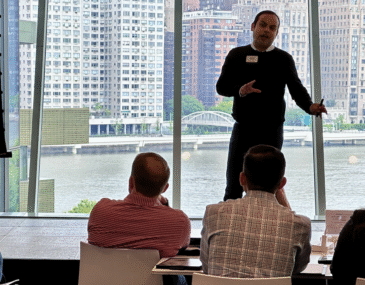
- Custom Enterprise Programs
- Price varies
- In person or hybrid
Request Information Now by completing the form below.

Hospitality Digital Marketing
| Select Payment Method | Cost |
|---|---|
| $3,750 | |