
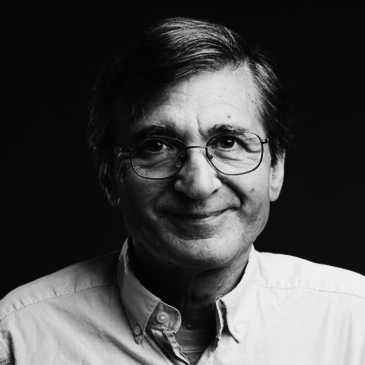
Received all degrees from Rutgers University. Arrived at Cornell in 1968 as Post-Doctoral Fellow for two years before becoming an Assistant Professor. I have been a full professor since 1986.Throughout my professional life I have been studying the control of food intake and regulation of body weight. I love both teaching and research.

Nutrition and Healthy LivingCornell Certificate Program
Nutrition and Healthy Living (DNSC03)
Enroll Now
Online
$3,750
Request More Info
More Info
Overview and Courses
This certificate program helps you answer one of the most important questions you can ask yourself: how can I live the longest, healthiest life possible? Courses present in-depth contemporary scientific information on nutrition and disease prevention, while building your awareness of ways to preserve optimal lifetime health. From diet to exercise and weight loss, you’ll go beyond the “fluff” and explore a holistic view of how biochemical pathways work together with physiological systems and behavior to determine your nutritional health and overall wellness.
For the best experience in this program it is recommended to take these courses in the order that they appear.
Course list
This course discusses how the digestive system works to extract critical nutrients from food, how we incorporate those nutrients into our body, and how the autonomic nervous system facilitates these processes. You will consider how bacteria from the environment may affect our digestive processes and why consuming foods containing specific nutrients can minimize some illnesses that occur with normal living.
View Course Start Dates Hide Course Start Dates
View Course Details- Nov 11, 2026
- Dec 9, 2026
- Jan 6, 2027
- Feb 3, 2027
- Mar 3, 2027
- Mar 31, 2027
- Apr 28, 2027
The nutrients our bodies use fall into two major categories: macronutrients and micronutrients. In this course, you will investigate carbohydrates — one of three macronutrients and the one that comprises the majority of all calories we consume. You will explore what carbohydrates are, why we need them, and how their energy is transformed and stored in our bodies. As the processing of carbohydrates results in glucose, you will also consider two conditions that can arise when the body cannot appropriately regulate glucose levels: diabetes and hypoglycemia.
View Course Start Dates Hide Course Start Dates
View Course Details- Nov 11, 2026
- Dec 9, 2026
- Jan 6, 2027
- Feb 3, 2027
- Mar 3, 2027
- Mar 31, 2027
- Apr 28, 2027
In this course, you will examine fats—a major macronutrient in our diets—and how they are used and transported in our bodies. You will also explore how atherosclerosis develops; this dangerous condition, in which fats build up and clog arteries, is a major cause of heart disease and stroke. This course walks you through what happens when too much fat circulates in our arteries and offers ways to delay and prevent atherosclerosis so you can live the longest and the healthiest life possible.
View Course Start Dates Hide Course Start Dates
View Course Details- Nov 11, 2026
- Dec 9, 2026
- Jan 6, 2027
- Feb 3, 2027
- Mar 3, 2027
- Mar 31, 2027
- Apr 28, 2027
The rise in chronic diseases linked to obesity is one of the most important public health issues facing our society today. From diabetes and heart disease to certain kinds of cancers and breathing disorders, such conditions lead to costly lifelong management and suffering. In this course, you will learn why obesity is on the rise, the underlying metabolic causes of weight gain, and how to correctly measure energy intake and expenditure in order to compare the effects of each on weight loss. You will also build your understanding of how biological and environmental factors determine body weight, as well as the amount of food we eat daily.
View Course Start Dates Hide Course Start Dates
View Course Details- Nov 11, 2026
- Dec 9, 2026
- Jan 6, 2027
- Feb 3, 2027
- Mar 3, 2027
- Mar 31, 2027
- Apr 28, 2027
Energetics explores the fundamental processes of energy flow and transformation within living organisms. This field examines both how organisms obtain and convert energy through nutrition and how they use that energy for various life functions and physical activities.
In this course, you will explore what energetics research reveals regarding key questions about human health and performance. You will examine evidence-based approaches to achieving and maintaining optimal body weight, enhancing physical performance, and understanding the crucial role of iron metabolism in overall health. The course concludes with a global perspective on malnutrition, examining its various forms, causes, and impacts on populations worldwide.
View Course Start Dates Hide Course Start Dates
View Course Details- Nov 11, 2026
- Dec 9, 2026
- Jan 6, 2027
- Feb 3, 2027
- Mar 3, 2027
- Mar 31, 2027
- Apr 28, 2027
In this course, you will learn how nutrition may prevent and improve symptoms of cancer, hypertension (high blood pressure), and osteoporosis. Specifically, you will explore the relationships between the food we eat and risk, understanding the role of animal protein, vitamins, and minerals in these major diseases and conditions. This course also builds your ability to critically analyze nutrition labels, understand dietary recommendations, and provides three key principles to follow for leading a healthy lifestyle.
Nutrition is a cornerstone of long-term health and a decisive factor in disease prevention. In this course, you will examine the complex interplay between lifestyle behaviors and three major chronic conditions: cancer, hypertension, and osteoporosis. You'll explore the specific roles of macronutrients, micronutrients, and physical activity in managing these risks. In addition, you will gain practical skills in interpreting nutrition metrics and labels, and leave with three foundational principles for maintaining an intentional, health-focused lifestyle.
View Course Start Dates Hide Course Start Dates
View Course Details- Nov 11, 2026
- Dec 9, 2026
- Jan 6, 2027
- Feb 3, 2027
- Mar 3, 2027
- Mar 31, 2027
- Apr 28, 2027
Request more Info by completing the form below.
more Info
by completing the form below.Act today—courses are filling fast.
How It Works
Format
All Online
Time Commitment
6 months with 3 to 5 hours of study per week
Cost
$3,750
Learn From Top Minds
Courses are developed by Cornell faculty.
Power Your Career
Gain today’s most in-demand skills to stand apart.
Flexibility Fits Your Life
Learn on your schedule without stepping out of your job.
Small-class Experience
Participate in facilitated discussions and live sessions with industry peers.
Real-world Projects
Apply learnings and insights to your work to make an impact right away.
Personalized Feedback
Enjoy meaningful feedback on assignments from expert facilitators.
Format
All Online
Time Commitment
6 months with 3 to 5 hours of study per week
Cost
$3,750
Learn From Top Minds
Courses are developed by Cornell faculty.
Power Your Career
Gain today’s most in-demand skills to stand apart.
Flexibility Fits Your Life
Learn on your schedule without stepping out of your job.
Small-class Experience
Participate in facilitated discussions and live sessions with industry peers.
Real-world Projects
Apply learnings and insights to your work to make an impact right away.
Personalized Feedback
Enjoy meaningful feedback on assignments from expert facilitators.
Faculty Author
David Levitsky
Professor Emeritus
Cornell Division of Nutritional Sciences
Professor of Nutrition and Psychology, Cornell Division of Nutritional Sciences
Key Course Takeaways
- Understand the scientific relationships between diet, exercise, and chronic disease
- Understand how our biochemistry, physiology, psychology, sociology, economics, and politics affect our nutrition and health
- Learn the many mechanisms in our bodies that are responsible for maintaining our health
- Critically evaluate claims and research concerning nutrition and health
- Learn healthy recipes through cooking demonstrations
Download Brochure
Fill out the form below to download program information and connect
with us.
Download a Brochure
Not ready to enroll but want to learn more? Download the certificate brochure to review program details.“
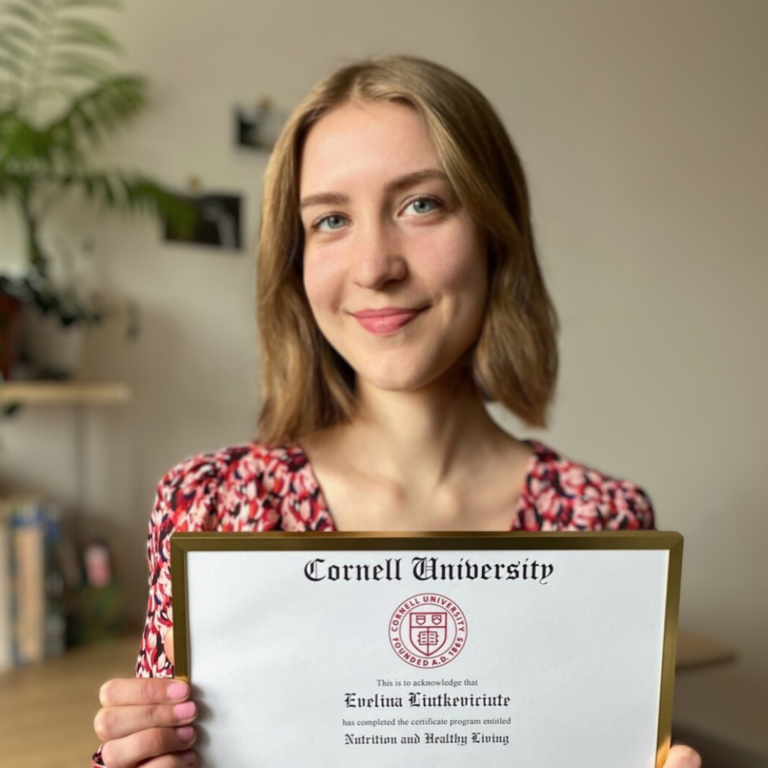
Earning a certificate from eCornell made me even more curious and confident to continue learning. Most importantly, it motivated me to continue making healthy food and lifestyle choices and encourage and inspire others to do the same.
‐ Evelina L.
What You'll Earn
- Nutrition and Healthy Living Certificate from Cornell Division of Nutritional Sciences
- 60 Professional Development Hours (6 CEUs)
Watch the Video
Nonlada shares how Cornell University’s online Nutrition and Healthy Living Certificate helped her build practical knowledge of nutrition and chronic disease, so she can make more informed health decisions for herself, her family, and her future healthcare career.
Who Should Enroll
- Nutrition, health, and wellness professionals
- Fitness and sports professionals, including personal trainers and athletic coaches
- Anyone interested in personal wellness and living a healthier life
- Anyone interested in nutrition, weight loss, diet, and exercise
Frequently Asked Questions
Nutrition advice is everywhere, but not all of it is trustworthy or grounded in human physiology. In the Nutrition and Healthy Living Certificate, authored by faculty from Cornell’s Division of Nutritional Sciences, you will build a clear, science-based understanding of how your body digests food, absorbs nutrients, produces energy, and responds to everyday lifestyle factors like stress, activity, and eating patterns.
You will go beyond simplified diet rules and learn how carbohydrates, fats, and energy balance actually work in the body. You’ll also strengthen your ability to evaluate popular nutrition claims and research so you can make more confident decisions for yourself, your clients, or your organization.
Along the way, you will practice applying what you learn through guided projects and hands-on activities, such as tracking your food intake, analyzing diet trends, and creating an evidence-based action plan for long-term health.
If you want a stronger understanding of nutrition science, practical tools for healthier everyday decisions, and the confidence to evaluate nutrition claims critically, you should choose Cornell's Nutrition and Healthy Living Certificate.
Cornell’s Nutrition and Healthy Living Certificate is built for people who want more than tips, meal plans, or trending diet commentary. You will learn the underlying science of nutrition and chronic disease risk then use that science to evaluate real claims about topics like low-carb dieting, supplements, and “heart-healthy” fats.
Unlike many online programs that are largely self-directed, this learning experience connects you with a small cohort of professionals and an expert facilitator who provides personalized feedback and guidance as you work through applied assignments and discussions.
You also benefit from learning design that is purpose-built for real understanding, not memorization. Across the certificate, you will interact with short video lessons, knowledge checks, discussions, and multi-part projects that help you apply physiology to everyday decisions. The curriculum regularly asks you to distinguish correlation from causation, trace claims back to credible sources, and practice critical thinking about nutrition research.
Finally, the content is intentionally holistic. You will connect digestion and metabolism to behavior and environment, including how stress can influence digestion and cardiovascular risk as well as how portion size, food variety, and social cues can shape what and how much you eat.
Cornell’s Nutrition and Healthy Living Certificate is designed for professionals and motivated learners who want a science-based foundation in nutrition and wellness.
The Nutrition and Healthy Living Certificate is a strong fit if you:
- Work in nutrition, health, or wellness and want to strengthen your ability to explain digestion, metabolism, and chronic disease risk using credible science
- Work in fitness or sport performance and want a clearer understanding of energy systems, carbohydrates, hydration, and practical nutrition choices
- Want to make better personal decisions about weight management, eating habits, and long-term health using evidence rather than trends
- Want to become more confident evaluating nutrition claims, supplement marketing, and diet headlines
Because the certificate focuses on understanding physiology and evidence, it is especially useful if you are tired of conflicting advice and want a clear way to think about nutrition and health information.
You will complete applied projects that help you translate nutrition science into real decisions. You’ll analyze evidence, critique popular claims, and create practical plans you can use personally or professionally.
Example projects in Cornell’s Nutrition and Healthy Living Certificate include:
- Evaluating the alkaline diet claim by applying the CRAAP test, distinguishing correlation from causation, and explaining why digestion and homeostasis prevent meaningful changes in blood pH
- Interpreting a recent randomized clinical trial comparing ketogenic dieting, time-restricted eating, and alternate-day fasting by connecting weight loss outcomes to ketogenesis, insulin dynamics, and sustainability limits
- Investigating an MCT oil digestion claim by tracing citations to peer-reviewed reviews and trials, assessing evidence quality over time, and identifying potential conflicts of interest from supplement-adjacent publishing
- Assessing a gut health and stress claim by reviewing a peer-reviewed study linking adverse childhood experiences to IBS symptoms and critiquing replicability based on participant demographics and measurement tools
- Building a personalized anti-atherosclerosis action plan by linking specific diet swaps, structured exercise, and stress-reduction habits to LDL transport, HDL clearance, and inflammation pathways
These projects are designed to build your confidence in reading research, spotting weak evidence, and making science-aligned recommendations and lifestyle choices.
You will build a rigorous, science-based understanding of nutrition and wellness that helps you communicate more credibly, evaluate claims more confidently, and support healthier decisions in professional settings.
After completing Cornell’s Nutrition and Healthy Living Certificate, you will have the skills to:
- Understand the scientific relationships among diet, exercise, and chronic disease
- Understand how our biochemistry, physiology, psychology, and sociology, along with societal factors like economics and politics, impact our nutrition and health
- Learn the many mechanisms in our bodies that are responsible for maintaining our health
- Critically evaluate claims and research concerning nutrition and health
- Learn healthy recipes through cooking demonstrations
Students often report finishing the program with a clearer, step-by-step understanding of digestion and how the body processes food, plus practical takeaways they can apply right away related to fiber, gut health, carbohydrates, metabolism, and lifestyle factors like stress. They also describe gaining a more evidence-based mindset for interpreting nutrition studies and spotting misinformation, supported by short, well-produced lessons and hands-on activities. Many learners find the certificate valuable both personally, helping them with their own health goals, and professionally, as they're better able to support patients, clients, or wellness initiatives with clearer, more credible guidance.
What truly sets eCornell apart is how our programs unlock genuine career transformation. Learners earn promotions to senior positions, enjoy meaningful salary growth, build valuable professional networks, and navigate successful career transitions.
Cornell’s Nutrition and Healthy Living Certificate, which consists of 6 short courses, is designed to be completed in 6 months. Each course in this certificate runs for 3 weeks, with a typical weekly time commitment of 3 to 5 hours.
The program is delivered online and includes a mix of learning — such as short video lessons, readings, and assignments — that you can complete on your own schedule. You will also participate in facilitated discussions and have opportunities to join live online sessions that add real-time interaction and support.
The experience is designed for working professionals. Because each course has a clear structure and weekly expectations, you can plan around busy periods while still maintaining momentum toward completion.
Students often say Cornell’s Nutrition and Healthy Living Certificate helps them make sense of nutrition through a clear, science-based explanation of how the body processes food then immediately turn that understanding into practical, everyday decisions. Many describe finishing the courses with a stronger grasp of digestion, fiber, carbohydrates, metabolism, and the way lifestyle factors like stress influence health, along with a new ability to evaluate nutrition claims and research more critically.
Students frequently highlight these themes:
- A clear, step-by-step understanding of digestion and how food is processed in the body
- Practical takeaways on fiber, gut health, and everyday eating choices they can apply right away
- Evidence-based instruction that helps them spot misinformation and interpret nutrition studies more confidently
- A holistic view connecting nutrition, stress, habits, and health outcomes, not just facts and figures
- Short, well-produced video lessons (often with visuals/animations) that make complex science easier to grasp
- Flexible pacing with the ability to pause, replay, and revisit lectures and transcripts when needed
- Live sessions that add real-time discussion and help the online experience feel personal and connected
- Highly engaged facilitators who provide timely, detailed, encouraging feedback on assignments and projects
- Hands-on activities and applied assignments that reinforce learning and help build confidence
- A well-organized, user-friendly platform designed to fit a working adult’s schedule
Many students also share that they use what they learn both personally, to improve their own eating habits and health goals, and professionally, to better support patients, clients, or wellness initiatives with clear, credible nutrition guidance.
No formal prerequisites are required, and Cornell’s Nutrition and Healthy Living Certificate is designed to build your understanding step by step. You will learn core physiology and nutrition concepts such as digestion and nutrient absorption, carbohydrate metabolism and blood glucose regulation, lipid transport and atherosclerosis, and the basics of measuring energy intake and expenditure.
You should be prepared to engage with scientific explanations and to practice critical thinking about research and health claims. If you’re willing to take notes, revisit short lectures as needed, and apply concepts through projects and discussions, you can be successful whether you are a health professional or learning primarily for personal development.
In Cornell’s Nutrition and Healthy Living Certificate, you will study how the body processes food and uses nutrients for energy then connect that science to common health questions and long-term risk reduction.
Topics and conditions covered include:
- Digestion and nutrient absorption, including the role of the autonomic nervous system and gastrointestinal hormones
- Carbohydrates, blood glucose regulation, diabetes, and hypoglycemia * Dietary fats, lipoproteins (LDL and HDL), and the development and prevention of atherosclerosis
- Energy balance, obesity trends, and how to measure energy intake and expenditure
- Weight management, exercise metabolism, hydration, protein basics, and common nutrient deficiencies such as iron and folate
- Nutrition’s relationship to cancer risk, osteoporosis, and hypertension, plus how to read labels and interpret dietary recommendations
You will also repeatedly practice evaluating popular diet and supplement claims using evidence-based tools.
You will learn through a mix of short lectures and active application. Throughout Cornell’s Nutrition and Healthy Living Certificate, you will complete multi-part projects, interactive exercises, discussions, and reflections designed to help you use the science, not just recognize the terms.
Examples of hands-on work include tracking elements of your own diet or lifestyle for a short period, analyzing popular diet or supplement claims using an evidence checklist, applying concepts like fiber and glycemic response to everyday food choices, and building an evidence-based action plan focused on long-term cardiovascular health.
These activities are supported by expert facilitator feedback, which helps you refine your reasoning and apply course concepts more confidently.
Explore programs to meet your professional goals
Certificates

Earn a Cornell credential as you complete multiple courses.
- 2 to 6 months
- $2,000 to $10,000
- Online
Courses

Learn in a small cohort, with graded assignments and opportunities for live sessions.
- 2 to 4 weeks
- $299 to $1,199
- Online
Workshops

Develop AI skills and strategies in interactive sessions with Cornell faculty.
- 3 hours
- $449
- Online
Degrees

Earn a professional master’s degree from Cornell University.
- 15 to 24 months part-time
- Tuition varies
- In person or online
On Campus
Join us in Ithaca or NYC to engage with peers and experts from around the world.
- 2 to 5 days
- $3,000 to $10,000
- In person - Ithaca or NYC
Programs for Teams
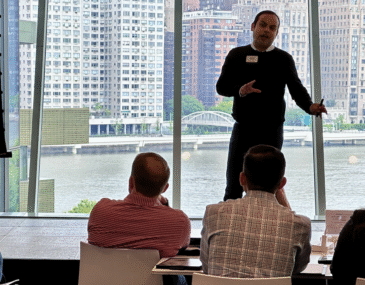
Address strategic challenges with Cornell University faculty to develop the skills required for organizational success.
- Custom Enterprise Programs
- Price varies
- In person or hybrid
Request Information Now by completing the form below.
Act today—courses are filling fast.
Purchase Options
3750

Nutrition and Healthy Living
| Select Payment Method | Cost |
|---|---|
| $3,750 | |
Review Program Pricing and Details