


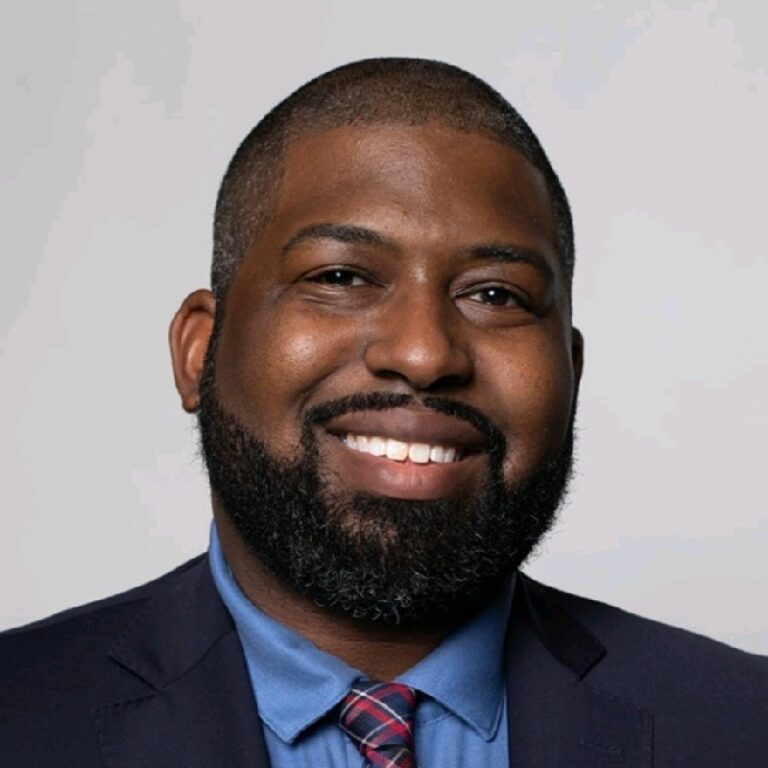
Brad Wendel joined the Cornell faculty in 2004 after teaching at Washington and Lee Law School from 1999 to 2004. Before entering graduate school and law teaching, he was a product liability litigator at Bogle & Gates in Seattle and a law clerk for Judge Andrew J. Kleinfeld on the U.S. Court of Appeals for the Ninth Circuit. Professor Wendel’s teaching interests are in the regulation of the legal profession and torts, and his research focuses on the application of moral and political philosophy to problems of legal ethics.
Request More Info
More Info
Overview and Courses
Exploring your personal take on the ethics of business and fostering standards for your organization can improve decision making, fortify team culture, and enable you to avoid potential issues and dysfunctions in various business settings.
This certificate program will give you the tools to apply the ethics of business to your organization. Throughout the program, you will break down the role ethics play in society and decision making. By using ethical reasoning, you will be able to anticipate issues that arise in business settings and create plans for avoiding them. You will then determine how to recognize psychological factors in yourself and others that interfere with making good ethical decisions and apply strategies to mitigate them.
The program will culminate in the discussion of research-based blockers that negatively affect work culture ethics at the personal and organizational levels. You will examine responsive strategies for the most common social and organizational factors that exacerbate the human tendency to overlook or misapply ethical analysis. By the end of the program, you’ll be prepared to foster the development of a responsible organizational culture and address potential legal and ethical issues, supporting your team in today’s complex and ever-changing business landscape.
For the best experience in this program it is recommended to take these courses in the order that they appear.
Course list
Ethical reasoning can be a pinnacle of decision making in business. In this course, you will survey the role that ethics play in society and gain a foundation for making good ethical decisions. You'll begin by identifying the similarities and differences between ethics and the law and examine myths and misunderstandings about ethics. You'll then investigate the contributions and insights from a number of major Western ethical traditions and use that analysis to inform your own ethical decision-making process. By the end of this course, you will be able to categorize and evaluate various situations and identify the relevant ethical considerations.
View Course Start Dates Hide Course Start Dates
View Course Details- Aug 12, 2026
- Nov 4, 2026
- Jan 27, 2027
- Apr 21, 2027
With technology playing a significant role in business, it is crucial to understand the ethical implications of the tools we use every day. This course will prepare you to anticipate and identify ethical and legal issues and apply appropriate ethical reasoning. You will begin by examining the objectives of a business or organization to assess how ethics relate to that purpose. By using case studies and real-world examples, you will establish an ethical decision-making framework that can be adapted to your organizational context and applied in your day-to-day work. Considering issues such as privacy, trust, and surveillance in the context of modern technology, you will leave this course with the ability to identify ethical issues and decisions that were made in complex, multifaceted cases.
View Course Start Dates Hide Course Start Dates
View Course Details- Aug 26, 2026
- Nov 18, 2026
- Feb 10, 2027
- May 5, 2027
Business and professional leaders sometimes make bad ethical decisions because personal and psychological factors influence how they perceive and address situations. This course is designed to help you recognize such personal factors and take steps to avoid the dangers associated with them. You will begin by considering implicit bias and other limitations that potentially affect all of us. By examining the hallmarks of ethical decision making, you will craft ways to avoid the psychological tendency to begin condoning a lowering of ethical standards. Finally, you will examine several case studies and draw insights from them that may help avoid ethical mistakes in your own decision making.
View Course Start Dates Hide Course Start Dates
View Course Details- Sep 9, 2026
- Dec 2, 2026
- Feb 24, 2027
- May 19, 2027
Social and organizational pressures combined with inherent human tendencies may help create organizational cultures that do not adhere to the ethical standards of society. In this course, you will identify a number of social influences on decision making. You will consider ways that a dysfunctional organizational culture may lead to wrongdoing. By looking into case studies and investigating real-world situations of ethical scandals at major companies, you will develop awareness and acquire guidelines for best practices in complex situations. Finally, you will apply what you have learned by identifying steps you and your organization might take to improve its culture and ensure that organizational decision making is ethical.
View Course Start Dates Hide Course Start Dates
View Course Details- Sep 23, 2026
- Dec 16, 2026
- Mar 10, 2027
- Jun 2, 2027
eCornell Online Workshops are live, interactive 3-hour learning experiences led by Cornell faculty experts. These premium short-format sessions focus on AI topics and are designed for busy professionals who want to gain immediately applicable skills and strategic perspectives. Workshops include faculty presentations, breakout discussions, and guided hands-on practice.
The AI Workshops All-Access Pass provides you with unlimited participation for 6 months from your date of purchase. Whether you choose to attend one workshop per month, or several per week, the All-Access Pass will allow you to customize your AI journey and stay on top of the latest AI trends.
Workshops cover a range of cutting-edge AI topics applicable across industries, hosted by Cornell faculty at the forefront of their fields. Whether you are just getting started with AI, seeking to build your AI skillset, or exploring advanced applications of AI, Workshops will provide you with an action-oriented learning experience for immediate application in your career. Sample Workshops include:
- Work Smarter with AI Agents: Individual and Team Effectiveness
- Leading AI Transformation: Bigger Than You Imagine, Harder Than You Expect
- Using AI at Work: Practical Choices and Better Results
- Search & Discoverability in the Era of AI
- Don't Just Prompt AI - Govern it
- AI-Powered Product Manager
- Leverage AI and Human Connection to Lead through Uncertainty
Request more Info by completing the form below.
more Info
by completing the form below.Act today—courses are filling fast.
How It Works
Format
All Online
Time Commitment
2 months with 3 to 5 hours of study per week
Cost
$3,900
Learn From Top Minds
Courses are developed by Cornell faculty.
Power Your Career
Gain today’s most in-demand skills to stand apart.
Flexibility Fits Your Life
Learn on your schedule without stepping out of your job.
Small-class Experience
Participate in facilitated discussions and live sessions with industry peers.
Real-world Projects
Apply learnings and insights to your work to make an impact right away.
Personalized Feedback
Enjoy meaningful feedback on assignments from expert facilitators.
Format
All Online
Time Commitment
2 months with 3 to 5 hours of study per week
Cost
$3,900
Learn From Top Minds
Courses are developed by Cornell faculty.
Power Your Career
Gain today’s most in-demand skills to stand apart.
Flexibility Fits Your Life
Learn on your schedule without stepping out of your job.
Small-class Experience
Participate in facilitated discussions and live sessions with industry peers.
Real-world Projects
Apply learnings and insights to your work to make an impact right away.
Personalized Feedback
Enjoy meaningful feedback on assignments from expert facilitators.
- View slide #1
- View slide #2
- View slide #3
- View slide #4
- View slide #5
- View slide #6
- View slide #7
- View slide #8
- View slide #9
Faculty Author
Professor of Law, Cornell Law School
Key Course Takeaways
- Identify the role of ethics in society and establish a broad foundation for making good ethical decisions
- Anticipate and apply ethical reasoning to issues that arise in business settings
- Address ethical issues arising from emerging technology
- Avoid pitfalls of psychological factors that interfere with making ethical decisions
- Diagnose and suggest responsive strategies for the social and organizational factors that exacerbate the human tendency to overlook or misapply ethical analysis

Download Brochure
Fill out the form below to download program information and connect
with us.
Download a Brochure
Not ready to enroll but want to learn more? Download the certificate brochure to review program details.“
As a seasoned executive and law school graduate, this program at Cornell was an excellent experience that gave me a fresh perspective on successful strategies, sharpening my negotiation techniques and equipping me with valuable tools to create fantastic value for my employer.
‐ Brandon C.
What You'll Earn
- Business Ethics Certificate from Cornell Law School
- 40 Professional Development Hours (4.0 CEUs)
Watch the Video
Hear eCornell students share their stories.
Who Should Enroll
- Business managers and leaders
- Founders and entrepreneurs
- Anyone looking to work effectively with legal professionals
- Professionals, particularly those working in highly regulated industries
Frequently Asked Questions
Ethical missteps rarely start as headline-making scandals. They usually begin as everyday decisions made under pressure, with incomplete information, misaligned incentives, or unexamined assumptions about what a business is “for.” Cornell’s Business Ethics Certificate helps you build a practical way to think through those moments so you can make choices you can defend to stakeholders, teammates, and yourself.
In this certificate program, authored by faculty from Cornell Law School, you will develop a foundation in ethical reasoning, learn to separate what is legal from what is ethical, and practice applying major ethical traditions and case-based analysis to real dilemmas. The program also equips you to recognize how cognitive biases, emotion, authority, and group dynamics can quietly distort judgment, then translate that insight into concrete steps you can take to strengthen ethical decision making in your team and organization.
If you want clearer ethical judgment under real-world pressure, practical frameworks you can use immediately, and the ability to build a healthier organizational culture, you should choose Cornell’s Business Ethics Certificate.
Many online ethics courses emphasize concepts you read about and then test in isolation. Cornell’s Business Ethics Certificate is built around applied analysis and structured reflection that you can carry into your role, especially when decisions involve competing stakeholder interests, technological complexity, and organizational pressure.
You practice multiple ways to reason, not just one point of view. You will use ethical traditions as a toolkit, apply a case-method approach to dilemmas where the “right” answer is not obvious, and work through a step-by-step decision framework designed to survive real organizational constraints like uncertainty, hierarchy, and reputational risk. You also go beyond individual intent to examine behavioral ethics and the social dynamics that drive ethical fading, groupthink, and slippery-slope decision making, so you can strengthen the systems around you rather than relying on willpower alone.
The learning experience is designed for working professionals, with expert facilitation, discussion-based learning, and feedback on your written analysis so you can go beyond memorizing rules to sharpen your reasoning and communication.
Enrolling in Cornell’s Business Ethics Certificate also provides you with a 6-month All-Access Pass to eCornell's live online AI Workshops, interactive sessions led by world-class Cornell faculty that combine Ivy League insight with practical applications for busy professionals. Each 3-hour Workshop features structured instruction, guided practice, and real tools to build competitive AI capabilities, plus the opportunity to connect with a global cohort of growth-oriented peers. While AI Workshops are not required, they enhance certificate programs through:
- Integrating AI perspectives across most curricula
- Responding to emerging AI developments and trends
- Offering direct engagement with Cornell faculty at the forefront of AI research
Leaders and professionals who make decisions that affect customers, employees, communities, and partners will find Cornell’s Business Ethics Certificate especially relevant. The program is designed for business managers, founders, and other professionals who want to strengthen judgment, reduce ethical risk, and communicate decisions clearly in environments where the stakes are high and the facts are incomplete.
The Business Ethics Certificate curriculum is also a strong fit if you work in a regulated or high-trust context or if your role intersects with data, privacy, monitoring, automated decision making, or other technology-enabled processes. You will gain language and frameworks that help you raise issues earlier, challenge assumptions productively, and design better decision processes for your team.
No formal prerequisites are required to enroll in Cornell’s Business Ethics Certificate; the work is best suited to learners who are ready to write, reflect, and engage with real cases that mirror modern organizational pressures.
Your project work in Cornell’s Business Ethics Certificate is writing-based and case-driven, designed to help you practice ethical analysis. Across the program, you will produce short, structured deliverables that build your ability to justify decisions, anticipate stakeholder impact, and propose culture and process improvements.
Examples of projects you can expect include:
- Reflective essays that define ethics in practical terms, engage at least one major ethical tradition, and apply case-method reasoning to a real dilemma
- A multi-part analysis of business purpose and responsibility, followed by a structured evaluation of ethical issues in technology-driven contexts such as privacy, surveillance, and automated decision making
- Written applications of a step-by-step ethical decision framework to a complex organizational case, including fact gathering, stakeholder mapping, options analysis, and monitoring
- Case analyses that connect behavioral ethics and psychology to real decisions, including identifying predictable biases and proposing improvements to ethics training
- A capstone-style project that diagnoses cultural and social dynamics that contribute to wrongdoing and recommends concrete changes that reduce ethical drift and strengthen organizational decision making
Cornell’s Business Ethics Certificate helps you strengthen credibility as a decision maker by giving you practical frameworks to analyze ethically complex situations, communicate your reasoning, and improve the decision environment around you.
After completing the Business Ethics Certificate, you will be prepared to:
- Identify the role of ethics in society and establish a broad foundation for making good ethical decisions
- Anticipate and apply ethical reasoning to issues that arise in business settings
- Address ethical issues arising from emerging technology
- Avoid pitfalls of psychological factors that interfere with making ethical decisions
- Diagnose and suggest responsive strategies for the social and organizational factors that exacerbate the human tendency to overlook or misapply ethical analysis
Students commonly report that the program changes how they think and lead day to day. In survey feedback, learners highlight clear tools for ethical reasoning, realistic case studies that mirror workplace dilemmas, and increased confidence discussing ethical issues with teams and stakeholders. Many also point to actionable facilitator feedback that strengthens their analysis and writing, plus insights into behavioral and psychological drivers that make ethical lapses more likely under pressure.
What truly sets eCornell apart is how our programs unlock genuine career transformation. Learners earn promotions to senior positions, enjoy meaningful salary growth, build valuable professional networks, and navigate successful career transitions.
Cornell’s Business Ethics Certificate, which consists of 4 short courses, is designed to be completed in 2 months. Each course runs for 2 weeks, with a typical weekly time commitment of 3 to 5 hours.
Built for busy professionals, the experience is largely flexible and asynchronous, so you can complete readings, videos, discussions, and writing assignments on your own timeline within each course’s weekly structure. Live sessions offer opportunities to deepen discussion and help you test your thinking with peers and your facilitator, without turning the program into a rigid, scheduled class.
Students in Cornell’s Business Ethics Certificate often describe the experience as a highly relevant, real-world exploration of ethical decision making that changes how they think and lead. They frequently point to the program’s strong blend of practical frameworks, case-based analysis, and structured reflection, supported by expert faculty and engaged facilitators who provide detailed, actionable feedback.
Common themes include:
- Clear tools for ethical reasoning and decision making in modern organizations
- Case studies that mirror real workplace dilemmas and current events
- A stronger ability to lead thoughtfully when stakes, pressure, and ambiguity are high
- Insight into the human side of ethics, including behavioral and psychological drivers
- Reflection-focused assignments that help students apply concepts at work and in life
- High-caliber instruction and credible, research-informed content
- Substantive facilitator feedback that strengthens thinking and writing
- Engaging interaction through discussion boards and opportunities for live sessions
- A well-paced, well-structured format that keeps learning moving without feeling chaotic
- Flexible, fully online access that fits the schedules of working professionals
Many students also say they leave the Business Ethics Certificate program with practical language and confidence to discuss ethical issues with teams and stakeholders, and they value that the program feels immediately applicable to leadership responsibilities across industries.
A law degree is not expected. Cornell’s Business Ethics Certificate is designed to help you separate legal compliance from ethical responsibility and build the habit of giving reasons for decisions that stakeholders can evaluate, even when the law is unclear or permissive.
You will work with practical concepts like stakeholders, fiduciary roles, consent, rights-based constraints, and organizational accountability, but the focus stays on ethical analysis you can apply in day-to-day business decisions. If you regularly partner with legal, compliance, HR, or risk teams, the program can also help you ask sharper questions and recognize when an “ethical alarm bell” should trigger deeper review.
Data-driven products and automated decisions can scale benefits quickly, but they can also scale harm when bias, opacity, or weak consent gets built into the system. Cornell’s Business Ethics Certificate prepares you to spot these issues earlier and evaluate them with a structured approach that considers stakeholders, rights, trade-offs, and long-term trust.
You will analyze real scenarios involving big data, algorithmic bias, surveillance, and privacy, including how consent can fail when users lack real understanding or choice. You’ll also practice applying an ethical decision framework that pushes you to clarify facts, map stakeholder impact, generate options, choose a defensible process, and monitor outcomes over time.
Strong ethical cultures are built through systems and everyday norms, not just values statements. Cornell’s Business Ethics Certificate helps you identify the pressures that lead good people to make bad calls, then translate that insight into practical interventions that make ethical behavior easier and misconduct harder.
You will examine how authority, conformity, diffusion of responsibility, and groupthink shape decisions, and how small exceptions can become a slippery slope toward normalized wrongdoing. You’ll also learn how incentives, metrics, rituals, and informal stories inside an organization can quietly redefine what people think is acceptable. By the end of Cornell’s Business Ethics Certificate program, you’ll be better equipped to recommend concrete changes like structured dissent, clearer escalation paths, balanced measurement, and after-action learning practices that reduce ethical drift and strengthen accountability.
Explore Related Programs



















Request Information Now by completing the form below.
Act today—courses are filling fast.
Purchase Options
3900

Business Ethics
| Select Payment Method | Cost |
|---|---|
| $3,900 | |
Review Program Pricing and Details