
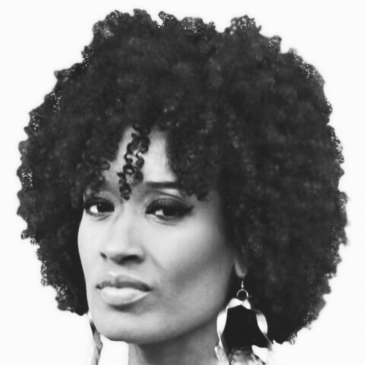
Mikaila Brown is a fashion anthropologist with a doctorate in Anthropology and Education from Columbia University. After working for designers like Oscar de la Renta, Pamela Roland, and Betsey Johnson, she ran a socially conscious fashion line for four years. This has evolved into The Common Thread Project (TCTP), a travel and fashion brand which highlights the cultural diversities within the fashion industry by investigating the style trends of local communities. TCTP uses anthropological tools to unpack the historical, cultural, and political roots behind the trends that locals wear, specifically looking at the ways in which these communities use style choices to communicate who they are and what they value. Dr. Brown shares this knowledge with the public by offering cultural shopping tours through Airbnb’s new experiential arm. Her company also works with fashion brands to help them provide design options that are as culturally sensitive as they are consumable.

Fashion Design ManagementCornell Certificate Program
Request More Info
Overview and Courses
Have you ever seen a stunning piece of clothing in a store window or on a runway that took your breath away? Have you ever wanted to be a part of making trendsetting fashion products? Fashion is ready for innovation; the time has never been better for newcomers to disrupt the market as fashion brands seek out inventive new ways to sell products, promote diversity, and emphasize sustainability practices.
Whether your goal is to be a designer, trend forecaster, merchandiser, buyer, or production manager, this certificate program provides an overview of the fashion industry that combines consumer and industry knowledge with business and economics.
The courses in the program cover four major areas of fashion design management: trend forecasting, product line development, production planning, and distribution and marketing. After examining current trends, you will have the opportunity to conceptually design your own six-product fashion line that considers style, silhouette, color, and fabric choices. From there, you will explore the world of production planning and how factories are chosen to manufacture items for fashion brands. Finally, you’ll create a marketing and distribution plan to determine how to best bring your fashion line to market.
Once you’ve completed the program, you’ll have gained a strong foundation in how the business of fashion operates that can help you launch or grow your career in the industry.
The courses in this certificate program are required to be completed in the order that they appear.Course list
What does it mean for something to be "on trend"? In fashion, trends guide everything from design to consumer behavior, evolving and changing over years and even decades. Trend forecasting is how industry experts predict what new trends will become popular with consumers and how existing trends will evolve over time. A knowledge of trend forecasting is necessary for staying relevant in fashion, whether you are working for an established fashion house or starting your own line. This course will guide you through the trend forecasting process so you can create a relevant trend forecast, be it for your own fashion brand, a large industry brand, or a trend forecasting service.
You will research current fashion trends using primary and secondary sources to determine what trends will be prominent with consumers. This research will be used to choose a trend for your trend forecast report. You will then gather the data from your research and, using the GRAB method, interpret your findings around a target market of your choice. Once your data is collected and synthesized, you will use your findings to complete your trend forecast report.
- Oct 28, 2026
- Jan 27, 2027
- Apr 21, 2027
- Jul 14, 2027
- Oct 6, 2027
- Dec 29, 2027
When you think about fashion, you often imagine a fashion line displayed at a store or coming down a runway. The development of the fashion line is a process that begins long before clothing is constructed and placed on a model. Product line development involves a significant amount of planning on the part of the designer as well as the other fashion professionals involved in the process.
In this course, you will develop a fashion product line, either for your own brand or for a brand of your choice. You'll start by identifying the target market, brand, and product type toward which you will design. Once you establish this foundation, you will develop the concept for your line and get feedback from your peers. You will use this feedback to conceptually design a six-piece fashion product line and an accompanying line sheet.
You are required to have completed the following course or have equivalent experience before taking this course:
- Fashion Trends and Forecasting
- Nov 11, 2026
- Feb 10, 2027
- May 5, 2027
- Jul 28, 2027
- Oct 20, 2027
The quality of your product is integral to managing a successful fashion brand. When fashion garments are created in a factory setting for a brand, every element of the garment's production cycle must be planned. Forward thinking in garment production ensures that every piece is completed to your specifications in a timely manner and that the manufacturing facilities you choose will be the best fit for your product line.
In this course, you will explore the process of production planning used to create a fashion product line. You will begin by creating a bill of materials that can be used to communicate the fabric needs of each product in manufacturing. You will then consider how stitching, construction, and fit are used by manufacturers to create a garment that will appropriately fit your consumer. You'll conclude the course by examining how factories and manufacturers operate and filling out a time and action calendar that you can use to plan the manufacturing timeline of your product line.
You are required to have completed the following courses or have equivalent experience before taking this course:
- Fashion Trends and Forecasting
- Fashion Line Product Development
- Nov 25, 2026
- Feb 24, 2027
- May 19, 2027
- Aug 11, 2027
- Nov 3, 2027
Fashion is made to be worn, and consumers must have access to it in order to make that happen. Successful fashion product lines are not just well designed; they also meet sales goals, whether those goals are set by a larger fashion brand or by an independent designer. Distribution and marketing are the methods that fashion brands use to get product lines into stores and into the hands of consumers. Every element, from your sales plan and retail pricing scheme to your selected distribution channels, can be used to help reach your target customer.
In this course, you will begin by setting a sales goal and creating a sales plan using resources such as the apparel retail calendar and assortment planning. After you create your sales plan, you will examine how fashion brands set a retail cost for their products and establish a retail cost for key products. You will then design a marketing strategy using distribution and promotion methods to ensure that your products are accessible and appealing to your target consumers. By using this process, you can create an appropriate targeted marketing and distribution strategy for any fashion retail space and product assortment.
You are required to have completed the following courses or have equivalent experience before taking this course:
- Fashion Trends and Forecasting
- Fashion Line Product Development
- Production Planning
- Dec 9, 2026
- Mar 10, 2027
- Jun 2, 2027
- Aug 25, 2027
- Nov 17, 2027
Request more Info by completing the form below.
How It Works
Faculty Authors

Tasha Lewis, Ph.D., is an associate professor in the Department of Fiber Science & Apparel Design at Cornell University, where she teaches fashion design management. Her research encompasses the consumer-driven aspects of the fashion industry as it contends with advances in technology, shortened product life cycles, and demands for more social responsibility and transparency. Dr. Lewis’s primary research explores how to assess the value that environmentally sustainable fashion products and supporting manufacturing processes bring to today’s fashion supply chain. Most recently, she has been focused on the post-consumer stage of the textile and clothing recycling process.
Key Course Takeaways
- Produce a cohesive trend forecast report that can inform fashion product lines
- Conceptually design a six-product fashion line using a line creation toolkit and additional resources provided for color and fabric selection
- Explore fashion production from fit and stitching to selecting a factory
- Create a distribution and marketing plan for bringing a fashion pop-up shop to market

Download a Brochure
Not ready to enroll but want to learn more? Download the certificate brochure to review program details.
What You'll Earn
- Fashion Design Management Certificate from Cornell College of Human Ecology
- 40 Professional Development Hours (4 CEUs)
Watch the Video
Who Should Enroll
- Anyone hoping to build or grow a career in the fashion industry
- Entrepreneurs
- Designers seeking a business background
Frequently Asked Questions
Fashion moves fast, but the work behind a successful product line is methodical: research, market clarity, product planning, production discipline, and a go-to-market strategy that matches how customers actually shop. Cornell’s Fashion Design Management Certificate helps you build that end-to-end understanding so you can make stronger decisions, whether you are developing a line, supporting a brand, or planning your next move in the industry.
In this certificate program, authored by faculty from Cornell’s College of Human Ecology, you will learn how to forecast trends using structured research, translate insights into a concept and a cohesive six-look collection, plan manufacturing details that protect quality and fit, and build a practical distribution and marketing approach for bringing a fashion pop-up concept to market. Throughout the program, you create portfolio-ready deliverables that demonstrate how you think and how you work.
Because the Fashion Design Management Certificate is built around applied projects, you will finish with tools you can reuse, including a trend forecast report, a line sheet, production planning templates, and sales, pricing, assortment, and promotion planning frameworks.
If you want a clear view of how the fashion business works, a set of practical deliverables you can use immediately, and the confidence to connect creative direction to market and operational realities, you should choose Cornell's Fashion Design Management Certificate.
Many online fashion courses focus on inspiration and isolated skills then leave you on your own to connect the dots. Cornell’s Fashion Design Management Certificate is designed as an applied, expert-facilitated experience where you practice the decisions that sit between creativity and commerce.
You learn with a small cohort and an expert facilitator who guides discussions and provides feedback on your submitted work. That means your trend forecast, line concept, manufacturing plan, and marketing strategy get reviewed as you build them, rather than being treated as optional exercises. The coursework also stays grounded in how the industry operates. You use structured approaches to trend research (including primary observations and secondary sources), translate a concept into a line and line sheet, evaluate fabric performance and sustainability trade-offs, analyze construction and fit information for production documentation, and build pricing, assortment, and promotion plans tied to a specific retail format.
The result is a learning experience that is flexible, but not hands-off. Cornell’s Fashion Design Management Certificate gives you a clear path to produce professional artifacts that reflect real fashion design management work.
Cornell’s Fashion Design Management Certificate is designed for professionals and aspiring professionals who want a practical, business-informed view of how fashion products go from trend signal to a market-ready plan.
You are a strong fit if you want to:
- Build or strengthen a foundation in trend forecasting, line planning, production basics, and distribution and marketing
- Develop portfolio-ready work that shows your thinking, not just your taste level
- Connect design choices to target customer needs, price points, and retail realities
- Explore sourcing, construction, fit, and scheduling considerations that influence quality and profitability
Cornell’s Fashion Design Management Certificate works well for entrepreneurs launching a brand, designers who want more business and operational fluency, and people seeking roles that touch merchandising, buying, trend research, product development, or production coordination within a fashion organization. The program is also structured to be manageable alongside full-time work, with short courses and weekly effort expectations designed for working professionals.
Project work in Cornell’s Fashion Design Management Certificate is designed to mirror real fashion design management outputs, so you can practice research, decision making, and communication in a format you can reuse professionally.
Examples of trend-focused project directions include:
- Forecast “Lazy Luxury” by tracking how burnout and slow-living values drive demand for relaxed silhouettes, premium-soft fabrics, and logo-free accessories that move from work to travel with ease
- Build a menswear trend case for heritage-inspired tailoring by connecting “quiet wealth” culture to structured suiting, classic outerwear, and analog accessories that signal understated status
- Map “Eclectic Minimalism” by showing how evolving workplace norms and tech-saturated lifestyles push consumers toward timeless basics upgraded with bold pattern, color, and accessory play
- Analyze the rise of personalized accessories by linking identity-led thrift culture to customizable bags, charms, and jewelry that let consumers express individuality within everyday dress codes
- Forecast “Western Chic” by translating rodeo and country-music event culture into product direction for boots, denim, statement belts, and feminine details like lace and turquoise accents
Beyond trend work, you also build practical artifacts that support a full go-to-market view. You will develop a concept and a cohesive six-piece line with a professional line sheet, create production planning documentation such as a time-and-action calendar, and build a retail and marketing plan that includes sales planning, pricing logic, assortment planning, and promotion strategy. Cornell’s Fashion Design Management Certificate emphasizes clear, presentation-ready communication of your decisions.
Cornell’s Fashion Design Management Certificate builds your ability to make and communicate end-to-end product decisions, from trend insight through line planning and production to pricing, assortment, and go-to-market strategy.
After completing Cornell’s Fashion Design Management Certificate, you will have the skills to:
- Produce a cohesive trend forecast report that can inform fashion product lines
- Conceptually design a six-product fashion line using a line creation toolkit and additional resources provided for color and fabric selection
- Explore fashion production from fit and stitching to selecting a factory
- Create a distribution and marketing plan for bringing a fashion pop-up shop to market
Students often report long-term benefits that show up as stronger day-to-day performance and clearer career direction. They describe gaining a behind-the-scenes understanding of how the fashion industry works and finishing with practical tools they can apply immediately to line development, merchandising, production, and brand-building decisions. They also highlight a deeper grasp of trend forecasting and how to translate insights into product and assortment choices, more confidence with distribution and fashion marketing strategy, and practical exposure to garment manufacturing and production planning, including sourcing considerations.
In addition, because eCornell represents the pinnacle of premium online professional education, participants in eCornell's programs often experience long-term career transformation such as promotions to more senior roles, salary increases, improved networking opportunities, and successful career transitions.
Cornell’s Fashion Design Management Certificate, which consists of 4 short courses, is designed to be completed in 2 months. Each course in this certificate runs for 2 weeks, with a typical weekly time commitment of 3 to 5 hours.
The schedule is flexible in the places that matter most. You complete most coursework on your own time, including videos, readings, research, and project work. At the same time, the experience is not purely self-paced. You have structured deadlines that help you keep momentum, plus opportunities for live interaction with your facilitator and cohort.
Because projects build practical deliverables, many learners find it helpful to set aside a consistent weekly block for research and development work, especially when you are assembling visual boards, line sheets, or planning documents. Cornell’s Fashion Design Management Certificate is designed so you can do that without stepping away from a full-time job.
Students in Cornell’s Fashion Design Management Certificate often say the program gives them a clear, behind-the-scenes understanding of how the fashion industry actually works, and that they finish with practical tools they can apply immediately to line development, merchandising, production, and brand-building decisions. They also highlight how supported they feel by engaged facilitators and how manageable the learning experience is alongside busy professional schedules.
Common themes students share include:
- A deeper grasp of trend forecasting and how to turn insights into product and assortment decisions
- Hands-on practice building a retail assortment plan and thinking like a merchandiser
- Clear, step-by-step guidance for developing a collection, from concept through line planning
- Practical exposure to garment manufacturing and production planning, including sourcing considerations
- A more confident understanding of distribution and fashion marketing strategy
- New perspective and sharper observation skills for analyzing trends and the market
Beyond the fashion-specific skills, students frequently mention the learning experience itself as a standout:
- Flexible, self-paced format that fits full-time work and travel
- Well-organized modules with easy-to-access resources and tools
- Facilitator feedback that is timely, supportive, and actionable
- Live touchpoints and peer interaction that help reinforce learning and build connections
- A fast, focused structure that still feels substantive and worth revisiting after the course ends
You will practice with the same kinds of tools fashion teams use to turn ideas into decisions and plans. In Cornell’s Fashion Design Management Certificate, you work with:
- A structured trend forecasting process using primary observations and secondary research, including the GRAB method (Gather, Recognize, Arrange, Build)
- Target market and customer persona development using demographic and psychographic segmentation
- Concept development artifacts such as moodboards and trend vision boards
- Production planning documents such as spec-sheet inputs and a time-and-action calendar for scheduling manufacturing milestones
- Retail planning frameworks, including the NRF 4-5-4 calendar for building a sales plan, pricing formulas for markup, and assortment planning paired with a promotional strategy
These tools are taught in a way that supports portfolio-ready communication, so you can explain not only what you chose but why you chose it.
Cornell’s Fashion Design Management Certificate is designed to be accessible to people entering or pivoting within the fashion industry, including entrepreneurs and designers who want a stronger business foundation.
Coursework emphasizes research, analysis, planning, and conceptual development rather than garment construction in a studio. You will create artifacts such as a trend forecast report, a concept and line plan with a line sheet, production planning documentation, and a sales, pricing, assortment, and promotion plan. That means you do not need advanced sewing skills to be successful.
You will get more value from the program if you bring curiosity about the fashion market and a willingness to work with details such as target customers, fabric considerations, fit and construction terminology, and retail math for pricing and markups. Cornell’s Fashion Design Management Certificate provides guidance and templates so you can focus on building practical capability, even if you are earlier in your fashion career.
Sustainability and responsible decision making show up as practical considerations throughout Cornell’s Fashion Design Management Certificate, not as abstract talking points.
You will learn how to:
- Evaluate the environmental impact of textiles by comparing natural and synthetic fibers, considering certifications and recycled options, and weighing dyeing and testing implications
- Factor sustainability and sourcing trade-offs into production planning decisions, including considerations that affect lead time, oversight, and labor-rights risk
- Incorporate cultural context into trend work by distinguishing respectful inspiration from cultural appropriation and by asking critical questions before recommending design directions
By connecting these topics to product decisions like fabric selection, sourcing choices, and trend interpretation, Cornell’s Fashion Design Management Certificate helps you build a more responsible and credible approach to brand and product planning.
Explore Related Programs



















“I was really able to harness that technology and have a classroom right at my kitchen table with eCornell.”
Explore programs to meet your professional goals

- 2 to 6 months
- $2,000 to $10,000
- Online

- 2 to 4 weeks
- $299 to $1,199
- Online

- 3 hours
- $449
- Online

- 15 to 24 months part-time
- Tuition varies
- In person or online

- 2 to 5 days
- $3,000 to $10,000
- In person - Ithaca or NYC

- Custom Enterprise Programs
- Price varies
- In person or hybrid
Request Information Now by completing the form below.

Fashion Design Management
| Select Payment Method | Cost |
|---|---|
| $2,500 | |