

Linda Nozick is a professor in Cornell’s School of Civil and Environmental Engineering. She served as director of the school for more than a decade. Prior to that role, Nozick was the director of the college’s Systems Engineering Program, which she co-founded. Nozick has been the recipient of several awards including a CAREER award from the National Science Foundation and a Presidential Early Career Award for Scientists and Engineers from President Clinton for “the development of innovative solutions to problems associated with the transportation of hazardous waste.” She is a past U.S. Presidential appointee to the U.S Nuclear Waste Technical Review Board. Nozick has authored over 100 peer-reviewed publications, many focused on transportation, the movement of hazardous materials, and the modeling of critical infrastructure systems. Nozick holds a B.S. in systems analysis and engineering from the George Washington University and a M.S.E and Ph.D. in systems engineering from the University of Pennsylvania.

Construction
ManagementCornell Certificate Program
Request More Info
Overview and Courses
Successfully managing a construction project requires balancing competing priorities, coordinating diverse stakeholders, and making informed decisions about cost, schedule, quality, and risk. From initial planning through project closeout, construction managers must bring together technical expertise and project management skills to keep complex projects moving forward.
In this certificate program, you will learn from Cornell faculty with expertise in construction, engineering, and project management as you build the skills to plan, coordinate, and control construction projects. You’ll explore project delivery methods, stakeholder responsibilities, and construction materials while discovering how to evaluate building systems and establish quality control requirements. You’ll also develop detailed cost estimates and competitive bids, create and refine project schedules, and apply contract administration and project control techniques to manage changes and address potential disputes.
Through practical exercises and applied projects, you will gain experience making the types of decisions construction managers face throughout the project life cycle. By the end of the program, you will be better prepared to manage project scope, cost, schedule, and quality while navigating the complexities of construction projects.
The courses in this certificate program are required to be completed in the order that they appear.
This program includes two years of access to the Project Management Symposium!
These highly interactive virtual events span multiple days and explore today’s most pressing topics. Symposium sessions offer exclusive opportunities to engage in real-time discussions with your eCornell community, applying insights from your courses to real-world scenarios. Through reflections and small-group discussions, you’ll deepen your learning, broaden your perspective, and expand your professional network.
Symposium events are held throughout the year, providing ongoing opportunities to stay engaged, gain fresh perspectives, and strengthen your skills. Once enrolled, you’ll receive access to the Symposium networking site and details about upcoming sessions. You can participate in as many as you’d like to make the most of your experience, though attendance is not required to complete your program.
Course list
Successful construction projects begin with effective planning, clear stakeholder responsibilities, and informed decisions about scope, cost, schedule, and quality. In this course, Professor Paul Carr will guide you through the foundations of managing capital construction projects, from initial concept through project closeout.
You will examine the roles and responsibilities of key stakeholders, compare project delivery methods, and explore how procurement, bidding procedures, and contracts influence project outcomes. You'll also learn to use industry cost data and indices to evaluate construction costs and develop feasibility-level budgets, from industry resources such as the Engineering News-Record (ENR.com).
Through a three-part course project, you will update a historical construction budget to reflect current market conditions, compare estimated costs with actual contractor data, and prepare a feasibility-level estimate for a new project. You'll then present your findings and recommendations from the perspective of a project team advising the owner. By the end of the course, you'll be better prepared to coordinate stakeholders, evaluate project feasibility, and make informed decisions during the early stages of construction planning.
- Jan 27, 2027
- Mar 24, 2027
- May 19, 2027
- Jul 14, 2027
- Sep 8, 2027
- Nov 3, 2027
- Dec 29, 2027
Selecting the right construction materials and establishing effective quality control practices are essential to ensuring that building projects meet structural, safety, and performance requirements. In this course, Professor Matthew Reiter will guide you through the properties of common structural materials, the relationships between building systems, and the quality control considerations that influence construction decisions.
You will compare the properties, limitations, and code requirements of steel, timber, concrete, and masonry while examining how material selection affects structural design and construction methods. You'll also explore foundations, gravity and lateral systems, and construction sequencing, using drawings and plans to evaluate structural components and their construction implications.
Through practical exercises and applied project work, you will develop a baseline structural quality control plan that incorporates material-specific inspection requirements and structural review criteria. You'll then adapt your plan to address project-specific risks, site hazards, and emerging construction materials and methods. By the end of the course, you'll be better prepared to evaluate material choices, assess constructability, and establish quality control practices for construction projects.
You are required to have completed the following course or have equivalent experience before taking this course:
- Foundations of Construction Project Management
- Feb 10, 2027
- Apr 7, 2027
- Jun 2, 2027
- Jul 28, 2027
- Sep 22, 2027
- Nov 17, 2027
Accurate cost estimating is essential to evaluating construction opportunities, managing financial risk, and developing competitive bids. In this course, Professor Paul Carr will guide you through the process of preparing comprehensive construction cost estimates that account for project requirements, market conditions, and contractor financial objectives.
You will learn to calculate direct costs for labor, materials, equipment, subcontractors, and self-performed work using construction drawings, specifications, quantity takeoffs, labor productivity rates, and supplier and subcontractor proposals. You'll then evaluate indirect costs, including field and home office overhead, insurance, bonds, and schedule-related expenses, to develop a more complete picture of project costs.
Through applied estimating exercises, you will incorporate risk, contingency, overhead, and profit considerations to prepare a detailed construction bid. By the end of the course, you'll be better prepared to develop and defend cost estimates that reflect both the unique requirements of a construction project and the financial objectives of the contractor.
You are required to have completed the following courses or have equivalent experience before taking this course:
- Foundations of Construction Project Management
- Construction Materials and Quality Control
- Feb 24, 2027
- Apr 21, 2027
- Jun 16, 2027
- Aug 11, 2027
- Oct 6, 2027
- Dec 1, 2027
Effective scheduling is critical to keeping construction projects on track while managing costs, resources, and uncertainty. In this course, Professor Linda Nozick will provide a rigorous introduction to construction project planning and scheduling, using industry-standard methods to build, analyze, and adapt schedules under real-world constraints.
You will explore both fixed-timeline scheduling approaches and methods that account for uncertainty and risk. You'll learn to build project schedules using the critical path method (CPM), which identifies the sequence of dependent tasks that determines the project's completion date. You'll also apply the program evaluation and review technique (PERT) to account for uncertainty in task durations using best-case, most likely, and worst-case estimates.
Through applied scheduling exercises, you will discover how to manage limited personnel and equipment by using resource leveling, smoothing workloads, and adjusting task schedules when possible. You'll also evaluate time-cost trade-offs, bonus and penalty scenarios, and resource feasibility to make informed scheduling decisions. By the end of the course, you'll have developed, analyzed, and defended a complete construction schedule that accounts for real-world project constraints.
You are required to have completed the following courses or have equivalent experience before taking this course:
- Foundations of Construction Project Management
- Construction Materials and Quality Control
- Estimating Construction Costs
- Mar 10, 2027
- May 5, 2027
- Jun 30, 2027
- Aug 25, 2027
- Oct 20, 2027
- Dec 15, 2027
Managing construction contracts and monitoring project performance are essential to controlling costs, maintaining schedules, and addressing issues before they escalate. In this course, Professor Paul Carr will guide you through the principles of contract administration and project controls, helping you understand how to manage change, evaluate performance, and resolve disputes throughout the construction process.
You will learn to develop project control programs that integrate cost estimates and schedules to monitor performance against project objectives. You'll also examine how contract documents, obligations, and responsibilities influence decisions when problems arise, and you'll discover how to evaluate scope and schedule changes that may affect project costs or contractual requirements.
Through applied project work, you will assess cost and schedule variances, determine appropriate responses to project changes, and explore options for escalating and resolving disputes. By the end of the course, you will be better prepared to use contract requirements and project controls together to manage construction challenges and support successful project outcomes.
You are required to have completed the following courses or have equivalent experience before taking this course:
- Foundations of Construction Project Management
- Construction Materials and Quality Control
- Estimating Construction Costs
- Construction Project Scheduling
- Mar 24, 2027
- May 19, 2027
- Jul 14, 2027
- Sep 8, 2027
- Nov 3, 2027
- Dec 29, 2027
Symposium sessions feature two days of live, highly interactive virtual Zoom sessions that will explore today's most pressing topics. The Project Management Symposium offers you a unique opportunity to engage in real-time conversations with peers and experts from the Cornell community and beyond. Using the context of your own experiences, you will take part in reflections and small-group discussions to build on the skills and knowledge you have gained from your courses.
Join us for the next Symposium, in which we'll share experiences from across industries, inspiring dialogue around best practices, innovation, and the future of project management. You will support your coursework through discussion and application of your knowledge, exploring pressing challenges and trends. By participating in relevant and engaging conversations with eCornell classmates, you will discover a variety of perspectives and build connections.
All sessions are held on Zoom.
Future dates are subject to change. You may participate in as many sessions as you wish. Attending Symposium sessions is not required to successfully complete any certificate program. Once enrolled in your courses, you will receive information about upcoming events. Accessibility accommodations will be available upon request.
eCornell online Workshops are live, interactive learning experiences lasting 1 to 4 hours and led by Cornell faculty experts. These premium, short-format sessions focus on AI topics and are designed for busy professionals who want to gain immediately applicable skills and strategic perspectives. Workshops may include faculty presentations, breakout discussions, and guided hands-on practice.
The AI Workshops All-Access Pass provides you with unlimited participation for 6 months from your date of purchase. Whether you choose to attend one Workshop per month or several per week, the All-Access Pass allows you to customize your AI journey and stay on top of the latest AI trends.
Hosted by Cornell faculty at the forefront of their fields, Workshops cover a range of cutting-edge AI topics applicable across industries. Workshops are offered at three levels to allow you to choose topics that match your experience.
- AI Foundations
- These Workshops introduce core AI concepts, terminology, capabilities, limitations, and practical applications. No prior AI experience is required.
- Best for: Beginners, AI-curious professionals, and teams starting their AI journey.
- AI in Practice
- These Workshops focus on practical skills, workflows, and strategies that help participants use AI more effectively in their day-to-day work. Some familiarity with AI tools is recommended.
- Best for: Professionals who have experimented with AI and want to build confidence and capability.
- AI Leadership and Transformation
- These advanced Workshops explore emerging technologies, strategic implementation, governance, organizational impact, and specialized applications. AI fluency is expected, and some Workshops may have prerequisites.
- Best for: AI leaders, transformation teams, executives, and advanced practitioners.
Request more Info by completing the form below.
How It Works
Faculty Authors
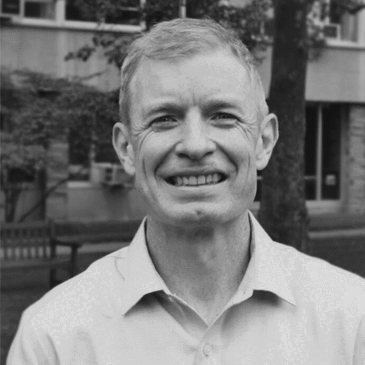
Matthew Reiter, Professor of Practice, teaches behavior and design courses in steel, timber, concrete, and masonry within the Civil Engineering Program at Cornell University as well as serving as Faculty Director of the Structural Engineering M.Eng. Program. He was named an American Institute of Steel Construction Innovation Scholar in 2025.
Professor Reiter brings a breadth of structural design and project management experience to the classroom, from his work with Cornell’s Facilities Engineering Department to consulting with Thornton Tomasetti on buildings and bridges spanning new construction, rehabilitation, and structural repair.
Professor received a Master of Civil Engineering from Villanova University in 2002 and a Master of Engineering Management from Cornell University in 2019.
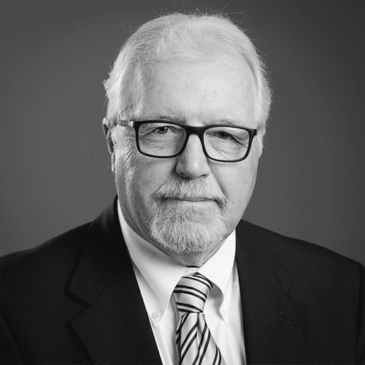
Paul G. Carr has been an Adjunct Professor of Civil and Environmental Engineering at Cornell University since 2000. Professor Carr is the Chairman Emeritus of the engineering and architectural firm that bears his name, Bernier-Carr and Associates, which he co-founded in 1980. He is the recipient of several awards, including the Cornell University Excellence in Teaching Awards, Virigina Tech Outstanding Alumni from the Myers-Lawson School of Construction, and the Rochester Institute of Technology Distinguished Alumni from the College of Applied Science and Technology. Professor Carr is a Senior Member of the National Academy of Forensic Engineers.
Professor Carr is widely published, lectures, and provides consulting on management techniques for troubled projects. He has been engaged in such high-profile projects as the $500 million Highly Enriched Uranium Materials Facility (HEUMF) constructed in Oak Ridge, TN, and the CDC (Centers for Disease Control and Prevention) new emerging infectious diseases laboratory facility in Atlanta, which includes a vivarium and BSL-4 laboratories.
In addition, Professor Carr participated in the special lecture series for the Kingdom of Kuwait Executive Architect/Engineer/Construction Management training program, focusing on effective project teams and the management of changing conditions to maintain project scope, quality, budget, and schedule. He provides expert testimony services to attorneys, testifying and communicating findings to mediators, arbitrators, judges, and juries. Professor Carr not only serves in these consulting roles, but he is also an arbitrator with the American Arbitration Association.
Professor Carr holds a Bachelor’s degree in Civil Engineering from the Rochester Institute of Technology, a Master’s in Civil Engineering from Cornell, and a Ph.D. in Civil Engineering from Virginia Tech. He also holds single- and multi-engine instrument ratings as both a helicopter and airplane pilot.
Linda Nozick is a professor in Cornell’s School of Civil and Environmental Engineering. She served as director of the school for more than a decade. Prior to that role, Nozick was the director of the college’s Systems Engineering Program, which she co-founded. Nozick has been the recipient of several awards including a CAREER award from the National Science Foundation and a Presidential Early Career Award for Scientists and Engineers from President Clinton for “the development of innovative solutions to problems associated with the transportation of hazardous waste.” She is a past U.S. Presidential appointee to the U.S Nuclear Waste Technical Review Board. Nozick has authored over 100 peer-reviewed publications, many focused on transportation, the movement of hazardous materials, and the modeling of critical infrastructure systems. Nozick holds a B.S. in systems analysis and engineering from the George Washington University and a M.S.E and Ph.D. in systems engineering from the University of Pennsylvania.
Matthew Reiter, Professor of Practice, teaches behavior and design courses in steel, timber, concrete, and masonry within the Civil Engineering Program at Cornell University as well as serving as Faculty Director of the Structural Engineering M.Eng. Program. He was named an American Institute of Steel Construction Innovation Scholar in 2025.
Professor Reiter brings a breadth of structural design and project management experience to the classroom, from his work with Cornell’s Facilities Engineering Department to consulting with Thornton Tomasetti on buildings and bridges spanning new construction, rehabilitation, and structural repair.
Professor received a Master of Civil Engineering from Villanova University in 2002 and a Master of Engineering Management from Cornell University in 2019.
Paul G. Carr has been an Adjunct Professor of Civil and Environmental Engineering at Cornell University since 2000. Professor Carr is the Chairman Emeritus of the engineering and architectural firm that bears his name, Bernier-Carr and Associates, which he co-founded in 1980. He is the recipient of several awards, including the Cornell University Excellence in Teaching Awards, Virigina Tech Outstanding Alumni from the Myers-Lawson School of Construction, and the Rochester Institute of Technology Distinguished Alumni from the College of Applied Science and Technology. Professor Carr is a Senior Member of the National Academy of Forensic Engineers.
Professor Carr is widely published, lectures, and provides consulting on management techniques for troubled projects. He has been engaged in such high-profile projects as the $500 million Highly Enriched Uranium Materials Facility (HEUMF) constructed in Oak Ridge, TN, and the CDC (Centers for Disease Control and Prevention) new emerging infectious diseases laboratory facility in Atlanta, which includes a vivarium and BSL-4 laboratories.
In addition, Professor Carr participated in the special lecture series for the Kingdom of Kuwait Executive Architect/Engineer/Construction Management training program, focusing on effective project teams and the management of changing conditions to maintain project scope, quality, budget, and schedule. He provides expert testimony services to attorneys, testifying and communicating findings to mediators, arbitrators, judges, and juries. Professor Carr not only serves in these consulting roles, but he is also an arbitrator with the American Arbitration Association.
Professor Carr holds a Bachelor’s degree in Civil Engineering from the Rochester Institute of Technology, a Master’s in Civil Engineering from Cornell, and a Ph.D. in Civil Engineering from Virginia Tech. He also holds single- and multi-engine instrument ratings as both a helicopter and airplane pilot.
Key Course Takeaways
- Coordinate stakeholders and project phases using appropriate delivery methods to optimize scope, schedule, cost, and quality
- Select and validate materials, integrate them into building systems, and apply quality control measures
- Develop a comprehensive cost estimate that accounts for all project costs, culminating in a bid proposal
- Develop construction schedules using critical path, evaluation and review, and resource planning to guide decisions under uncertainty
- Manage contract administration, project controls, time, and costs while identifying and resolving changes to support project success

Download a Brochure
Not ready to enroll but want to learn more? Download the certificate brochure to review program details.
What You'll Earn
- Construction Management Certificate from Cornell Duffield Engineering
- 50 Professional Development Hours (5 CEUs)
Watch the Video
Who Should Enroll
- Construction managers, project managers, and professionals seeking to advance their construction management skills
- Site supervisors, superintendents, field engineers, and trade leaders responsible for coordinating construction activities
- Architects, engineers, and design professionals involved in construction planning and project execution
- Real estate developers, construction consultants, vendors, and regulatory professionals who need to evaluate project costs, schedules, and construction requirements
- Professionals transitioning into construction management or seeking to enter the construction industry
{Anytime, anywhere.}
Explore programs to meet your professional goals

- 2 to 6 months
- $2,000 to $10,000
- Online

- 2 to 4 weeks
- $299 to $1,199
- Online

- 3 hours
- $449
- Online

- 15 to 24 months part-time
- Tuition varies
- In person or online
- 2 to 5 days
- $3,000 to $10,000
- In person - Ithaca or NYC
- Custom Enterprise Programs
- Price varies
- In person or hybrid
Request Information Now by completing the form below.

Construction Management
| Select Payment Method | Cost |
|---|---|
| $3,750 | |