

Andrew Deutz is a leading expert in international environmental law, policy and negotiations, as well as international conservation and development. Dr. Deutz directs global policy at The Nature Conservancy, overseeing the organization’s international policy work on biodiversity, climate change, development and conservation finance, and overseeing relationships with international organizations and financial institutions. Prior to joining TNC, he served in several leadership roles with the World Conservation Union (IUCN). Dr. Deutz has also worked as the Lead Forest Negotiator for the US State Department, as Forest Policy Advisor to the World Bank, and as Research Associate at the Woods Hole Research Center. He holds a doctorate in International Environmental Law from the Fletcher School of Law and Diplomacy.
Financing Nature
Event Overview
A new report entitled “Financing Nature: Closing the Global Biodiversity Financing Gap” makes a strong economic case for conserving biodiversity. The report, which grew out of a collaboration between The Nature Conservancy, the Paulson Institute, and the Cornell Atkinson Center for Sustainability, confronts some of the most pressing questions impacting life on Earth and includes recommendations on how to reverse biodiversity loss, reduce financial risk, bolster economic growth, and translate the urgency of these actions for both government budgets and private, return-seeking capital.
In this session, the team behind this important research will engage in an in-depth discussion of the current state of biodiversity on Earth and how the global community can — and must — address this critical challenge in a financially sound way.
What You'll Learn
- How much capital the global community is spending on conserving biodiversity and how much it should be spending
- The most promising policy and financial mechanisms to close the biodiversity financing gap
- What corporations, investors, and the public sector should be doing to address the global biodiversity crisis
Speakers
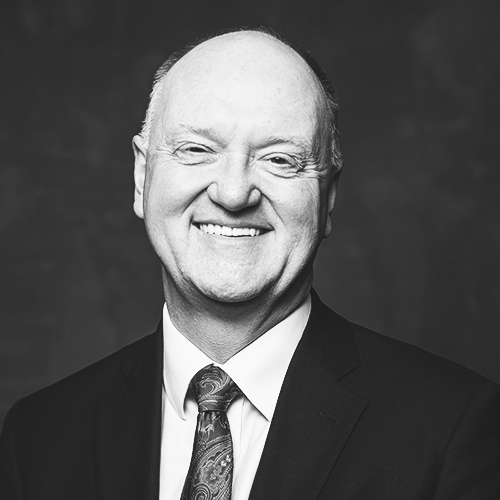
Andrew Karolyi is the Charles Field Knight Dean of the Cornell SC Johnson College of Business. He is a Professor of Finance and International Business as well as holder of the Harold Bierman Jr. Distinguished Professorship in the Johnson Graduate School of Management. Dr. Karolyi is also a Professor of Economics in Cornell’s College of Arts and Sciences.
A scholar in the area of investment management, with a specialization in the study of international financial markets, Dr. Karolyi has published extensively in journals in finance and economics, including the Journal of Finance, Journal of Financial Economics, and Review of Financial Studies. He has also published several books and monographs, and his research is featured in print and electronic media such as the Wall Street Journal, Financial Times, The Economist, Time, New York Times, Washington Post, Forbes, BusinessWeek, and CNBC. Dr. Karolyi recently completed a four-year term as executive editor of the Review of Financial Studies, one of the top-tier journals in finance. He has also served as an associate editor for a variety of journals, including the Journal of Finance, Journal of Financial Economics, Journal of Empirical Finance, Journal of Banking and Finance, Review of Finance, and the Pacific Basin Finance Journal.
Dr. Karolyi is a recipient of the Michael Jensen Prize for Corporate Finance and Organizations (2017), the Fama/DFA Prize for Capital Markets and Asset Pricing (2005), the William F. Sharpe Award for Scholarship in Finance (2001), the Journal of Empirical Finance’s Biennial Best Paper Prize (2006), and Johnson School’s Prize for Excellence in Research (2010). Dr. Karolyi leads various executive education programs in the U.S., Canada, Europe, and Asia, and he is actively involved in consulting with corporations, banks, investment firms, stock exchanges, and law firms. He is president-elect/program chair of the Western Finance Association, has served as a director of the American Finance Association, and is past chairperson of the board of trustees and past president of the Financial Management Association International. Dr. Karolyi received his B.A. (Honors) in Economics from McGill University and worked at the Bank of Canada for several years in its research department. He subsequently earned his MBA and Ph.D. degrees in Finance at the Graduate School of Business of the University of Chicago.

John Tobin-de la Puente is a Professor of Practice at the Charles H. Dyson School of Applied Economics and Management in the Cornell SC Johnson College of Business. He is also Director of the CEMS international MBA program as well as the Director of the Grand Challenges at Dyson program. Professor Tobin is an ecologist and attorney with over two decades of private sector experience, having worked in the international finance industry for much of his career.
Following a decade of corporate legal practice in the area of emerging markets finance, while actively providing counsel on environmental conservation matters on a pro bono basis, Professor Tobin turned his full attention toward the growing area of corporate sustainability, becoming Managing Director and Global Head of Sustainability at Credit Suisse. In this position, he pioneered a variety of initiatives and policies aimed at setting the finance industry on a more sustainable course.
In 2016, Professor Tobin transitioned into a faculty position at Cornell University, where he teaches corporate sustainability, environmental and social risk management, impact investing, environmental finance, and related topics to undergraduates and graduate students in business and public affairs. His research focuses on the use of financial tools to generate positive outcomes in the areas of sustainable development and biodiversity conservation.
In addition, Professor Tobin actively engages with industry and civil society to develop financial solutions to sustainability problems, including as co-founder of the Coalition for Private Investment in Conservation (CPIC). Professor Tobin has extensive leadership and governance experience in not-for-profit entities at the board level, particularly in the areas of environment, science, and education.
Li Zhu is a Director for the Conservation Program at the Paulson Institute where he works to develop and implement initiatives that seek to contribute to better management of China’s environmental performance in its overseas investment and international trade of key commodities. Prior to joining the Paulson Institute, Li Zhu was a Senior Program Officer at the World Wildlife Fund. In this capacity, he developed research and managed projects on China’s Going Global strategy and the associated environmental impact. He also worked for the Nature Conservancy’s China Program as its Communications Director, where he led its overall communications strategy and oversaw the implementation of its diverse communications and marketing efforts. Li Zhu graduated from the Southwestern University of Finance and Economics, and also received an MPhil degree from the University of Cambridge.
Marisa is responsible for setting the strategy and directing, coordinating and facilitating activities across the bank which lead to Impact Investing on behalf of the bank’s private wealth, institutional and corporate clients. Prior to this role, from 2013 to 2017, Marisa was the Co-Head of the EMEA Investment Banking and Capital Markets (IBCM) Division. She has been in the investment banking business for over 30 years and joined Credit Suisse in 2003, to establish the Leveraged Finance Origination Group. Prior to joining Credit Suisse, Marisa worked for Merrill Lynch for eleven years and was instrumental in the formation of Merrill Lynch’s European Leveraged Finance Group. Marisa is also active in recruitment, diversity and philanthropic initiatives in the industry. She sits on the Harvard Women’s Leadership Board and is a Trustee of the Credit Suisse Foundation. She also sits on the advisory boards of Room-to-Read and the Lessons for Life Foundation.
Suresh A. Sethi is a quantitative ecologist with over 15 years of experience working across disciplines to advance solutions to natural resource management problems. Drawing from previous experience in the socially responsible investment sector, as a commercial fisherman, and as the regional biometrician for the U.S. Fish and Wildlife Service in Alaska, his research characterizes the dynamics of coupled human-natural systems and identifies strategies for sustainable ecosystem management. In 2016, Dr. Sethi joined Cornell University as an Assistant Professor in the Department of Natural Resources and Assistant Leader of the NY Cooperative Fish and Wildlife Research Unit. He is a Faculty Fellow at the Cornell Atkinson Center for Sustainability where he collaborates with colleagues in finance and economics to catalyze financial flows for global biodiversity conservation.
Tracey is a Technical Advisor with the UNDP Biodiversity Finance Initiative (BIOFIN), and a member of the Convention on Biological Diversity Panel of Experts on Resource Mobilisation for the post-2020 global biodiversity framework. Tracey majored in Economics and Environmental Science at Rhodes University in South Africa, and has a Master’s degree in Environmental Science from the same. She has extensive experience in biodiversity finance and policy at a national and international level, and is a member of the IUCN Specialist Group on Privately Protected Areas and Nature Stewardship.
Andrew Deutz is a leading expert in international environmental law, policy and negotiations, as well as international conservation and development. Dr. Deutz directs global policy at The Nature Conservancy, overseeing the organization’s international policy work on biodiversity, climate change, development and conservation finance, and overseeing relationships with international organizations and financial institutions. Prior to joining TNC, he served in several leadership roles with the World Conservation Union (IUCN). Dr. Deutz has also worked as the Lead Forest Negotiator for the US State Department, as Forest Policy Advisor to the World Bank, and as Research Associate at the Woods Hole Research Center. He holds a doctorate in International Environmental Law from the Fletcher School of Law and Diplomacy.
Andrew Karolyi is the Charles Field Knight Dean of the Cornell SC Johnson College of Business. He is a Professor of Finance and International Business as well as holder of the Harold Bierman Jr. Distinguished Professorship in the Johnson Graduate School of Management. Dr. Karolyi is also a Professor of Economics in Cornell’s College of Arts and Sciences.
A scholar in the area of investment management, with a specialization in the study of international financial markets, Dr. Karolyi has published extensively in journals in finance and economics, including the Journal of Finance, Journal of Financial Economics, and Review of Financial Studies. He has also published several books and monographs, and his research is featured in print and electronic media such as the Wall Street Journal, Financial Times, The Economist, Time, New York Times, Washington Post, Forbes, BusinessWeek, and CNBC. Dr. Karolyi recently completed a four-year term as executive editor of the Review of Financial Studies, one of the top-tier journals in finance. He has also served as an associate editor for a variety of journals, including the Journal of Finance, Journal of Financial Economics, Journal of Empirical Finance, Journal of Banking and Finance, Review of Finance, and the Pacific Basin Finance Journal.
Dr. Karolyi is a recipient of the Michael Jensen Prize for Corporate Finance and Organizations (2017), the Fama/DFA Prize for Capital Markets and Asset Pricing (2005), the William F. Sharpe Award for Scholarship in Finance (2001), the Journal of Empirical Finance’s Biennial Best Paper Prize (2006), and Johnson School’s Prize for Excellence in Research (2010). Dr. Karolyi leads various executive education programs in the U.S., Canada, Europe, and Asia, and he is actively involved in consulting with corporations, banks, investment firms, stock exchanges, and law firms. He is president-elect/program chair of the Western Finance Association, has served as a director of the American Finance Association, and is past chairperson of the board of trustees and past president of the Financial Management Association International. Dr. Karolyi received his B.A. (Honors) in Economics from McGill University and worked at the Bank of Canada for several years in its research department. He subsequently earned his MBA and Ph.D. degrees in Finance at the Graduate School of Business of the University of Chicago.
John Tobin-de la Puente is a Professor of Practice at the Charles H. Dyson School of Applied Economics and Management in the Cornell SC Johnson College of Business. He is also Director of the CEMS international MBA program as well as the Director of the Grand Challenges at Dyson program. Professor Tobin is an ecologist and attorney with over two decades of private sector experience, having worked in the international finance industry for much of his career.
Following a decade of corporate legal practice in the area of emerging markets finance, while actively providing counsel on environmental conservation matters on a pro bono basis, Professor Tobin turned his full attention toward the growing area of corporate sustainability, becoming Managing Director and Global Head of Sustainability at Credit Suisse. In this position, he pioneered a variety of initiatives and policies aimed at setting the finance industry on a more sustainable course.
In 2016, Professor Tobin transitioned into a faculty position at Cornell University, where he teaches corporate sustainability, environmental and social risk management, impact investing, environmental finance, and related topics to undergraduates and graduate students in business and public affairs. His research focuses on the use of financial tools to generate positive outcomes in the areas of sustainable development and biodiversity conservation.
In addition, Professor Tobin actively engages with industry and civil society to develop financial solutions to sustainability problems, including as co-founder of the Coalition for Private Investment in Conservation (CPIC). Professor Tobin has extensive leadership and governance experience in not-for-profit entities at the board level, particularly in the areas of environment, science, and education.
Li Zhu is a Director for the Conservation Program at the Paulson Institute where he works to develop and implement initiatives that seek to contribute to better management of China’s environmental performance in its overseas investment and international trade of key commodities. Prior to joining the Paulson Institute, Li Zhu was a Senior Program Officer at the World Wildlife Fund. In this capacity, he developed research and managed projects on China’s Going Global strategy and the associated environmental impact. He also worked for the Nature Conservancy’s China Program as its Communications Director, where he led its overall communications strategy and oversaw the implementation of its diverse communications and marketing efforts. Li Zhu graduated from the Southwestern University of Finance and Economics, and also received an MPhil degree from the University of Cambridge.
Marisa is responsible for setting the strategy and directing, coordinating and facilitating activities across the bank which lead to Impact Investing on behalf of the bank’s private wealth, institutional and corporate clients. Prior to this role, from 2013 to 2017, Marisa was the Co-Head of the EMEA Investment Banking and Capital Markets (IBCM) Division. She has been in the investment banking business for over 30 years and joined Credit Suisse in 2003, to establish the Leveraged Finance Origination Group. Prior to joining Credit Suisse, Marisa worked for Merrill Lynch for eleven years and was instrumental in the formation of Merrill Lynch’s European Leveraged Finance Group. Marisa is also active in recruitment, diversity and philanthropic initiatives in the industry. She sits on the Harvard Women’s Leadership Board and is a Trustee of the Credit Suisse Foundation. She also sits on the advisory boards of Room-to-Read and the Lessons for Life Foundation.
Suresh A. Sethi is a quantitative ecologist with over 15 years of experience working across disciplines to advance solutions to natural resource management problems. Drawing from previous experience in the socially responsible investment sector, as a commercial fisherman, and as the regional biometrician for the U.S. Fish and Wildlife Service in Alaska, his research characterizes the dynamics of coupled human-natural systems and identifies strategies for sustainable ecosystem management. In 2016, Dr. Sethi joined Cornell University as an Assistant Professor in the Department of Natural Resources and Assistant Leader of the NY Cooperative Fish and Wildlife Research Unit. He is a Faculty Fellow at the Cornell Atkinson Center for Sustainability where he collaborates with colleagues in finance and economics to catalyze financial flows for global biodiversity conservation.
Tracey is a Technical Advisor with the UNDP Biodiversity Finance Initiative (BIOFIN), and a member of the Convention on Biological Diversity Panel of Experts on Resource Mobilisation for the post-2020 global biodiversity framework. Tracey majored in Economics and Environmental Science at Rhodes University in South Africa, and has a Master’s degree in Environmental Science from the same. She has extensive experience in biodiversity finance and policy at a national and international level, and is a member of the IUCN Specialist Group on Privately Protected Areas and Nature Stewardship.