
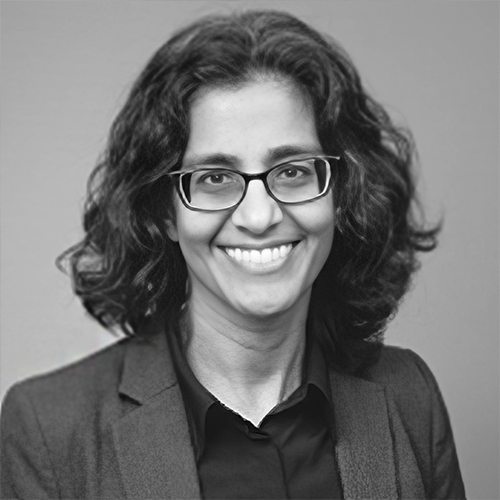
Before joining Cornell University in May 2019, Kim Nayyer was Associate University Librarian for Law and Adjunct Associate Professor at University of Victoria in Canada. There, her administrative responsibilities included direction of the law library and participation in the administration of the university’s copyright office. Within that law school, Professor Nayyer taught Advanced and Introductory Legal Research and Writing in the Canadian context, along with a program in comparative legal research. She planned that law library’s role in the world’s first J.D./JID dual degree program, which combines education in Indigenous legal orders and Canadian common law.
Professor Nayyer contributes time to various legal education and legal information professional communities, including the Association of American Law Schools (Vice Chair, North American Cooperation Section); American Association of Law Libraries (member, Spectrum Editorial Board); Canadian Association of Law Libraries/L’Association Canadienne des Bibliothèques de Droit (Vice President; founder, Diversity, Inclusion, and Decolonization Committee; past co-chair, Copyright Committee); and the Canadian Federation of Library Associations/Fédération Canadienne des Associations des Bibliothèques (member, Copyright Committee).
Professor Nayyer’s research interests span legal studies and information studies. They include the ethics of big data and artificial intelligence in legal information; critical information literacy in machine-manipulated environments of legal information, non-legal information, and the media; digital citizenship, privacy, and data ownership issues and their regulation in intersections with legal and non-legal public online participation; technological innovations in legal education, pedagogy, and practice; access to direct and legal information and machine-manipulated legal information and access to justice; comparative U.S. and Canadian legal information topics and research methods; comparative copyright and other intellectual property law and their intersections with Indigenous knowledge; comparative copyright and licensing issues and solutions in libraries and of primary legal information; and inclusive library, legal, and educational leadership in environments of diversity and accelerated change.
Professor Nayyer holds a B.Sc. from the University of Alberta, an LLB from York University’s Osgoode Hall Law School, and an MLIS from the University of Alberta. She clerked for the late Associate Chief Justice Jerome at the Federal Court of Canada/Cour Fédérale du Canada in a bilingual position and was called to the bars of Alberta and Ontario. In her law practice career, Professor Nayyer worked as a litigation and research attorney for large and small law firms in Calgary, Edmonton, and Toronto, and she served as legal counsel for the Alberta Court of Appeal in Edmonton and Calgary.