
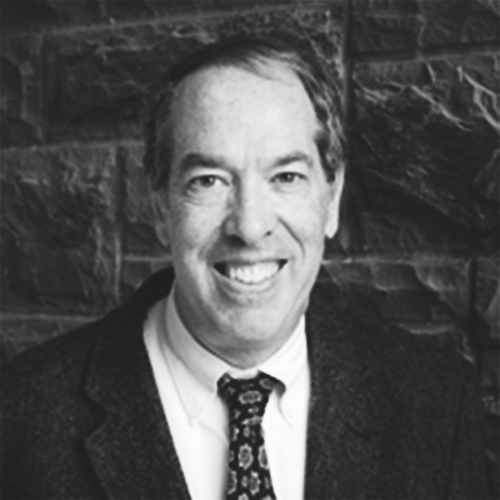
Jery Stedinger joined the faculty of Cornell’s School of Civil and Environmental Engineering in 1977 and taught courses in Uncertainty Analysis and Risk Management for many years. He was appointed to Cornell’s Dwight C. Baum Professor of Engineering chair in 2015.
Dr. Stedinger holds a B.A. in Applied Mathematics from the University of California at Berkeley and a Ph.D. in Environmental Systems Engineering from Harvard University. His research has focused on probability, statistical, and risk assessment issues for natural hazards, floods, and operation of water resource systems. Dr. Stedinger has authored more than 150 professional papers and contributed to textbooks on water systems analysis and statistical issues in hydrology. He enjoyed sabbaticals at the U.S. Geological Survey, the U.S. Army Corps of Engineers Institute for Water Resources, the U.S. Army Corps of Engineers Hydrologic Engineering Center, and the Centre for Water Resource Systems at the Vienna University of Technology.
Dr. Stedinger has won a number of national and international recognitions, including the American Society of Civil Engineers’ Julian Hinds Award, the ASCE Ven Te Chow Award, the ASCE Environmental and Water Institute’s Lifetime Achievement Award, and the Prince Sultan Bin Abdulaziz International Prize for Surface Water. In 2014, he became a distinguished member of ASCE and was elected to the U.S. National Academy of Engineering.