
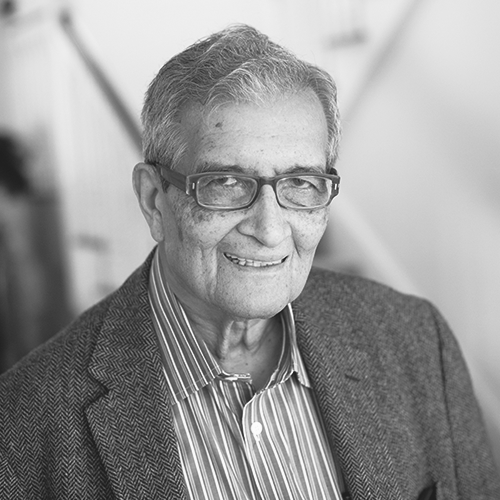
Amartya Sen is Thomas W. Lamont University Professor and Professor of Economics and Philosophy at Harvard University. He has served as president of the Econometric Society, American Economic Association, Indian Economic Association, and International Economic Association. Translated into more than 40 languages, Dr. Sen’s books include “Collective Choice and Social Welfare” (1970, 2017), “Development as Freedom” (1999), “Identity and Violence” (2006), and “The Idea of Justice” (2009). Dr. Sen’s awards include the Bharat Ratna (India); Commandeur de la Legion d’Honneur (France); National Humanities Medal, George Marshall Award, and Eisenhower Medal (USA); Honorary Companion of Honour and Edinburgh Medal (U.K.); Ordem do Merito Cientifico (Brazil); Aztec Eagle (Mexico); and the Nobel Prize in Economics.
Attacks on Democracy
Event Overview
As the 21st century dawned, many would have said that understanding the need for democracy was the most important change in the world over the preceding 100 years. Yet in the past two decades, democracy has been treated with contempt and hostility in many parts of the world — including countries in the West (such as Hungary, Poland, and others), but also elsewhere.
Dr. Sen believes that it is important to ask why this is happening and how we should deal with it. “Some countries seem to be undergoing a big transition in this respect, and my own country, India, may be a significant example — despite its being often described as the largest democracy in the world, which in some sense it still is,” Dr. Sen said. “As someone who is dismayed by recent developments, I would like to discuss the nature of the problems we may be facing and what can be done about them.”
Dr. Sen’s talk, “Attacks on Democracy,” will kick off a discussion with Cornell faculty and students moderated by Dr. Basu. Edward Cornell Professor of Law Robert Hockett, Edward H. Meyer Professor of Economics Marco Battaglini, and Professor of Philosophy Rachana Kamtekar are among the Cornell faculty who will join Dr. Sen, Dr. Basu, and audience members, including several students, for conversation and Q&A on democratic challenges and the path forward.
Wendy Wolford, Vice Provost for International Affairs and the Robert A. and Ruth E. Polson Professor of Global Development, and Rachel Beatty Riedl, Director of the Mario Einaudi Center for International Studies and the John S. Knight Professor of International Studies, will introduce the discussion. This event is part of the Einaudi Center’s global research theme of democratic resilience.
The Bartels World Affairs Lecture was established in 1984 to foster a broadened worldview among Cornell students, especially undergraduates. The lecture and related events are made possible by the generosity of Henry E. Bartels ’48 and Nancy Horton Bartels ’48.
What You'll Learn
- How and why democratic systems are being threatened and attacked in many countries
- Factors that make democratic institutions vulnerable to internal subversion and the conditions under which they are resilient
- Ways in which economics and politics intersect to support or undermine democracy
- What we can learn from the example of India about democratic challenges and resilience in other countries and regions
- Strategies that institutions and grassroots movements can employ to resist autocracy and protect political freedoms
Speakers
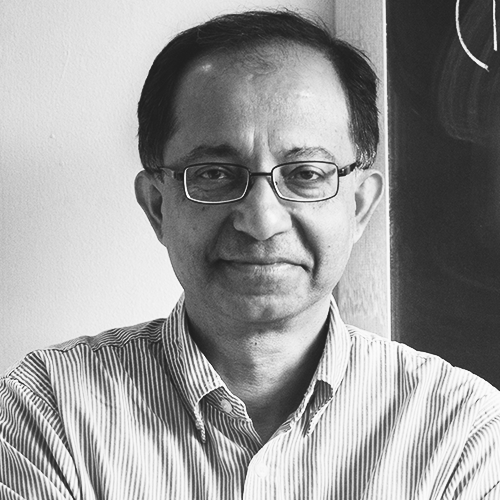
Kaushik Basu is Professor of Economics and Carl Marks Professor of International Studies at Cornell University. He was earlier the Chief Economist and Senior Vice President of the World Bank. Prior to joining the World Bank, Dr. Basu served as Chief Economic Adviser to the government of India. He is a Fellow of the Econometric Society and received the title Padma Bhushan, one of the highest civilian awards given by the President of India. Dr. Basu’s contributions span development economics, welfare economics, industrial organization, and game theory.
In addition to Cornell, Dr. Basu has taught at the Delhi School of Economics, Harvard, Princeton, and MIT. He has published widely in academic journals and has contributed articles to many widely read magazines and newspapers. Dr. Basu has also written several books, including “Beyond the Invisible Hand: Groundwork for a New Economics” (Princeton University Press and Penguin) and “An Economist in the Real World: the Art of Policymaking in India” (MIT Press).
Dr. Basu holds a Ph.D. in Economics from the London School of Economics. He has received honorary doctorates from several institutes, including IIT in Mumbai, and Fordham University in New York.