
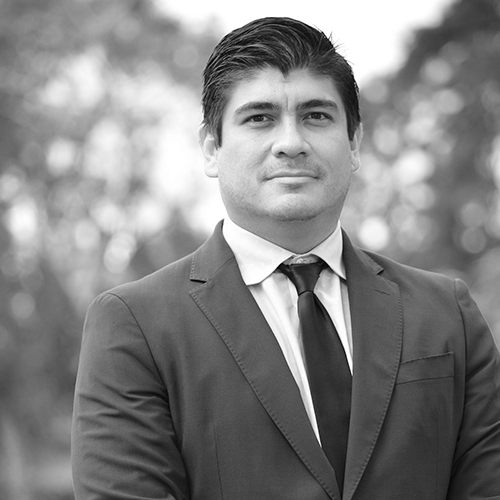
Carlos Alvarado Quesada was Costa Rica’s 48th president, serving from 2018 until 2022. Professor Alvarado was Costa Rica’s youngest president in a century, taking office at age 38. Representing the Citizens’ Action Party (PAC), he previously served as Minister of Labor and Social Security. Professor Alvarado received the 2022 Planetary Leadership Award from the National Geographic Society for his commitment and action to protect the ocean. He accepted on behalf of his country the 2019 Champion of the Earth Award, the United Nations’ highest environmental honor. A writer and political scientist, Professor Alvarado is currently Professor of Practice of Diplomacy at Tufts University’s Fletcher School in Massachusetts.
Almost done! Check your email to get your password.
Event Overview
In this year’s Bartels World Affairs Lecture from the Mario Einaudi Center for International Studies, former president of Costa Rica Carlos Alvarado Quesada will share how conservation and sustainability are crucial for preserving democracy around the world.
Costa Rica is one of the most biodiverse spots on the planet, with more than one-quarter of the nation’s land protected in parks and preserves. As Costa Rica’s leader from 2018 to 2022, Professor Alvarado proposed a challenge for his country and the world: to make Costa Rica a decarbonized nation by 2050.
During his visit to Cornell, Professor Alvarado will explore some of the questions that guided his administration: What roles do democracy and governance play in shaping environmental policies at the local, national, and global levels? And how can we meet — equitably and democratically — the basic needs of the world’s ever-growing human population without sacrificing the health of the planet and its other inhabitants?
The Bartels World Affairs Lecture is a signature event of the Mario Einaudi Center for International Studies. Part of Einaudi's work on democratic threats and resilience, this year’s lecture is cosponsored by Einaudi’s Latin American and Caribbean Studies Program. The lecture and related events are made possible by the generosity of Henry E. Bartels ’48 and Nancy Horton Bartels ’48.
Costa Rica is one of the most biodiverse spots on the planet, with more than one-quarter of the nation’s land protected in parks and preserves. As Costa Rica’s leader from 2018 to 2022, Professor Alvarado proposed a challenge for his country and the world: to make Costa Rica a decarbonized nation by 2050.
During his visit to Cornell, Professor Alvarado will explore some of the questions that guided his administration: What roles do democracy and governance play in shaping environmental policies at the local, national, and global levels? And how can we meet — equitably and democratically — the basic needs of the world’s ever-growing human population without sacrificing the health of the planet and its other inhabitants?
The Bartels World Affairs Lecture is a signature event of the Mario Einaudi Center for International Studies. Part of Einaudi's work on democratic threats and resilience, this year’s lecture is cosponsored by Einaudi’s Latin American and Caribbean Studies Program. The lecture and related events are made possible by the generosity of Henry E. Bartels ’48 and Nancy Horton Bartels ’48.
What You'll Learn
- The relationship between sustainability and democracy around the world
- How Costa Rica set a goal to be a decarbonized nation by 2050
- What steps governments and citizens can take in fighting for democracy and the planet
- How we think about the relationship among justice, equity, and citizen participation in democratic governance and sustainable economic development for national and planetary well-being
Speakers
Carlos Alvarado Quesada
President of Costa Rica, 2018-22
President of Costa Rica, 2018-22
President, Cornell University
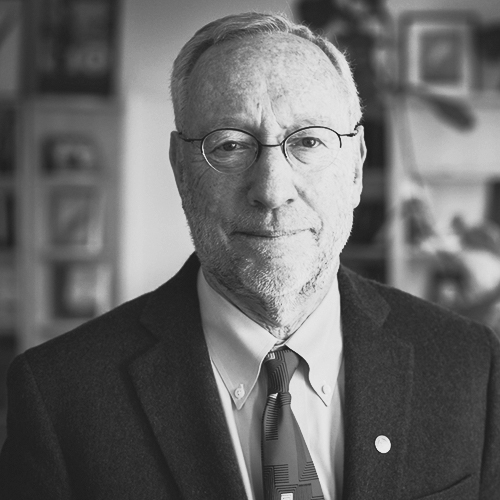
Michael I. Kotlikoff is the 15th president of Cornell University and professor of molecular physiology. The Cornell Board of Trustees appointed him president on March 21, 2025, following eight months as interim president.
Previously, Kotlikoff was Cornell’s longest-serving provost, holding that office from August 2015 to June 2024. Concurrently with his administrative duties as department chair, dean, and provost, Kotlikoff also oversaw an NIH-funded laboratory comprising senior scientists, postdocs, and graduate and undergraduate students, studying cardiovascular biology and heart repair.
Throughout his tenure at Cornell, President Kotlikoff has overseen numerous initiatives and landmark changes to advance the university’s excellence in teaching, scholarship, and outreach, and to enhance academic collaboration across Cornell’s disciplines, colleges, and campuses.
Under Kotlikoff’s leadership as provost, Cornell created the Ann S. Bowers College of Computing and Information Science, Jeb E. Brooks School of Public Policy, and SC Johnson College of Business; multi-college departments of computational biology, design technology, economics, psychology, sociology, and statistics and data science; and the cross-college Paul Rubacha Department of Real Estate.
Kotlikoff’s signature strategic initiative, Radical Collaboration, has enhanced Cornell’s academic excellence and interdisciplinary collaborations by bringing together world-leading expertise from across widely divergent fields. The initiative has recruited faculty in artificial intelligence, design technology, digital humanities, nanoscience, sustainability, and other areas; led investments in university centers such as the Cornell High Energy Synchrotron Source, or CHESS; the Society for the Humanities; and the Cornell Center for the Social Sciences; and given rise to the Academic Integration initiative, which deepened collaboration across the Ithaca and Weill Cornell Medicine campuses.
During Kotlikoff’s time as provost, significant advances were also made across Cornell in teaching and learning and in student and campus life, with the development of the Center for Teaching Innovation, the Gateway Courses project, the Community-Engaged Learning Initiative through the David M. Einhorn Center for Community Engagement, the rapid expansion of eCornell, and the construction and opening of the North Campus Residential Expansion project. He also developed policies to facilitate greater faculty diversity and dual-career hiring across Cornell’s colleges, and initiated broad, high-impact investments in the university’s academic facilities, including the construction of Atkinson Hall, the renovation of McGraw and Phillips Halls, and the renovation and expansion of Thurston Hall.
Cornell successfully navigated the COVID-19 pandemic under Kotlikoff’s leadership, developing and implementing rigorous, evidence-driven public health measures that enabled it to safely continue in-person residential instruction and research activities throughout the 2020-21 academic year.
Kotlikoff was recruited to Cornell in 2000 as the founding chair of the Department of Biomedical Sciences and chair of the Mammalian Genomics Life Science Initiative, and served as the Austin O. Hooey Dean of the College of Veterinary Medicine from 2007 to 2015. His laboratory’s work is internationally recognized in cell signaling and heart repair and was continuously funded by the National Institutes of Health for over 35 years. He has received numerous awards, served on and chaired several editorial boards and NIH councils, and was awarded an honorary doctoral degree from City University of Hong Kong in 2019.
Kotlikoff received his B.A. (literature) and V.M.D. degrees from the University of Pennsylvania and his Ph.D. in physiology from the University of California, Davis.

Rachel Beatty Riedl
Director, Mario Einaudi Center for International Studies
Cornell Jeb E. Brooks School of Public Policy
Department of Government, Cornell University
John S. Knight Professor of International Studies | Director, Mario Einaudi Center for International Studies | Professor of Government, College of Arts and Sciences and Brooks School of Public Policy
Rachel Beatty Riedl is the Director of Mario Einaudi Center for International Studies as well as the Einaudi Center’s John S. Knight Professor of International Studies and a professor in the Department of Government and Cornell Jeb E. Brooks School of Public Policy. Professor Riedl’s research interests include institutional development in new democracies, local governance and decentralization, and authoritarian regime legacies in Africa. Her most recent book, “From Pews to Politics: Religious Sermons and Political Participation in Africa,” coauthored with Gwyneth McClendon, was published in September 2019. “Authoritarian Origins of Democratic Party Systems in Africa” (2014), her previous book, won the African Politics Best Book award. Professor Riedl also cohosts the Ufahamu Africa podcast about life and politics on the African continent. Most recently, Professor Riedl was a fellow at the Nantes Institute for Advanced Study and a Fulbright scholar. Previously, she was director of the Program of African Studies and an associate professor in the Department of Political Science at Northwestern University.
Mario Herrero
Nancy and Peter Meinig Family Investigator in the Life Sciences
Cornell Atkinson Center for Sustainability
Department of Global Development
Cornell University
Mario Herrero is a professor of sustainable food systems and global change in the Department of Global Development. He is also a Cornell Atkinson Scholar, and a Nancy and Peter Meinig Family Investigator in the Life Sciences. His research focuses on increasing the sustainability of food systems for the benefit of humans and ecosystems. He works in the areas of food systems and the environment, climate mitigation and adaptation, livestock systems, true cost of food, sustainability metrics, and healthy and sustainable diets. He has played senior roles in many global initiatives on food and the environment (IPCC, UN Food Systems Summit, AgMip, etc). He is currently a Coordinating Lead Author of the forthcoming IPBES-Nexus Report and a Commissioner and Executive Committee member of the EAT-Lancet 2.0 study. Mario is a highly-cited researcher according to the Web of Science, and is in the top 10 of Reuters list of most influential climate change scientists. He obtained his postgraduate degrees from the University of Edinburgh in Scotland.
Carlos Alvarado Quesada
President of Costa Rica, 2018-22
President of Costa Rica, 2018-22
Carlos Alvarado Quesada was Costa Rica’s 48th president, serving from 2018 until 2022. Professor Alvarado was Costa Rica’s youngest president in a century, taking office at age 38. Representing the Citizens’ Action Party (PAC), he previously served as Minister of Labor and Social Security. Professor Alvarado received the 2022 Planetary Leadership Award from the National Geographic Society for his commitment and action to protect the ocean. He accepted on behalf of his country the 2019 Champion of the Earth Award, the United Nations’ highest environmental honor. A writer and political scientist, Professor Alvarado is currently Professor of Practice of Diplomacy at Tufts University’s Fletcher School in Massachusetts.
President, Cornell University
Michael I. Kotlikoff is the 15th president of Cornell University and professor of molecular physiology. The Cornell Board of Trustees appointed him president on March 21, 2025, following eight months as interim president.
Previously, Kotlikoff was Cornell’s longest-serving provost, holding that office from August 2015 to June 2024. Concurrently with his administrative duties as department chair, dean, and provost, Kotlikoff also oversaw an NIH-funded laboratory comprising senior scientists, postdocs, and graduate and undergraduate students, studying cardiovascular biology and heart repair.
Throughout his tenure at Cornell, President Kotlikoff has overseen numerous initiatives and landmark changes to advance the university’s excellence in teaching, scholarship, and outreach, and to enhance academic collaboration across Cornell’s disciplines, colleges, and campuses.
Under Kotlikoff’s leadership as provost, Cornell created the Ann S. Bowers College of Computing and Information Science, Jeb E. Brooks School of Public Policy, and SC Johnson College of Business; multi-college departments of computational biology, design technology, economics, psychology, sociology, and statistics and data science; and the cross-college Paul Rubacha Department of Real Estate.
Kotlikoff’s signature strategic initiative, Radical Collaboration, has enhanced Cornell’s academic excellence and interdisciplinary collaborations by bringing together world-leading expertise from across widely divergent fields. The initiative has recruited faculty in artificial intelligence, design technology, digital humanities, nanoscience, sustainability, and other areas; led investments in university centers such as the Cornell High Energy Synchrotron Source, or CHESS; the Society for the Humanities; and the Cornell Center for the Social Sciences; and given rise to the Academic Integration initiative, which deepened collaboration across the Ithaca and Weill Cornell Medicine campuses.
During Kotlikoff’s time as provost, significant advances were also made across Cornell in teaching and learning and in student and campus life, with the development of the Center for Teaching Innovation, the Gateway Courses project, the Community-Engaged Learning Initiative through the David M. Einhorn Center for Community Engagement, the rapid expansion of eCornell, and the construction and opening of the North Campus Residential Expansion project. He also developed policies to facilitate greater faculty diversity and dual-career hiring across Cornell’s colleges, and initiated broad, high-impact investments in the university’s academic facilities, including the construction of Atkinson Hall, the renovation of McGraw and Phillips Halls, and the renovation and expansion of Thurston Hall.
Cornell successfully navigated the COVID-19 pandemic under Kotlikoff’s leadership, developing and implementing rigorous, evidence-driven public health measures that enabled it to safely continue in-person residential instruction and research activities throughout the 2020-21 academic year.
Kotlikoff was recruited to Cornell in 2000 as the founding chair of the Department of Biomedical Sciences and chair of the Mammalian Genomics Life Science Initiative, and served as the Austin O. Hooey Dean of the College of Veterinary Medicine from 2007 to 2015. His laboratory’s work is internationally recognized in cell signaling and heart repair and was continuously funded by the National Institutes of Health for over 35 years. He has received numerous awards, served on and chaired several editorial boards and NIH councils, and was awarded an honorary doctoral degree from City University of Hong Kong in 2019.
Kotlikoff received his B.A. (literature) and V.M.D. degrees from the University of Pennsylvania and his Ph.D. in physiology from the University of California, Davis.
Rachel Beatty Riedl
Director, Mario Einaudi Center for International Studies
Cornell Jeb E. Brooks School of Public Policy
Department of Government, Cornell University
John S. Knight Professor of International Studies | Director, Mario Einaudi Center for International Studies | Professor of Government, College of Arts and Sciences and Brooks School of Public Policy
Rachel Beatty Riedl is the Director of Mario Einaudi Center for International Studies as well as the Einaudi Center’s John S. Knight Professor of International Studies and a professor in the Department of Government and Cornell Jeb E. Brooks School of Public Policy. Professor Riedl’s research interests include institutional development in new democracies, local governance and decentralization, and authoritarian regime legacies in Africa. Her most recent book, “From Pews to Politics: Religious Sermons and Political Participation in Africa,” coauthored with Gwyneth McClendon, was published in September 2019. “Authoritarian Origins of Democratic Party Systems in Africa” (2014), her previous book, won the African Politics Best Book award. Professor Riedl also cohosts the Ufahamu Africa podcast about life and politics on the African continent. Most recently, Professor Riedl was a fellow at the Nantes Institute for Advanced Study and a Fulbright scholar. Previously, she was director of the Program of African Studies and an associate professor in the Department of Political Science at Northwestern University.
Mario Herrero
Nancy and Peter Meinig Family Investigator in the Life Sciences
Cornell Atkinson Center for Sustainability
Department of Global Development
Cornell University
Mario Herrero is a professor of sustainable food systems and global change in the Department of Global Development. He is also a Cornell Atkinson Scholar, and a Nancy and Peter Meinig Family Investigator in the Life Sciences. His research focuses on increasing the sustainability of food systems for the benefit of humans and ecosystems. He works in the areas of food systems and the environment, climate mitigation and adaptation, livestock systems, true cost of food, sustainability metrics, and healthy and sustainable diets. He has played senior roles in many global initiatives on food and the environment (IPCC, UN Food Systems Summit, AgMip, etc). He is currently a Coordinating Lead Author of the forthcoming IPBES-Nexus Report and a Commissioner and Executive Committee member of the EAT-Lancet 2.0 study. Mario is a highly-cited researcher according to the Web of Science, and is in the top 10 of Reuters list of most influential climate change scientists. He obtained his postgraduate degrees from the University of Edinburgh in Scotland.
View Keynote by completing the form below.
Gain access to this free event
Thanks,
You're Registered!
Join or sign in to tailor your experience and earn CEUs from Cornell.
Create Account