


Chris Anderson is a professor at the Cornell Nolan School of Hotel Administration. Prior to his appointment in 2006, he was on the faculty at the Ivey School of Business in London, Ontario, Canada. Professor Anderson’s main research focus is on revenue management and service pricing. He actively works in the application and development of revenue management across numerous industry types, including hotels, airlines, and rental car and tour companies, as well as numerous consumer packaged goods and financial services firms. Professor Anderson’s research has been funded by numerous governmental agencies and industrial partners. He serves on the editorial board of the Journal of Revenue and Pricing Management and is the regional editor for the International Journal of Revenue Management. At the Nolan School of Hotel Administration, Professor Anderson teaches courses in revenue management and service operations management.
Request More Info
Overview and Courses
Generative AI is transforming the hospitality industry by greatly enhancing efficiency, streamlining operations, and guiding better decision making.
The business of hospitality is increasingly data rich, but the data comes from a variety of sources which need to be collected, assessed, and acted upon on a frequent basis. Data sources include archival data on third-party platforms and transactional systems which are often behind user logins, in-house data collections systems, human resource software, and key online platforms such as Google and Tripadvisor. Now, hospitality providers can access, compare, and analyze this data through the use of predictive and generative AI — without extensive data analysis training.
Throughout this program, you will use machine learning methods and generative AI to build predictive models, analyze data, evaluate forecast data, and assess and categorize customer reviews as you work through common hospitality scenarios. These skills can be immediately applicable to your organization’s marketing, training, pricing, forecasting, user-generated content management, communications, and guest experience enhancement efforts. You will also have the opportunity to use several AI tools to help automate operational activities, including data collection, transfer and analysis, and internal and external communications, freeing up employees to perform value-add activities and focus on the customer experience.
By the end of the program, you will be able to strategically implement AI solutions to optimize operations, enhance guest satisfaction, and drive innovation within your hospitality organization.
The courses in this certificate program are required to be completed in the order that they appear. Coursework will require access to Microsoft Excel, the purchase of a UDS$30 one-month license to BigML, and free versions of ChatGPT, Zapier, and Botster. Additionally, for the course, Streamlining Hospitality Operations With Automation, access to a PC with Microsoft Excel and Microsoft Power Automate is highly encouraged to maximize the learning experience, though it is not required. Microsoft Power Automate is not available for Mac users.
This program includes two years of free access to both the Hospitality Symposium and the AI Symposium! These events feature live, highly participatory virtual Zoom sessions with Cornell faculty and experts to explore today’s most pressing topics. Throughout the year, you may participate in as many sessions as you wish. Attending a Symposium is not required to successfully complete the certificate program.
Course list
As a hospitality professional, it's essential to quickly understand how AI can enhance your daily operations as well as improve both customer and employee experiences. This process begins with establishing a foundation in predictive analytics and machine learning, which utilizes historical data to forecast, make recommendations, and support decision making. Understanding these practices is crucial for staying competitive and responsive in a rapidly evolving industry landscape.
Throughout this course, you will delve into how AI is transforming the hospitality sector, exploring both the opportunities and challenges it presents. A focus will be placed on how machine learning can be leveraged to optimize customer experiences and enhance employee performance and operational efficiency. You will apply predictive analytic models to evaluate and optimize analytical processes, analyze qualitative and quantitative data to make informed predictions, and evaluate correlations among variables. You'll also select suitable predictive models, assess their performance, and refine these models to more accurately forecast market demands and business outcomes while identifying data biases and their potential impact on model limitations.
By the end of this course, you'll have explored, practiced, and evaluated various methods of integrating machine learning and predictive analytics into your organization. These skills will assist in streamlining business activities, supporting organizational goals, and allowing employees to focus more on enriching the customer experience. Although the course includes numerous AI use cases, they are intended as foundational learning; you are encouraged to build upon these models and apply your skills to effectively address data-driven challenges as they arise in your professional environment.
Note: Coursework will require access to Microsoft Excel, the purchase of a USD$30 one-month license to BigML, and free versions of ChatGPT, Zapier, and Botster.
- Dec 23, 2026
- Feb 17, 2027
- Apr 14, 2027
- Jun 9, 2027
- Aug 4, 2027
- Sep 29, 2027
- Nov 24, 2027
In today's rapidly evolving hospitality industry, the advent of generative AI (GenAI) offers groundbreaking possibilities akin to historic innovations like the assembly line and the internet. GenAI has the potential to revolutionize how people work in the hospitality industry.
One of GenAI's most immediate effects is increased access to analytical tools that were once reserved for experts, making them available to anyone with a smartphone or laptop. This newfound accessibility creates a wealth of opportunities for hospitality professionals who have a deep understanding of their business and market but may lack formal training in statistical analysis. Yet with these opportunities come certain risks. As a leader in the hospitality industry, it is increasingly crucial to understand, communicate, and effectively apply the capabilities, limitations, risks, rewards, and impacts of GenAI on your firm's customer service experience and business objectives.
In this course, you will explore and apply GenAI best practices to help you address a variety of qualitative and quantitative challenges. Throughout, you will examine the critical role of human oversight while harnessing the capabilities of GenAI to serve as your data analysis assistant. You will work with large language models to perform cross-program computations; create custom, data-rich, and visually efficient reports; and enhance accuracy and efficiency in Excel. You will also practice methods to generate and refine content across diverse settings, such as crafting customized responses to consumer reviews; drafting documents, reports, and emails; and efficiently evaluating and categorizing consumer feedback.
By the end of this course, you will have developed the skills necessary to effectively interact with GenAI as your on-demand data scientist, allowing you to tackle a range of data-driven problems and challenges in hospitality.
Note: Coursework will require access to Microsoft Excel and free versions of ChatGPT, Zapier, and Botster.
You are required to have completed the following course or have equivalent experience before taking this course:
- Leveraging Predictive AI in Hospitality
- Nov 18, 2026
- Jan 13, 2027
- Mar 10, 2027
- May 5, 2027
- Jun 30, 2027
- Aug 25, 2027
- Oct 20, 2027
Today's hospitality leaders face the challenge of constantly enhancing and optimizing their business processes while relying on the most up-to-date information. Yet valuable data about your organization is not confined to in-house systems; it is extensively distributed online. From desktop customer databases and property and reservation management systems to customer reviews, inquiries, market trends, and popular searches, data is omnipresent. The process of collecting, connecting, categorizing, and analyzing this data can be time consuming, potentially hindering business objectives as individuals struggle to keep pace. Fortunately, many of these tasks can be automated, allowing firms to react swiftly so that they can concentrate on doing what they do best: delivering exceptional service to their customers and clients.
In this course, you will explore various forms of automation tailored for the hospitality industry. You'll set up alerts for new reviews and automatically forward key insights via SMS or email to relevant stakeholders. You'll leverage generative AI (GenAI) tools to craft responses to reviews, which can be posted online or shared with team members for approval. You'll also gain hands-on experience scraping reviews using specialized tools and building custom solutions through robotic process automation. Additionally, you'll automate sentiment analysis of reviews using GenAI, enabling deeper insights into customer feedback.
A key highlight of the course is creating and deploying your own virtual assistant powered by GenAI. This assistant can be trained on company-specific data to handle customer inquiries or support employee training. You'll also discover how to automate data entry and extraction from legacy desktop applications, enabling seamless integration between disconnected systems. This comprehensive approach will equip you with the skills to harness AI and automation for greater efficiency and improved guest experiences.
Note: In this course, access to a PC with Microsoft Excel and Microsoft Power Automate is highly encouraged for students to maximize their learning experience, though it is not required. Microsoft Power Automate is not available for Mac users. Coursework will require access to Microsoft Excel, and free versions of ChatGPT, Zapier, and Botster.
You are required to have completed the following courses or have equivalent experience before taking this course:
- Leveraging Predictive AI in Hospitality
- Applying Generative AI in Hospitality
- Dec 9, 2026
- Feb 3, 2027
- Mar 31, 2027
- May 26, 2027
- Jul 21, 2027
- Sep 15, 2027
- Nov 10, 2027
Symposium sessions feature two days of live, highly interactive virtual Zoom sessions that will explore today's most pressing topics. The Hospitality Symposium offers you a unique opportunity to engage in real-time conversations with peers and experts from the Cornell community and beyond. Using the context of your own experiences, you will take part in reflections and small-group discussions to build on the skills and knowledge you have gained from your courses.
Join us for the next Symposium, in which we'll discuss how both day-to-day operations and strategic goal setting in the hospitality sector have rapidly evolved over the past two years, opening up new space for real-time conversations about the future of the industry. You will support your coursework by applying your knowledge and experiences to various areas of the industry, examining the innovations and accommodations you have all had to make throughout the COVID-19 pandemic and strategizing on future directions. By participating in relevant and engaging discussions, you will discover a variety of perspectives and build connections with your fellow participants from across the industry.
All sessions are held on Zoom.
Future dates are subject to change. You may participate in as many sessions as you wish. Attending Symposium sessions is not required to successfully complete any certificate program. Once enrolled in your courses, you will receive information about upcoming events. Accessibility accommodations will be available upon request.
Symposium sessions feature two days of live, highly interactive virtual Zoom sessions that will explore today's most pressing topics. The AI Symposium offers you a unique opportunity to engage in real-time conversations with peers and experts from the Cornell community and beyond. Using the context of your own experiences, you will take part in reflections and small-group discussions to build on the skills and knowledge you have gained from your courses.
Join us for the next Symposium, in which we'll share experiences from across the industry, inspiring real-time conversations about best practices, innovation, and the future of AI. You will support your coursework by applying your knowledge and experiences to some of the most pressing topics and trends in the field. By participating in relevant and engaging discussions, you will discover a variety of perspectives and build connections with your fellow participants from across a variety of industries.
All sessions are held on Zoom.
Future dates are subject to change. You may participate in as many sessions as you wish. Attending Symposium sessions is not required to successfully complete any certificate program. Once enrolled in your courses, you will receive information about upcoming events. Accessibility accommodations will be available upon request.
eCornell online Workshops are live, interactive learning experiences lasting 1 to 4 hours and led by Cornell faculty experts. These premium, short-format sessions focus on AI topics and are designed for busy professionals who want to gain immediately applicable skills and strategic perspectives. Workshops may include faculty presentations, breakout discussions, and guided hands-on practice.
The AI Workshops All-Access Pass provides you with unlimited participation for 6 months from your date of purchase. Whether you choose to attend one Workshop per month or several per week, the All-Access Pass allows you to customize your AI journey and stay on top of the latest AI trends.
Hosted by Cornell faculty at the forefront of their fields, Workshops cover a range of cutting-edge AI topics applicable across industries. Workshops are offered at three levels to allow you to choose topics that match your experience.
- AI Foundations
- These Workshops introduce core AI concepts, terminology, capabilities, limitations, and practical applications. No prior AI experience is required.
- Best for: Beginners, AI-curious professionals, and teams starting their AI journey.
- AI in Practice
- These Workshops focus on practical skills, workflows, and strategies that help participants use AI more effectively in their day-to-day work. Some familiarity with AI tools is recommended.
- Best for: Professionals who have experimented with AI and want to build confidence and capability.
- AI Leadership and Transformation
- These advanced Workshops explore emerging technologies, strategic implementation, governance, organizational impact, and specialized applications. AI fluency is expected, and some Workshops may have prerequisites.
- Best for: AI leaders, transformation teams, executives, and advanced practitioners.
Request more Info by completing the form below.
How It Works
Faculty Author
Key Course Takeaways
- Evaluate the opportunities and challenges AI presents for the hospitality industry
- Apply machine learning, generative AI, and automation to help streamline operations and decision making
- Explore how predictive analytics can help you optimize the customer experience and improve employee and operations performance
- Work with large language models to perform cross-program computations, create custom reports, and enhance accuracy and efficiency
- Utilize AI to generate and refine communications, such as responses to consumer reviews, documents, reports, and emails
- Scrape customer reviews using specialized tools and build custom solutions through robotic process automation
- Create and deploy a virtual assistant powered by GenAI

JOIN AN AI SYMPOSIUM!
Download a Brochure
Not ready to enroll but want to learn more? Download the certificate brochure to review program details.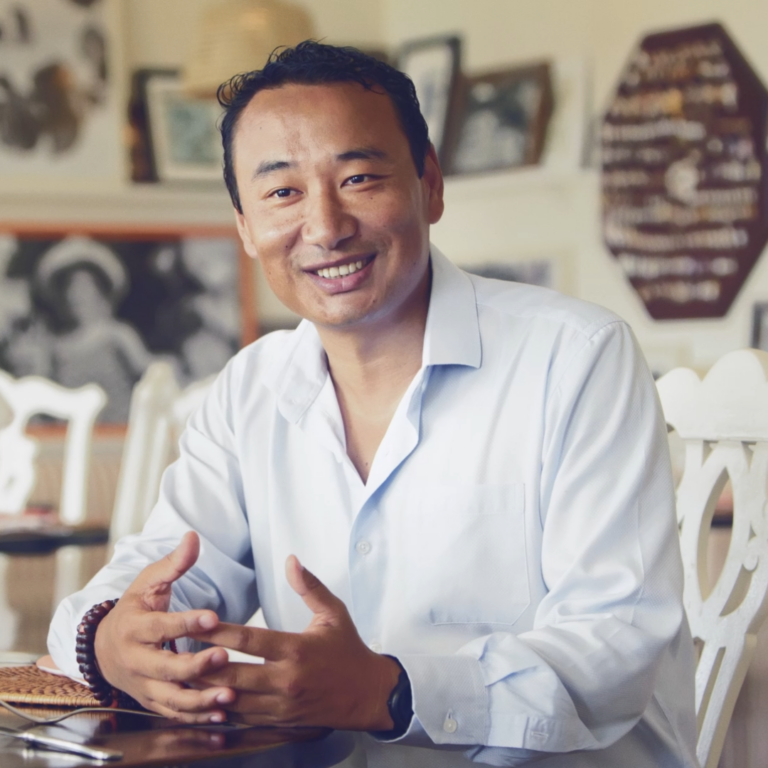
What You'll Earn
- AI in Hospitality Certificate from Cornell’s Peter and Stephanie Nolan School of Hotel Administration
- 45 Professional Development Hours (4.5 CEUs)
Who Should Enroll
- Mid- and senior-level hospitality professionals
- Marketing and sales directors in hospitality
- HR directors for hospitality organizations
- Business analysts
- Hotel general managers
- Housekeeping directors
Frequently Asked Questions
AI is quickly changing how hospitality teams forecast demand, respond to guests, and run day-to-day operations. Cornell’s AI in Hospitality Certificate helps you move from curiosity to practical capability by showing you how to use predictive analytics, generative AI, and automation in common hospitality scenarios like cancellations, guest reviews, workforce data, and operational reporting.
In this certificate program, authored by faculty from the Nolan School of Hotel Administration at the Cornell SC Johnson College of Business, you will learn how to evaluate where AI adds value, build and compare models using real hospitality-style datasets, and turn outputs into decisions you can defend. The experience is designed for working professionals, so you spend your time applying tools and methods to realistic problems, with facilitator feedback and peer discussion to help you improve your approach.
If you want practical hospitality-specific AI skills, hands-on experience with widely used tools, and a structured path to streamline operations and improve decision making, you should choose Cornell’s AI in Hospitality Certificate.
Many online AI courses stop at concepts, generic demos, or self-paced videos. Cornell’s AI in Hospitality Certificate is built around applied, hospitality-relevant work that helps you make better decisions with the types of data you actually see in hotels and hospitality businesses, from guest feedback to operational and commercial performance data.
Instead of learning in isolation, you learn in a small cohort with an expert facilitator who guides discussion and provides feedback on your project work. The AI in Hospitality Certificate also emphasizes practical judgment. You will practice comparing model types, measuring model performance, and recognizing limitations like bias, privacy risk, and hallucinations so you can implement AI more responsibly at work.
Plus, by enrolling in Cornell’s AI in Hospitality Certificate, you get two years of access to Hospitality Symposium and AI Symposium, each featuring two days of live, highly interactive virtual Zoom sessions that will explore today’s most pressing topics, giving you a unique opportunity to engage in real-time conversations with peers and experts from the Cornell community and beyond.
Enrolling in this certificate also provides you with a 6-month All-Access Pass to eCornell's live online AI Workshops, interactive sessions led by world-class Cornell faculty that combine Ivy League insight with practical applications for busy professionals. Each 3-hour Workshop features structured instruction, guided practice, and real tools to build competitive AI capabilities, plus the opportunity to connect with a global cohort of growth-oriented peers. While AI Workshops are not required, they enhance certificate programs through:
- Integrating AI perspectives across most curricula
- Responding to emerging AI developments and trends
- Offering direct engagement with Cornell faculty at the forefront of AI research
Cornell’s AI in Hospitality Certificate is designed for hospitality professionals who want to apply AI to real operational and commercial decisions without needing to become data scientists. The program is a strong fit if you want to improve how your team forecasts demand, learns from guest feedback, streamlines repeatable workflows, or communicates more effectively with guests and stakeholders.
You are a good match for the AI in Hospitality Certificate if you work in roles such as:
- Hotel and hospitality operations leadership (including general management and department leadership)
- Marketing, sales, and guest experience leadership
- HR and people operations in hospitality
- Business analysis and performance-focused roles supporting hospitality teams
Because Cornell’s AI in Hospitality Certificate uses common workplace tools, you can bring your own context to the projects even if you are new to AI, as long as you are comfortable working with data at a basic level and willing to practice in tools like Excel and guided AI platforms.
Project work in Cornell’s AI in Hospitality Certificate is designed to look like the work you would do when you are evaluating, testing, and rolling out AI support for hospitality operations. You will build skills step by step then synthesize them into practical deliverables you can adapt to your property or organization.
Examples of the kinds of projects you will complete include:
- Identifying and prioritizing AI opportunities in your workplace, including benefits, risks, and readiness considerations
- Building predictive models using regression techniques and using them to answer business questions such as pay equity patterns and reservation cancellation likelihood
- Comparing model performance using evaluation metrics and train-test (holdout) approaches so you can choose models that balance accuracy and interpretability
- Segmenting customers or operational patterns with clustering, then summarizing large volumes of guest feedback with topic modeling
- Using generative AI to structure job-related tasks, analyze datasets through chain prompting, and create clearer reports, tables, and summaries
- Drafting and refining guest-facing and internal communications, including review responses and stakeholder-ready performance updates
- Designing automations that trigger alerts, route information to the right people, and generate first-draft outputs for review
- Scraping and organizing review data, running sentiment classification at scale, and exporting structured outputs for analysis
- Creating a virtual assistant that can answer questions using a defined knowledge base and clear response rules
Across Cornell’s AI in Hospitality Certificate, facilitator feedback helps you tighten your analysis, improve your assumptions, and communicate results in a way that supports action.
Cornell’s AI in Hospitality Certificate equips you to apply AI to hospitality decisions and workflows in a way that improves your effectiveness and credibility as a modern operator and leader.
After completing the AI in Hospitality Certificate, you will be prepared to:
- Evaluate the opportunities and challenges AI presents for the hospitality industry
- Apply machine learning, generative AI, and automation to help streamline operations and decision making
- Explore how predictive analytics can help you optimize the customer experience and improve employee and operations performance
- Work with large language models to perform cross-program computations, create custom reports, and enhance accuracy and efficiency
- Utilize AI to generate and refine communications, such as responses to consumer reviews, documents, reports, and emails
- Scrape customer reviews using specialized tools and build custom solutions through robotic process automation
- Create and deploy a virtual assistant powered by GenAI
Students commonly report that the program builds confidence with AI, even for learners who are new to the topic, because it connects generative AI, predictive AI, and automation directly to operational and commercial hospitality challenges. Learners frequently highlight practical, hospitality-specific use cases, hands-on practice with widely used tools for workflows and productivity, and an emphasis on real-world implementation rather than theory alone. Many also describe leaving with concrete takeaways they can use immediately, from improving internal processes to taking a more structured approach to adopting AI responsibly across teams.
What truly sets eCornell apart is how our programs unlock genuine career transformation. Learners earn promotions to senior positions, enjoy meaningful salary growth, build valuable professional networks, and navigate successful career transitions.
Cornell’s AI in Hospitality Certificate, which consists of 3 short courses, is designed to be completed in 3 months. Each course runs for 3 weeks, with a typical weekly time commitment of 3 to 5 hours.
Designed for busy hospitality professionals, each course combines asynchronous work you can complete on your own schedule (short videos, readings, practice activities, and project work) with structured deadlines that help you maintain momentum. You also have opportunities for live interaction in the eCornell learning model, which adds support and peer learning without turning the program into a rigid, fixed-time experience.
Students describe Cornell’s AI in Hospitality Certificate as a practical, confidence-building way to understand and apply AI in hotel and hospitality operations, even if they are new to the topic. They frequently highlight how the program connects AI concepts directly to real operational and commercial challenges, helping them spot immediate opportunities to improve efficiency, decision-making, and guest experience.
Common themes learners mention include:
- Hospitality-specific use cases that translate directly to hotel operations and commercial functions
- Clear introductions to generative AI, predictive AI, and automation in a hospitality context
- Hands-on practice with widely used tools for workflows and productivity (including no-code automation)
- Strong focus on real-world implementation, not just theory
- Frameworks and models that help evaluate where AI adds value in day-to-day hotel work
- Practical exercises that encourage creative problem-solving and process improvement
- Flexible, self-paced format that fits busy schedules and full-time roles
- Well-organized modules with bite-sized videos, readings, and applied activities
- Facilitators who are accessible, engaging, and supportive
- Valuable peer learning through live discussions with hospitality professionals from diverse backgrounds
Many students also say they finish the program with concrete takeaways they can use immediately, from improving internal processes at their properties to adopting a more structured approach to implementing AI responsibly across teams.
A coding-heavy background is not required for Cornell’s AI in Hospitality Certificate. You will practice core AI and analytics concepts using accessible tools and guided workflows, including Excel for analysis and widely used AI and automation platforms where you focus on setting up models, interpreting outputs, and making operational recommendations.
You should be comfortable working with basic spreadsheets and willing to engage with data, prompts, and step-by-step tool instructions. Cornell’s AI in Hospitality Certificate also emphasizes good judgment, including validating outputs, checking for bias, and using human oversight when generative AI is involved, so you can apply what you learn responsibly in real hospitality environments.
Hands-on work in Cornell’s AI in Hospitality Certificate uses tools that many hospitality teams already touch in some form, plus a few accessible platforms that make AI and automation easier to practice. You will use Microsoft Excel for analysis and reporting exercises, a free trial of BigML to build and compare machine learning models, and free versions of ChatGPT, Zapier, and Botster for generative AI use cases and automation workflows.
For deeper robotic process automation practice, access to a Windows PC with Microsoft Power Automate is strongly encouraged to maximize the experience, though it is not required. Power Automate is not available for Mac users, so Mac learners typically focus on the web-automation and GenAI components while still completing the certificate requirements.
Responsible adoption is a recurring theme in Cornell’s AI in Hospitality Certificate because hospitality teams often work with sensitive information, including guest feedback, employee records, and performance data. You will learn to evaluate where AI is appropriate, where it introduces risk, and how to build guardrails that keep humans accountable for decisions.
In the predictive analytics work, you will explicitly consider issues like bias and model limitations when using employee and operational datasets. In the generative AI work, you’ll practice human-in-the-loop methods to reduce errors from probabilistic outputs, including validating analyses and refining prompts for clarity and accuracy. In the automation work, you’ll design workflows that route outputs for review when needed, so speed does not come at the expense of brand voice, privacy, or sound judgment.
Explore programs to meet your professional goals

- 2 to 6 months
- $2,000 to $10,000
- Online

- 2 to 4 weeks
- $299 to $1,199
- Online

- 3 hours
- $449
- Online

- 15 to 24 months part-time
- Tuition varies
- In person or online
- 2 to 5 days
- $3,000 to $10,000
- In person - Ithaca or NYC
- Custom Enterprise Programs
- Price varies
- In person or hybrid
Request Information Now by completing the form below.

AI in Hospitality
| Select Payment Method | Cost |
|---|---|
| $3,900 | |