

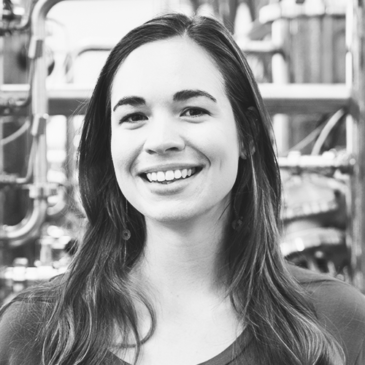
Kaylyn Kirkpatrick is the Technical Brewing Projects Coordinator for the Brewers Association (BA). Before starting at the BA, Kaylyn managed the Cornell University Brewing Extension program, which provides analytical lab services, educational content, and brewing resources to the craft beer community in New York State. Kaylyn earned her Bachelor’s degree in biochemistry from Colorado State University and a Master’s degree in food science from Oregon State University, where she studied in the Brewing Science Lab. She has a brewing and distilling diploma from the Institute of Brewing and Distilling in London and previously worked as a beer chemist at New Belgium Brewing Co. in Fort Collins, Colorado.
Request More Info
More Info
Overview and Courses
The craft brewing industry provides more than 150,000 jobs in the United States alone and has been rapidly expanding for several years now. Whether you’re looking to enter this growing field or are a home brewer, this certificate program will give you the skills you need to create and refine your own beer recipe.
Throughout this program, you will have the opportunity to walk through a hands-on exploration of the four main ingredients used in beer production and their impact on the final product. This in-depth look at each ingredient includes the chemistry and calculations needed to determine the best combination and ratios of ingredients for brewing. You will investigate how malt, hops, yeast, and water impact the aroma and flavor of your beer then determine how to achieve your desired recipe and style. After completing this program, you will be well equipped with the expertise and tools to develop, brew, and refine craft beer.
Note: You will be asked to purchase beer ingredients and other materials for various activities and projects before your courses begin. This may amount to around $100. You will receive a full list of materials at the time of enrollment.
Familiarity with high school-level chemistry, advanced high school-level algebra, and basic calculations will help you be successful in this program.
Course list
It is often said that malt is the soul of beer, and it plays an important role as the source of nutrients and sugars that carry forward into fermentation and your finished product. Selecting the right malt and managing the malt quality are key to a good finished beer. In this course, you will explore different malts and their impact on the wort. You'll then read and interpret malt Certificates of Analysis so that you can choose and purchase the correct malt for each recipe you create. By the end of this course, you'll be better prepared to select the ideal malts to optimize your beer recipe.
View Course Start Dates Hide Course Start Dates
View Course Details- Nov 11, 2026
- Feb 3, 2027
- Apr 28, 2027
- Jul 21, 2027
- Oct 13, 2027
Hops are a key ingredient that impacts finished beer aroma and flavor, and it's crucial to be able to differentiate among hop varieties. In this course, you will analyze different hop varieties and the unique chemistry they bring to your beer. You will work through calculations to reach the desired level of bitterness and aroma, and explore how different brewery processes can impact a finished beer. By the end of this course, you will be able to use hops to get closer to your desired aroma and flavor.
View Course Start Dates Hide Course Start Dates
View Course Details- Nov 25, 2026
- Feb 17, 2027
- May 12, 2027
- Aug 4, 2027
- Oct 27, 2027
For consistent excellence in your final beer, you need to successfully manage yeast and microorganisms during fermentation. In this course, you will consider the role of yeast in your beer recipe and how to manage fermentation to produce your desired flavor profile. You'll identify the conditions needed to manage yeast for healthy production and practice evaluating yeast health ahead of fermentation. Finally, you will fine-tune yeast pitching rates and develop the skills to troubleshoot yeast-related issues revealed during fermentation. With this experience, you'll be better positioned to manage the health and vitality of your yeast and to achieve your final beer flavor goals.
View Course Start Dates Hide Course Start Dates
View Course Details- Dec 9, 2026
- Mar 3, 2027
- May 26, 2027
- Aug 18, 2027
- Nov 10, 2027
Water in beer production has a role in both the flavor of the finished beer and the efficiency of production. The use of water in brewing necessitates practices centered around sustainability. This course focuses on water as an ingredient and how to evaluate its chemical makeup in order to create the water profile that's best for your recipe. In this course, you'll recognize sustainable water sources, what they offer and why they matter, and evaluate your water supply for use as brew water. You will match brew water profiles to beer styles and flavors, then adjust the water composition to meet your recipe requirements.
View Course Start Dates Hide Course Start Dates
View Course Details- Dec 23, 2026
- Mar 17, 2027
- Jun 9, 2027
- Sep 1, 2027
- Nov 24, 2027
It is time to get your recipe ready for production! In this course, you will explore how production choices influence your beer recipe and outcomes. You'll examine the impact of ingredient interplay during the brewing process, including process aids and nontraditional sources of flavor. The focus is on the chemical processes and reactions that may be harnessed to promote and retain the target characteristics of your beer. Upon completing this course, you'll be ready to refine the production process to manifest your recipe goals.
You are required to have completed the following courses or have equivalent experience before taking this course:
- Malt Evaluation
- Hops Flavor Chemistry
- Yeast and Fermentation
- Water Profiles
View Course Start Dates Hide Course Start Dates
View Course Details- Jan 6, 2027
- Mar 31, 2027
- Jun 23, 2027
- Sep 15, 2027
- Dec 8, 2027
Request more Info by completing the form below.
more Info
by completing the form below.Act today—courses are filling fast.
How It Works
Format
All Online
Time Commitment
3 months with 3 to 5 hours of study per week
Cost
$1,999
Learn From Top Minds
Courses are developed by Cornell faculty.
Power Your Career
Gain today’s most in-demand skills to stand apart.
Flexibility Fits Your Life
Learn on your schedule without stepping out of your job.
Small-class Experience
Participate in facilitated discussions and live sessions with industry peers.
Real-world Projects
Apply learnings and insights to your work to make an impact right away.
Personalized Feedback
Enjoy meaningful feedback on assignments from expert facilitators.
Format
All Online
Time Commitment
3 months with 3 to 5 hours of study per week
Cost
$1,999
Learn From Top Minds
Courses are developed by Cornell faculty.
Power Your Career
Gain today’s most in-demand skills to stand apart.
Flexibility Fits Your Life
Learn on your schedule without stepping out of your job.
Small-class Experience
Participate in facilitated discussions and live sessions with industry peers.
Real-world Projects
Apply learnings and insights to your work to make an impact right away.
Personalized Feedback
Enjoy meaningful feedback on assignments from expert facilitators.
Faculty Author
Visiting Lecturer, Cornell University
Key Course Takeaways
- Investigate the characteristics of different malts to determine which is best for your recipe and beer style
- Explore the properties of hops and determine their impact on beer aroma and flavor
- Analyze the yeasts and microorganisms used in beer fermentation to achieve the desired flavor profile
- Evaluate water and its chemical makeup to create the appropriate water profile for your recipe
- Examine the nuances of ingredient interplay during the brewing process to refine the production of your recipe

Download Brochure
Fill out the form below to download program information and connect
with us.
Download a Brochure
Not ready to enroll but want to learn more? Download the certificate brochure to review program details.
What You'll Earn
- Craft Brewing Certificate from Cornell CALS
- 50 Professional Development Hours (5 CEUs)
Watch the Video
Hear eCornell students share their stories.
Who Should Enroll
- Homebrewers and hobbyists
- Brewery startups
- Equipment vendors
- Malt suppliers
- Homebrew retailers
- Brewery apprentices and career starters
- Brewery employees looking to expand their knowledge
Frequently Asked Questions
Great beer gets reliably great when you understand why each ingredient and process choice changes what ends up in the glass. Cornell’s Craft Brewing Certificate helps you move beyond guesswork by connecting brewing science to practical decisions you can use right away, whether you brew at home or in a small commercial setting.
Across the certificate, authored by faculty from Cornell’s College of Agriculture and Life Sciences, you will build capability in evaluating malt quality data, shaping hop bitterness and aroma with calculations, managing yeast health and pitching rates, and designing water profiles that support your target style. You’ll also learn how production decisions, such as mash programming, process aids, haze and foam management, and packaging choices, can protect flavor and improve consistency.
If you want more control over flavor outcomes, stronger troubleshooting skills, and a science-based way to design and refine recipes, you should choose Cornell's Craft Brewing Certificate.
Many online brewing courses focus on passive video learning or isolated tips and tricks. Cornell’s Craft Brewing Certificate is designed as an applied, expert-facilitated experience where you practice making technical decisions, defend them with data, and get feedback that helps you improve.
You will work through structured, hands-on activities that mirror real brewing workflows, such as interpreting ingredient certificates of analysis, running brewing calculations for bitterness and water adjustments, evaluating yeast health, and planning processes that protect flavor through packaging. The program also emphasizes sensory vocabulary and communication, helping you describe malt- and hop-derived flavors clearly and connect those descriptors back to process choices.
Because eCornell programs are built for small-cohort learning with an expert facilitator and graded, competency-based projects, you learn independently but not in isolation. You leave with practical tools, templates, and repeatable methods you can keep using as your recipes and production constraints evolve.
Cornell's Craft Brewing Certificate is a strong fit if you want to brew more intentionally and you are ready to engage with the science behind recipe and process decisions. The program is designed for homebrewers and hobbyists, brewery startups, brewery apprentices and career starters, and brewery employees who want to expand their technical knowledge.
The certificate is also useful for professionals adjacent to production, such as equipment vendors, malt suppliers, and homebrew retailers, who want a more rigorous understanding of how ingredient specifications and process variables translate into aroma, flavor, and consistency.
To get the most value, you should be comfortable with basic calculations and willing to complete hands-on activities that use real brewing scenarios and data.
Project work in Cornell's Craft Brewing Certificate is designed to help you make and justify brewing decisions using real inputs, such as ingredient specs, process constraints, and style targets.
Students have completed projects like:
- Building a Belgian Abbey ale fermentation plan by comparing multiple commercial yeast options and selecting a dry Belgian ale strain to target dark-fruit esters and balanced phenolics
- Designing a German-style lager yeast selection workflow by evaluating supplier quality documentation and linking strain attributes (POF status, attenuation, and flocculation) to a crisp, clean finish
- Creating a Kölsch-focused malt bill by selecting Pilsner, Vienna, wheat, and dextrin malts, then interpreting COA shifts (diastatic power, FAN, beta-glucans) to adjust mash strategy for consistent fermentability
- Running hands-on hop blending trials by preparing hop “tea” infusions, sensory scoring three blends, and selecting a citrus-forward blend based on aroma intensity and balance
- Planning an American-style light lager grain bill by balancing base malt with rice and corn adjuncts to hit a pale color target while maintaining a neutral, highly drinkable flavor profile
Together, projects like these build the ability to design recipes with intent, communicate sensory outcomes, and troubleshoot results using a repeatable, data-informed approach.
Cornell’s Craft Brewing Certificate builds practical brewing decision-making skills that can help you contribute more confidently to recipe development, quality consistency, and production troubleshooting.
After completing Cornell's Craft Brewing Certificate, you will have the skills to:
- Investigate the characteristics of different malts to determine which is best for your recipe and beer style
- Explore the properties of hops and determine their impact on beer aroma and flavor
- Analyze the yeasts and microorganisms used in beer fermentation to achieve the desired flavor profile
- Evaluate water and its chemical makeup to create the appropriate water profile for your recipe
- Examine the nuances of ingredient interplay during the brewing process to refine the production of your recipe
Students report long-term value from the program’s clear, science-based explanations of the “why” behind brewing choices, along with especially strong skill building in water chemistry, yeast and fermentation troubleshooting, and ingredient selection for aroma and flavor. Learners also highlight that the hands-on experiments, calculators, and templates remain useful after the certificate and that they feel better able to talk shop with professional brewers and apply best practices in real production settings, even when they started as serious homebrewers.
What truly sets eCornell apart is how our programs unlock genuine career transformation. Learners earn promotions to senior positions, enjoy meaningful salary growth, build valuable professional networks, and navigate successful career transitions.
Cornell’s Craft Brewing Certificate, which consists of 5 short courses, is designed to be completed in 3 months. Each course in this certificate runs for 2 weeks, with a typical weekly time commitment of 3 to 5 hours.
Designed for busy working professionals, most learning tasks can be completed on your schedule, with structured deadlines that help you keep momentum. The result is flexibility with accountability: You can keep brewing, working, and managing life responsibilities while still moving through a rigorous, applied learning experience in Cornell's Craft Brewing Certificate.
Students in Cornell's Craft Brewing Certificate often describe it as a rare chance to study brewing in a structured, academically rigorous way while still staying highly practical for real brewing, whether at home or in a small commercial setting. They frequently mention that the program helps them connect the entire beer production process from ingredients to fermentation, quality, and refinement, and that they finish with more confidence in both their decisions and their results.
Common highlights students point to include:
- Clear, science-based explanations of brewing, including the “why” behind recipes and processes
- Strong skill building in water chemistry and water profiling
- A deeper understanding of yeast, fermentation, and how to troubleshoot outcomes
- Ingredient-focused learning, especially malt evaluation, grain selection, and the impact of hops on flavor and aroma
- Hands-on activities, experiments, and practical tools (including calculators and templates) they keep using after the course
- An improved ability to talk shop with professional brewers and apply best practices in production settings
- Engaging facilitators with real industry experience and responsive support through live sessions and messaging
- Well-organized, easy-to-navigate online format that fits busy schedules while still maintaining momentum
Overall, students say Cornell's Craft Brewing Certificate delivers a high-density learning experience that turns curiosity into capability, giving them a solid foundation to brew more intentionally and a clear pathway to keep advancing their craft.
No specific prior brewing experience is required, but you will get more out of Cornell's Craft Brewing Certificate if you are ready to engage with brewing data, basic chemistry concepts, and hands-on practice.
The program recommends familiarity with high school-level chemistry, advanced high school-level algebra, and basic calculations so you can work comfortably with topics such as ingredient specifications, bitterness and pitching-rate math, and water profile adjustments. If you are newer to the science, you can still be successful by budgeting extra time for the calculations and using the provided worksheets and calculators as you build fluency.
You should expect to purchase beer ingredients and a small set of materials for activities and projects as part of Cornell's Craft Brewing Certificate. The program estimates these purchases may total around $100, and you will receive a full materials list at the time of enrollment.
Hands-on work includes activities such as sensory evaluation of ingredients, simple at-home brewing or lab-style checks, and measurement exercises related to water and fermentation. The goal is to keep the practice accessible while still grounding your learning in real brewing inputs, not just theory.
Consistency comes from knowing what to measure, what signals to watch, and what adjustments are most likely to bring a beer back on target. In Cornell's Craft Brewing Certificate, you will practice skills that support quality across the process.
You will learn how to interpret ingredient quality information (such as malt and hop specifications), evaluate yeast health and recognize common fermentation off-flavor risks, and build water profiles that better match style goals. You’ll also work with practical methods for diagnosing and correcting issues with foam and haze, and you’ll consider packaging choices and oxygen control practices that help preserve the flavor you worked to create.
These capabilities help you move from reacting to problems toward preventing them with better inputs, tighter process control, and clearer documentation.
Explore Related Programs






“I love making beer. This course really took my understanding of the process to another level.”
Jamie M.
Explore programs to meet your professional goals
Certificates

Earn a Cornell credential as you complete multiple courses.
- 2 to 6 months
- $2,000 to $10,000
- Online
Courses

Learn in a small cohort, with graded assignments and opportunities for live sessions.
- 2 to 4 weeks
- $299 to $1,199
- Online
Workshops

Develop AI skills and strategies in interactive sessions with Cornell faculty.
- 3 hours
- $449
- Online
Degrees

Earn a professional master’s degree from Cornell University.
- 15 to 24 months part-time
- Tuition varies
- In person or online
On Campus

Join us in Ithaca or NYC to engage with peers and experts from around the world.
- 2 to 5 days
- $3,000 to $10,000
- In person - Ithaca or NYC
Programs for Teams

Address strategic challenges with Cornell University faculty to develop the skills required for organizational success.
- Custom Enterprise Programs
- Price varies
- In person or hybrid
Request Information Now by completing the form below.
Act today—courses are filling fast.
Purchase Options
1999

Craft Brewing
| Select Payment Method | Cost |
|---|---|
| $1,999 | |
Review Program Pricing and Details