
Course list

From powering global communications to enabling scientific discovery and supporting national security, spacecraft serve as the backbone of today's rapidly evolving space sector. As commercial launches surge and new technologies reshape mission possibilities, professionals who understand the intricacies of spacecraft design and mission planning are in high demand.

In this course, you will systematically build expertise in spacecraft architecture, mission objectives, and subsystem integration, connecting each phase of the mission life cycle to real-world outcomes. By working with tools such as the Spacecraft Function Categorization and Subsystem Functions Chart, you'll translate mission goals into actionable design requirements and evaluate how critical components work together. Applying the Technology Readiness Level (TRL) framework, you'll discover how to balance innovation with reliability, assess technical risks, and make informed decisions that drive mission success.

By completing this course, you will be prepared to navigate complex spacecraft systems, contribute confidently to mission planning, and make strategic decisions that advance the future of space exploration.

Global investment in space technology is accelerating, fueling new opportunities and reshaping the workforce needed to drive innovation in this dynamic sector. As government agencies, private contractors, and vendors collaborate on ambitious projects, understanding the interplay between key industry players and regulatory frameworks has become essential for anyone seeking to thrive in the field.

In this course, you will examine the intricate relationships among prime contractors, vendors, and government agencies, uncovering how these stakeholders navigate complex aerospace ecosystems. By analyzing the influence of export controls, proprietary data, and regulatory requirements, you'll discover how to assess the impact of these factors on company operations and technology development. You'll also investigate the economic drivers shaping job opportunities and the evolving expectations for roles across the space industry.

By engaging with real-world scenarios and interactive exercises, you will develop a tailored career strategy that leverages your strengths and aligns with industry needs. Upon completion, you'll be prepared to confidently pursue opportunities in space technology and make meaningful contributions to the future of aerospace innovation.

You are required to have completed the following courses or have equivalent experience before taking this course:

  • Identifying Spacecraft Functions and Components

From advancing satellite technology to deep space exploration, the demand for expertly assembled spacecraft hardware continues to grow as missions become more ambitious and complex. Gaining hands-on expertise in specialized assembly processes is essential for ensuring the reliability and safety of systems destined for space.

In this course, you will analyze critical components used in spacecraft fabrication, implement rigorous electrostatic discharge (ESD) controls, and apply cleanroom protocols to maintain the highest standards of safety and contamination control. You'll also examine advanced, space-qualified soldering techniques and discover how to integrate complex subsystems using proven fabrication methods. Live demonstrations in a cleanroom laboratory environment offer a rare opportunity to observe precision hardware assembly in real time, bridging the gap between theory and practice.

By completing this course, you will be equipped to confidently fabricate and assemble spacecraft systems, applying industry-leading standards to meet the challenges of modern space missions.

You are required to have completed the following courses or have equivalent experience before taking this course:

  • Identifying Spacecraft Functions and Components
  • Evaluating Space Technology Ecosystem and Policies

The push for deeper space exploration and commercial satellite deployment demands absolute confidence in spacecraft performance. As missions grow in complexity and cost, the ability to rigorously validate spacecraft systems has become a critical differentiator for engineers and organizations alike.

In this course, you will examine the root causes of spacecraft failures and leverage advanced testing methodologies to mitigate mission risk. You'll compare prototype, qualification, and environmental testing approaches, distinguishing subsystem-focused strategies from system-level validation. By navigating the challenges of integrating diverse components into cohesive subsystems, you'll gain practical insights into assembling and verifying complete spacecraft systems.

Drawing on real-world case studies and proven testing frameworks, you will master risk mitigation strategies and build the expertise to conduct comprehensive validation procedures. By completing this course, you'll be equipped to lead spacecraft testing initiatives that ensure mission readiness and operational reliability, even in the most demanding environments.

You are required to have completed the following courses or have equivalent experience before taking this course:

  • Identifying Spacecraft Functions and Components
  • Evaluating Space Technology Ecosystem and Policies
  • Applying Techniques for Space Hardware Fabrication

Advances in space exploration demand innovative propulsion systems capable of delivering reliability, efficiency, and safety for a range of mission profiles. As new technologies emerge and missions grow more complex, professionals must possess a deep understanding of propulsion options and the critical trade-offs that shape mission success.

In this course, you will systematically examine chemical, electrical, and hybrid propulsion technologies, evaluating their operational strengths, limitations, and suitability for diverse applications. You'll investigate the engineering and safety considerations of propellant tanks, mastering protocols for handling and storage to ensure mission integrity.

By dissecting the components and operation of rocket engines, you will learn how propulsion systems are integrated and optimized for real-world performance. Engaging with case studies, you'll apply analytical frameworks to assess propulsion solutions, balancing efficiency, safety, and mission requirements.

By completing this course, you will be equipped to make informed, strategic decisions about propulsion system selection and integration, positioning yourself to contribute confidently to the future of space missions.

You are required to have completed the following courses or have equivalent experience before taking this course:

  • Identifying Spacecraft Functions and Components
  • Evaluating Space Technology Ecosystem and Policies
  • Applying Techniques for Space Hardware Fabrication
  • Executing Spacecraft Testing and Integration

Coordinating a successful spacecraft launch demands precision, teamwork, and a deep understanding of every operational detail. As commercial space activities expand and mission complexity increases, organizations require professionals who can expertly guide spacecraft from arrival at the launch site through to reliable orbital operations.

In this course, you will navigate the entire launch preparation process, from assessing launch site capabilities and orchestrating spacecraft integration to mastering countdown procedures and the critical handoff from human oversight to automated systems. You'll dissect the distinct demands of various mission profiles, including crewed expeditions and multi-payload rideshare launches, and evaluate how mission control teams manage decision making during pivotal moments like separation and early orbit. Through immersive scenarios and authentic industry examples, you'll build the skills needed to oversee launch-day operations and confidently support the transition to sustained orbital functionality.

By completing this course, you will be equipped to manage the complexities of spacecraft launch and mission initiation, positioning yourself as a key contributor in today's dynamic space industry.

You are required to have completed the following courses or have equivalent experience before taking this course:

  • Identifying Spacecraft Functions and Components
  • Evaluating Space Technology Ecosystem and Policies
  • Applying Techniques for Space Hardware Fabrication
  • Executing Spacecraft Testing and Integration
  • Analyzing Propulsion Technologies

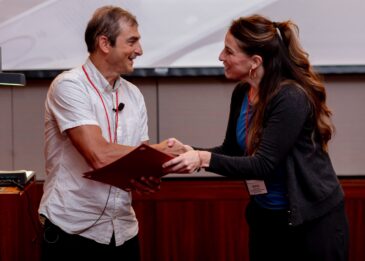
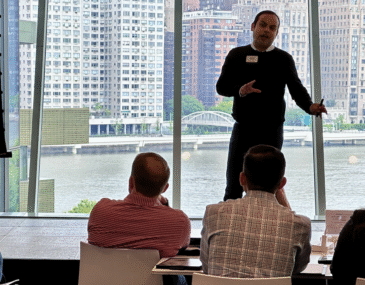
eCornell Online Workshops are live, interactive 3-hour learning experiences led by Cornell faculty experts. These premium short-format sessions focus on AI topics and are designed for busy professionals who want to gain immediately applicable skills and strategic perspectives. Workshops include faculty presentations, breakout discussions, and guided hands-on practice.

The AI Workshops All-Access Pass provides you with unlimited participation for 6 months from your date of purchase. Whether you choose to attend one workshop per month, or several per week, the All-Access Pass will allow you to customize your AI journey and stay on top of the latest AI trends.

Workshops cover a range of cutting-edge AI topics applicable across industries, hosted by Cornell faculty at the forefront of their fields. Whether you are just getting started with AI, seeking to build your AI skillset, or exploring advanced applications of AI, Workshops will provide you with an action-oriented learning experience for immediate application in your career. Sample Workshops include:

  • Work Smarter with AI Agents: Individual and Team Effectiveness
  • Leading AI Transformation: Bigger Than You Imagine, Harder Than You Expect
  • Using AI at Work: Practical Choices and Better Results
  • Search & Discoverability in the Era of AI
  • Don't Just Prompt AI - Govern it
  • AI-Powered Product Manager
  • Leverage AI and Human Connection to Lead through Uncertainty

Request
more Info
by completing the form below.

Act today—courses are filling fast.

How It Works

“I would found an institution where any person could find instruction in any study.”
{Anytime, anywhere.}
Ezra Cornell
Founder of Cornell University