
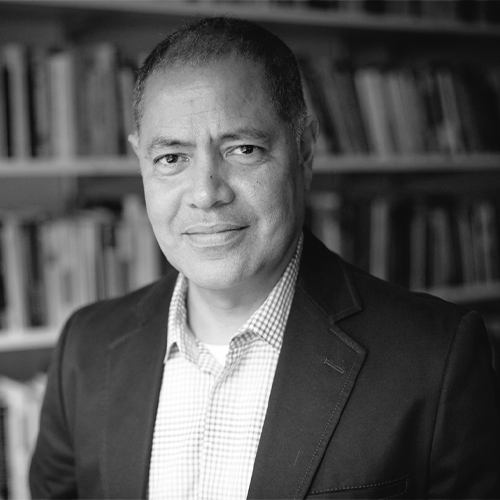
Gerard Aching is Professor of Africana and Romance Studies. He specializes in 19th- and 20th-century Caribbean literatures and intellectual histories; theories of modernism and modernity in Latin America; and the relationship among literature, philosophy, and slavery in the Caribbean and the United States. Professor Aching is the author of three books related to his areas of interest; his current research and teaching focus on subjectivity in slave narratives, slavery and philosophy, and sugar production in the development of the modern transatlantic world. His Underground Railroad Research Project, which entails field work in Central and Western New York, informs his new book project, “The Promise of Rebirth: A Contemporary Approach to the Underground Railroad.” Professor Aching is also a faculty fellow at the Cornell Atkinson Center for Sustainability and co-director of Cornell’s Rural Humanities Initiative.
Dissecting Discrimination
Event Overview
In this webinar, Cornell faculty across several disciplines will discuss the relationship between migration and race-based discrimination, from the earliest forced movement of enslaved peoples to nations built on excluding or extracting from particular racial/ethnic groups. Through the lens of colonialism and conquest, they’ll examine the ways in which migrant discrimination is preserved today and how to address it.
This discussion is part of the Cornell Migrations Initiative, which studies the nexus among racism, dispossession, and migration by cultivating dialogue and creative interdisciplinary collaboration.
What You'll Learn
- How the plantation economy was the root of racialized dispossession, colonization, and forced migration
- The many forms of resistance that characterized plantation life and societies
- How race factors into detention and deportation of immigrants
- The relationship between labor vulnerability and race for immigrants
- Ideas for addressing continuing racial inequities in migration
Speakers
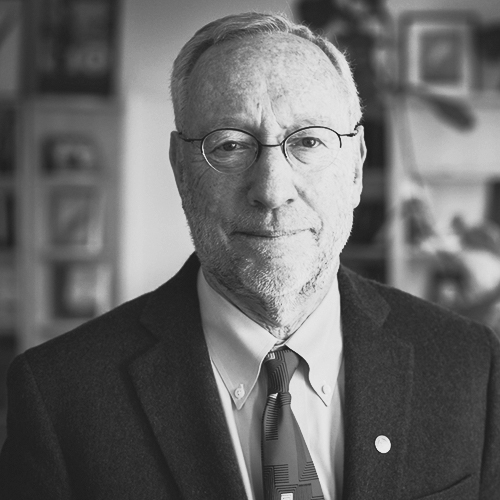
Michael I. Kotlikoff is the 15th president of Cornell University and professor of molecular physiology. The Cornell Board of Trustees appointed him president on March 21, 2025, following eight months as interim president.
Previously, Kotlikoff was Cornell’s longest-serving provost, holding that office from August 2015 to June 2024. Concurrently with his administrative duties as department chair, dean, and provost, Kotlikoff also oversaw an NIH-funded laboratory comprising senior scientists, postdocs, and graduate and undergraduate students, studying cardiovascular biology and heart repair.
Throughout his tenure at Cornell, President Kotlikoff has overseen numerous initiatives and landmark changes to advance the university’s excellence in teaching, scholarship, and outreach, and to enhance academic collaboration across Cornell’s disciplines, colleges, and campuses.
Under Kotlikoff’s leadership as provost, Cornell created the Ann S. Bowers College of Computing and Information Science, Jeb E. Brooks School of Public Policy, and SC Johnson College of Business; multi-college departments of computational biology, design technology, economics, psychology, sociology, and statistics and data science; and the cross-college Paul Rubacha Department of Real Estate.
Kotlikoff’s signature strategic initiative, Radical Collaboration, has enhanced Cornell’s academic excellence and interdisciplinary collaborations by bringing together world-leading expertise from across widely divergent fields. The initiative has recruited faculty in artificial intelligence, design technology, digital humanities, nanoscience, sustainability, and other areas; led investments in university centers such as the Cornell High Energy Synchrotron Source, or CHESS; the Society for the Humanities; and the Cornell Center for the Social Sciences; and given rise to the Academic Integration initiative, which deepened collaboration across the Ithaca and Weill Cornell Medicine campuses.
During Kotlikoff’s time as provost, significant advances were also made across Cornell in teaching and learning and in student and campus life, with the development of the Center for Teaching Innovation, the Gateway Courses project, the Community-Engaged Learning Initiative through the David M. Einhorn Center for Community Engagement, the rapid expansion of eCornell, and the construction and opening of the North Campus Residential Expansion project. He also developed policies to facilitate greater faculty diversity and dual-career hiring across Cornell’s colleges, and initiated broad, high-impact investments in the university’s academic facilities, including the construction of Atkinson Hall, the renovation of McGraw and Phillips Halls, and the renovation and expansion of Thurston Hall.
Cornell successfully navigated the COVID-19 pandemic under Kotlikoff’s leadership, developing and implementing rigorous, evidence-driven public health measures that enabled it to safely continue in-person residential instruction and research activities throughout the 2020-21 academic year.
Kotlikoff was recruited to Cornell in 2000 as the founding chair of the Department of Biomedical Sciences and chair of the Mammalian Genomics Life Science Initiative, and served as the Austin O. Hooey Dean of the College of Veterinary Medicine from 2007 to 2015. His laboratory’s work is internationally recognized in cell signaling and heart repair and was continuously funded by the National Institutes of Health for over 35 years. He has received numerous awards, served on and chaired several editorial boards and NIH councils, and was awarded an honorary doctoral degree from City University of Hong Kong in 2019.
Kotlikoff received his B.A. (literature) and V.M.D. degrees from the University of Pennsylvania and his Ph.D. in physiology from the University of California, Davis.

Shannon Gleeson is the Edmund Ezra Day Professor at the Cornell University School of Industrial and Labor Relations and the chairperson of ILR’s Department of Global Labor and Work. She also serves as a teaching faculty member in Latina/o Studies and American Studies programs in Cornell’s College of Arts and Sciences and is a professor in the Jeb E. Brooks School of Public Policy.
A sociologist who studies migrant worker rights and immigration policy, Professor Gleeson is engaged in various collaborative projects that examine immigrant workers. She is particularly interested in how worker rights policies are implemented on the ground as well as how workers, unions, worker centers and other NGOs navigate the policies that impact precarious workers, especially the 8 million U.S. workers who are undocumented.
Professor Gleeson has co-authored five books and monographs, including the book “Scaling Migrant Worker Rights: How Advocates Collaborate and Contest State Power,” which won the 2024 Best Book Award by the American Political Science Association Latino Caucus.
Professor Gleeson earned a Ph.D. in Sociology and Demography from the University of California, Berkeley.

Stephen Yale-Loehr is Professor of Immigration Practice at Cornell Law School and of counsel at Miller Mayer in Ithaca, New York. He also directs the Immigration Law and Policy Center at Cornell Law and is a faculty fellow for the Cornell Migrations initiative as well as a non-resident fellow at the Migration Policy Institute. Professor Yale-Loehr has practiced immigration law for over 35 years and is co-author of the leading immigration law treatise “Immigration Law and Procedure,” published by LexisNexis, as well as the co-author or editor of many other books. He is a national expert on immigration law and has often testified before Congress. Professor Yale-Loehr received his Bachelor’s degree from Cornell University and his Juris Doctor degree from Cornell Law School.

Wendy Wolford is Vice Provost for International Affairs and the Robert A. and Ruth E. Polson Professor of Global Development in the College of Agriculture and Life Sciences. As vice provost, Professor Wolford supports Cornell’s international community and leads efforts to strengthen the university’s global connections and interdisciplinary initiatives.
Under Professor Wolford’s leadership, Cornell has created Global Hubs partnerships, Global Grand Challenges, and increased support for Scholars Under Threat. Her research spans land governance, social movements, agrarian studies, and political ecology, with long-term work in Brazil, Ecuador, and Mozambique.
Gerard Aching is Professor of Africana and Romance Studies. He specializes in 19th- and 20th-century Caribbean literatures and intellectual histories; theories of modernism and modernity in Latin America; and the relationship among literature, philosophy, and slavery in the Caribbean and the United States. Professor Aching is the author of three books related to his areas of interest; his current research and teaching focus on subjectivity in slave narratives, slavery and philosophy, and sugar production in the development of the modern transatlantic world. His Underground Railroad Research Project, which entails field work in Central and Western New York, informs his new book project, “The Promise of Rebirth: A Contemporary Approach to the Underground Railroad.” Professor Aching is also a faculty fellow at the Cornell Atkinson Center for Sustainability and co-director of Cornell’s Rural Humanities Initiative.
Michael I. Kotlikoff is the 15th president of Cornell University and professor of molecular physiology. The Cornell Board of Trustees appointed him president on March 21, 2025, following eight months as interim president.
Previously, Kotlikoff was Cornell’s longest-serving provost, holding that office from August 2015 to June 2024. Concurrently with his administrative duties as department chair, dean, and provost, Kotlikoff also oversaw an NIH-funded laboratory comprising senior scientists, postdocs, and graduate and undergraduate students, studying cardiovascular biology and heart repair.
Throughout his tenure at Cornell, President Kotlikoff has overseen numerous initiatives and landmark changes to advance the university’s excellence in teaching, scholarship, and outreach, and to enhance academic collaboration across Cornell’s disciplines, colleges, and campuses.
Under Kotlikoff’s leadership as provost, Cornell created the Ann S. Bowers College of Computing and Information Science, Jeb E. Brooks School of Public Policy, and SC Johnson College of Business; multi-college departments of computational biology, design technology, economics, psychology, sociology, and statistics and data science; and the cross-college Paul Rubacha Department of Real Estate.
Kotlikoff’s signature strategic initiative, Radical Collaboration, has enhanced Cornell’s academic excellence and interdisciplinary collaborations by bringing together world-leading expertise from across widely divergent fields. The initiative has recruited faculty in artificial intelligence, design technology, digital humanities, nanoscience, sustainability, and other areas; led investments in university centers such as the Cornell High Energy Synchrotron Source, or CHESS; the Society for the Humanities; and the Cornell Center for the Social Sciences; and given rise to the Academic Integration initiative, which deepened collaboration across the Ithaca and Weill Cornell Medicine campuses.
During Kotlikoff’s time as provost, significant advances were also made across Cornell in teaching and learning and in student and campus life, with the development of the Center for Teaching Innovation, the Gateway Courses project, the Community-Engaged Learning Initiative through the David M. Einhorn Center for Community Engagement, the rapid expansion of eCornell, and the construction and opening of the North Campus Residential Expansion project. He also developed policies to facilitate greater faculty diversity and dual-career hiring across Cornell’s colleges, and initiated broad, high-impact investments in the university’s academic facilities, including the construction of Atkinson Hall, the renovation of McGraw and Phillips Halls, and the renovation and expansion of Thurston Hall.
Cornell successfully navigated the COVID-19 pandemic under Kotlikoff’s leadership, developing and implementing rigorous, evidence-driven public health measures that enabled it to safely continue in-person residential instruction and research activities throughout the 2020-21 academic year.
Kotlikoff was recruited to Cornell in 2000 as the founding chair of the Department of Biomedical Sciences and chair of the Mammalian Genomics Life Science Initiative, and served as the Austin O. Hooey Dean of the College of Veterinary Medicine from 2007 to 2015. His laboratory’s work is internationally recognized in cell signaling and heart repair and was continuously funded by the National Institutes of Health for over 35 years. He has received numerous awards, served on and chaired several editorial boards and NIH councils, and was awarded an honorary doctoral degree from City University of Hong Kong in 2019.
Kotlikoff received his B.A. (literature) and V.M.D. degrees from the University of Pennsylvania and his Ph.D. in physiology from the University of California, Davis.
Shannon Gleeson is the Edmund Ezra Day Professor at the Cornell University School of Industrial and Labor Relations and the chairperson of ILR’s Department of Global Labor and Work. She also serves as a teaching faculty member in Latina/o Studies and American Studies programs in Cornell’s College of Arts and Sciences and is a professor in the Jeb E. Brooks School of Public Policy.
A sociologist who studies migrant worker rights and immigration policy, Professor Gleeson is engaged in various collaborative projects that examine immigrant workers. She is particularly interested in how worker rights policies are implemented on the ground as well as how workers, unions, worker centers and other NGOs navigate the policies that impact precarious workers, especially the 8 million U.S. workers who are undocumented.
Professor Gleeson has co-authored five books and monographs, including the book “Scaling Migrant Worker Rights: How Advocates Collaborate and Contest State Power,” which won the 2024 Best Book Award by the American Political Science Association Latino Caucus.
Professor Gleeson earned a Ph.D. in Sociology and Demography from the University of California, Berkeley.
Stephen Yale-Loehr is Professor of Immigration Practice at Cornell Law School and of counsel at Miller Mayer in Ithaca, New York. He also directs the Immigration Law and Policy Center at Cornell Law and is a faculty fellow for the Cornell Migrations initiative as well as a non-resident fellow at the Migration Policy Institute. Professor Yale-Loehr has practiced immigration law for over 35 years and is co-author of the leading immigration law treatise “Immigration Law and Procedure,” published by LexisNexis, as well as the co-author or editor of many other books. He is a national expert on immigration law and has often testified before Congress. Professor Yale-Loehr received his Bachelor’s degree from Cornell University and his Juris Doctor degree from Cornell Law School.
Wendy Wolford is Vice Provost for International Affairs and the Robert A. and Ruth E. Polson Professor of Global Development in the College of Agriculture and Life Sciences. As vice provost, Professor Wolford supports Cornell’s international community and leads efforts to strengthen the university’s global connections and interdisciplinary initiatives.
Under Professor Wolford’s leadership, Cornell has created Global Hubs partnerships, Global Grand Challenges, and increased support for Scholars Under Threat. Her research spans land governance, social movements, agrarian studies, and political ecology, with long-term work in Brazil, Ecuador, and Mozambique.