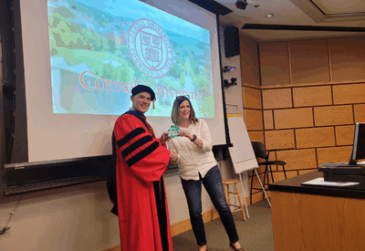
Through its work with women entrepreneurs in the food and beverage industry, the James Beard Foundation (JBF) identified several barriers that can make growing a business more difficult, including limited access to capital, mentorship, leadership development, and industry networks.
JBF wanted to go beyond inspiration and provide entrepreneurs with practical support they could use to strengthen and grow their businesses. That goal led to the Women’s Entrepreneurial Leadership (WEL) program, developed in partnership with Cornell Executive Education.
Building a Program Around Entrepreneurs’ Needs
JBF set out to create a program that would equip women entrepreneurs with tangible business tools and strategic knowledge while building a supportive peer community.
To bring that vision to life, JBF partnered with Cornell Executive Education, drawing on Cornell faculty expertise in entrepreneurship, leadership, and gender equity.
Together, they developed an intensive, 11-week virtual learning experience specifically for women in the food and beverage sector.
The program brings together small cohorts of 20 brick-and-mortar business owners from across the country for live instruction, interactive workshops, and peer-to-peer learning led by Cornell faculty, JBF staff, and industry experts.
The curriculum covers areas directly connected to running and growing a business, including leadership, financial modeling, operations, branding, communications, and funding strategies.
Just as importantly, the program emphasizes applying that learning to participants’ businesses.
Building Confidence as Business Owners
One of the clearest outcomes documented in the case study is increased confidence.
Eighty-seven percent of participants report increased confidence as business owners.
Participants also credit the program with strengthening their leadership presence, clarifying their strategic vision, and deepening their sense of purpose.
One participant described the impact this way:
“WEL boosted my confidence and opened my eyes to the struggles and management strategies we were all facing!”
She also said the program gave her tools to become a better leader in her community and industry while reminding her of her value and purpose.
Strengthening Financial and Strategic Capabilities
The program also focuses on helping participants strengthen the financial and strategic capabilities involved in growing a business.
According to the case study, WEL alumnae leave with a stronger grasp of financial management and a more strategic approach to growth.
For one participant, that translated into a meaningful change in how she approached her business:
“I have a much better grasp of our financials and can discuss our numbers with confidence.”
She also described becoming better at working on her business rather than remaining focused primarily on its day-to-day demands.
That feedback reflects one of the program’s goals: equipping entrepreneurs with practical business tools and strategic knowledge they can carry back to their organizations.
Creating a Network That Lasts Beyond the Program
The WEL experience was also designed to foster a supportive peer community among women entrepreneurs across the country.
For many participants, that community became an important part of the experience.
Seventy-six percent of alumnae cite a valuable support network as an outcome of the program.
One participant described the opportunity to learn alongside 19 other women as something she couldn’t replicate through a conference, trade publication, trade show, or book. Hearing their stories, challenges, and plans, she said, was both inspiring and informative.
The case study notes that these networks can foster collaboration, mentorship, shared resources, and new opportunities among participants.
A Program Designed for a Specific Community
WEL was created around the needs of a particular audience rather than adapted from a one-size-fits-all program.
JBF brought its understanding of women entrepreneurs in the food and beverage industry, while Cornell Executive Education brought faculty expertise and a practical approach to executive education.
The resulting program combines business education, leadership development, immediate application, and peer learning within a community of entrepreneurs navigating related challenges.
For JBF, that approach supports a larger goal: providing women with tools, resources, and networks that can contribute to the growth of women-owned businesses and women in leadership across the industry.
The Impact of the Partnership
The Women’s Entrepreneurial Leadership program offers a concrete example of how a custom executive education partnership can be built around an organization’s goals and the needs of the people it serves.
The outcomes documented by JBF and Cornell Executive Education include increased confidence among business owners, stronger financial and strategic capabilities, and a professional network that participants continue to value.
For organizations exploring their own talent and leadership development initiatives, the WEL program offers an example of what a highly tailored approach can look like: a learning experience designed around a specific audience, the challenges participants face, and the capabilities they want to strengthen.
Explore Custom Executive Education
Learn more about how Cornell Executive Education works with organizations to develop custom learning experiences for leaders and teams.